 listicle
Best Copper Still for Hobbyists 2026: Top Picks
Table of Contents
- Why Copper Still Quality Matters for Hobbyists in 2026
- Quick Comparison: Top Copper Stills for Hobbyists
- 1. Steven StillZ LLC: Premium Handcrafted Copper Stills
- 2. Mile Hi Distilling Stills: Versatile Capacity Options
- 3. CopperHolic Copper Stills: Buying Guidance and Options
- 4. The Distillery Network Copper Moonshine Stills: Budget-Friendly Entry
- 5. MBIC Still: Portable Copper Still for Beginners
- 6. Copper Pot Stills on eBay: Marketplace Variety
- Copper Still vs Stainless Steel Still: Which Should Hobbyists Choose?
- How to Choose the Right Copper Still Kit for Your Setup
- Frequently Asked Questions
Last Updated: October 15, 2026
Why Copper Still Quality Matters for Hobbyists in 2026
A copper still is a distillation vessel built from copper that heats a fermented wash and condenses the vapor back into a concentrated spirit.
At Steven StillZ LLC, we build hand-made stills from Paul Revere Copper because the material is only half the story. According to the TTB's distilled spirits permit guidance, home distillation of alcohol remains illegal without a federal permit, so most buyers use these units for water, essential oils, and legal demonstration purposes.
Three things separate a serious copper still from a cheap one:
- Material purity. Look for 99.9% pure copper, not copper-plated steel.
- Solder and joints. Lead-free silver bearing solder matters more than most buyers realize.
- Pressure testing. Every unit should be water and air pressure tested before it ships.
Below, we break down six options for hobbyists, from premium handcrafted builds to budget marketplace finds.
Quick Comparison: Top Copper Stills for Hobbyists
Here is how the six picks compare on construction, capacity, and price transparency.
| Still | Construction | Capacity | Starting Price | Best For |
|---|---|---|---|---|
| Steven StillZ LLC | 20oz hand-made copper, lead-free solder | Varies by build | Contact for pricing | Serious hobbyists upgrading equipment |
| Mile Hi Distilling | Copper or stainless options | 3-26 gallons | Contact for pricing | Comparing sizes and materials |
| CopperHolic | Copper stills, assembled or DIY | Varies | Contact for pricing | Buyers who want buying guidance |
| The Distillery Network | Copper moonshine stills | Not specified | $499.00 USD | A publicly listed starting price |
| MBIC Still | Copper, portable | Not specified | $104.99 USD | Beginners on a tight budget |
| eBay Copper Pot Stills | Varies by seller | Varies | $150.00 USD (used) | Marketplace variety |
The pattern is telling: the cheapest options rarely publish specifications, and the most transparent builds rarely advertise the lowest price.
1. Steven StillZ LLC: Premium Handcrafted Copper Stills
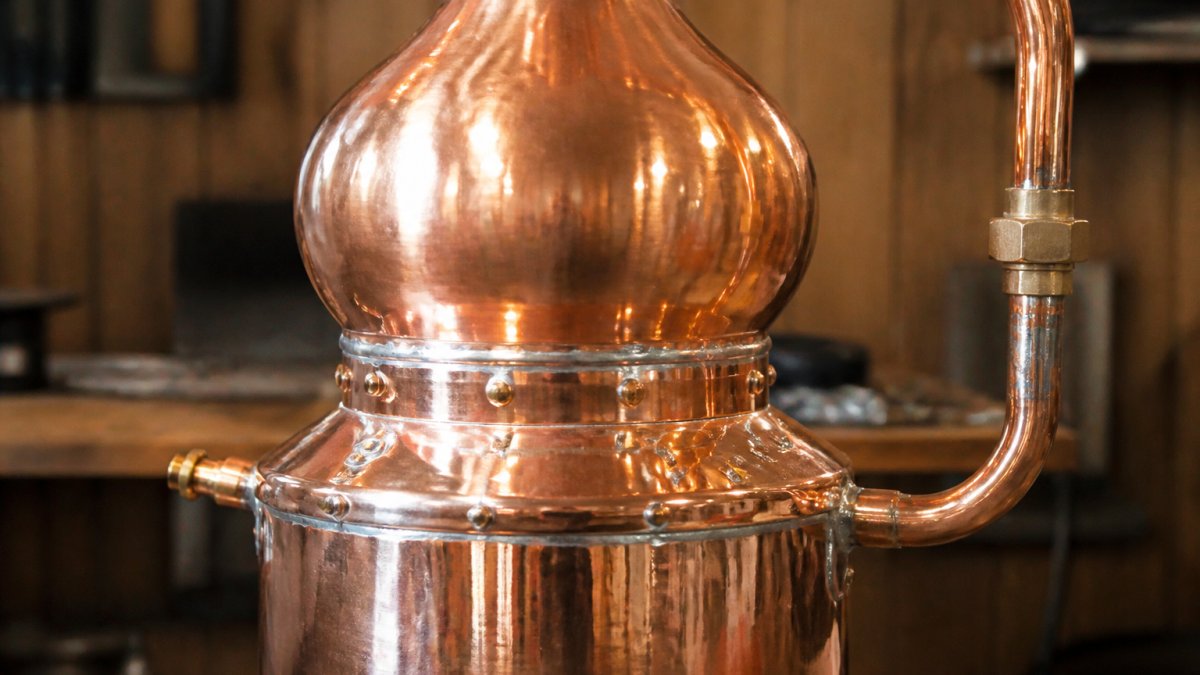
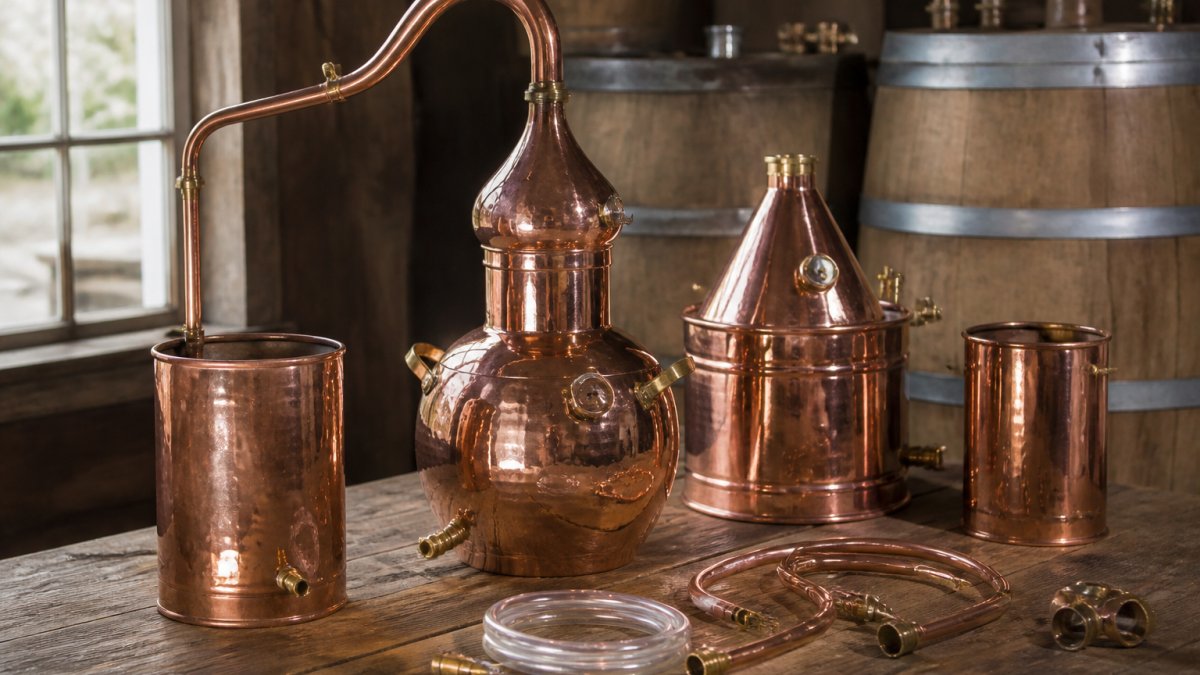
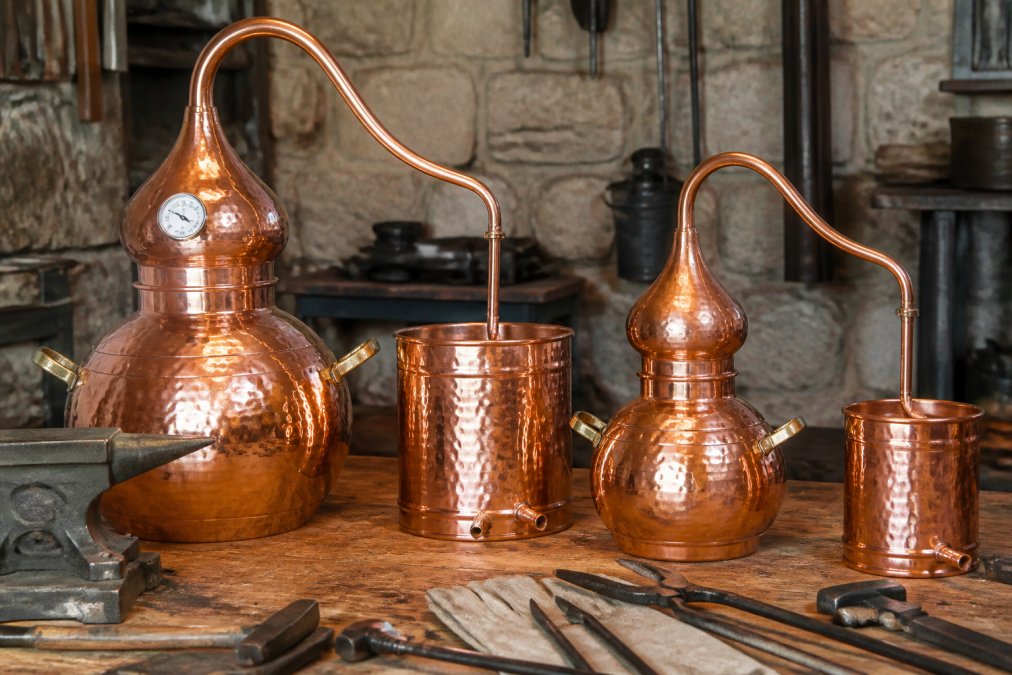
Parts are rolled, hemmed, and beaded for structural integrity, and every unit goes through rigorous water and air pressure testing before it leaves the shop, the reason a slow condenser-joint leak never becomes your problem.
The build quality also answers the objection that a professional-grade still is overkill for a garage setup.
2. Mile Hi Distilling Stills: Versatile Capacity Options
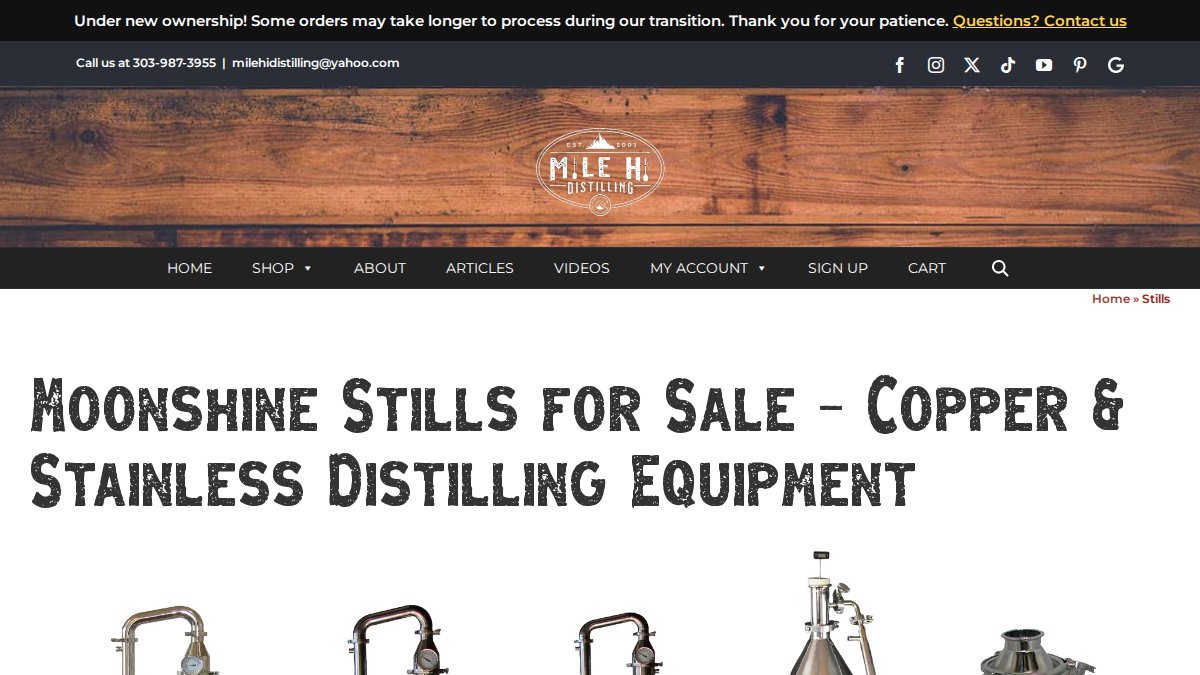
Mile Hi Distilling earns a spot because it sells both copper and stainless steel stills in a listed capacity range of 3 to 26 gallons, described as suitable for beginners and hobbyists.
That range is useful if you are deciding between a small 5-gallon pot still and something larger, and buying from one seller that offers both materials lets you compare copper against stainless without switching vendors.
The catch is transparency: the listing provides no specific model prices or detailed specifications, so contact the seller directly for current figures.
3. CopperHolic Copper Stills: Buying Guidance and Options
CopperHolic stands out less for its catalog than for its published buying guide, which recommends comparing still size, construction quality, and features before you buy.
If you enjoy the research phase, CopperHolic is worth a look; its guide frames the market around size, material, and build quality.
Where it falls short is verifiable specifics: no current model price or detailed specifications are confirmed, so treat any figures as needing direct confirmation from the seller.

4. The Distillery Network Copper Moonshine Stills: Budget-Friendly Entry
The Distillery Network lists copper moonshine stills with a publicly shown starting price of $499.00 USD, making it one of the more transparent budget-friendly entries here.
For hobbyists who want a copper still without a custom build, that listed starting point is a real anchor, and the seller describes an inventory of multiple stills.
The limitation is documentation: capacities, materials beyond copper, and warranty terms are unspecified.
5. MBIC Still: Portable Copper Still for Beginners
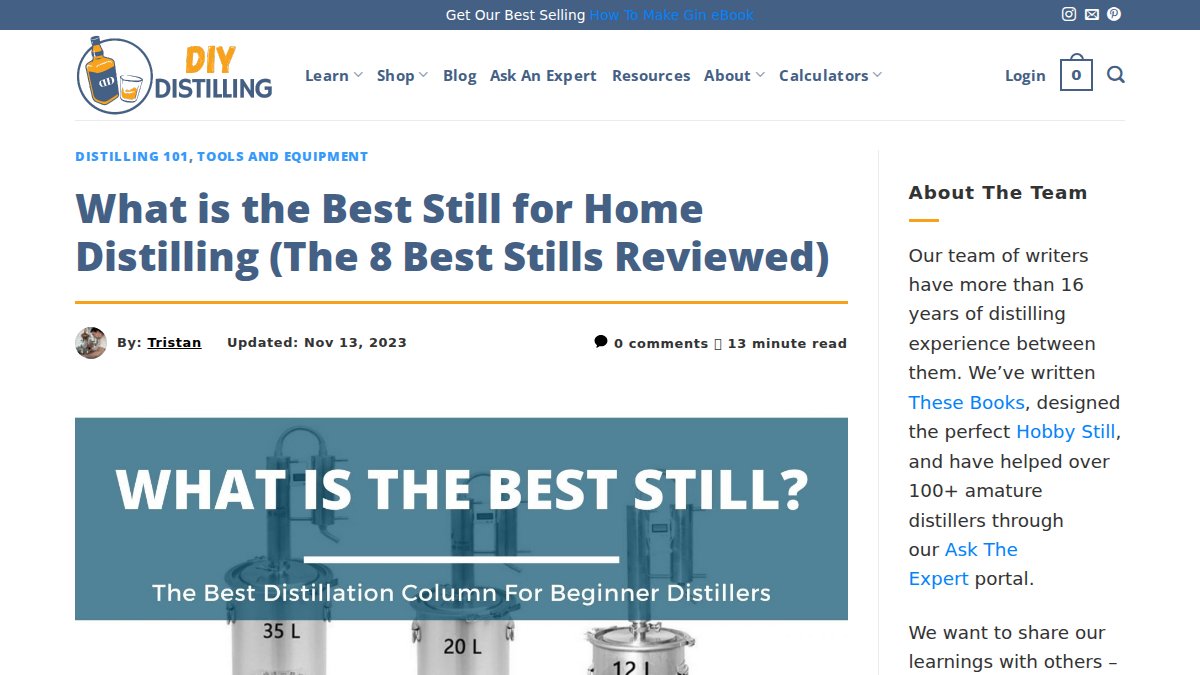
Beginners prioritizing portability and low entry cost should look at the MBIC Still, described by DIY Distilling as a portable copper still listed at $104.99.
If your goal is to try hobby distilling for water or essential oils before committing to a serious setup, this is a low-risk starting point. Just do not expect the same longevity or flavor consistency as a 20oz hand-built still.
6. Copper Pot Stills on eBay: Marketplace Variety
The appeal is variety and the chance of a deal; the risk is that condition, specifications, shipping, and seller terms vary wildly. A used still may have solder you cannot verify or poorly maintained copper.
For hobbyists who enjoy a project and can inspect a unit before buying, the marketplace can work. For everyone else, the lack of standardization is a real drawback.
Copper Still vs Stainless Steel Still: Which Should Hobbyists Choose?
The short version, copper wins on flavor chemistry and heat transfer, stainless wins on price and cleaning, is where most guides stop. The useful version compares purchase price, the accessories each material forces you to buy, cleaning time, and how long the metal lasts.
The chemistry, briefly
Copper reacts with sulfur compounds in the vapor, which is why distillers have used it for centuries to reduce off-flavors, and it spreads heat more evenly than stainless, making a run easier to control. Stainless does neither, but it also does not tarnish, dent as easily, or require the same care.
The cost picture, not just the sticker
A stainless boiler usually lists for less than a comparable copper one. But the purchase price is only the first line item:
- Copper packing or a copper column. Many hobbyists run a stainless boiler with copper mesh or a copper section in the vapor path to get the sulfur-binding benefit without paying for an all-copper body. That is an added cost on top of the stainless price.
- Cleaning supplies. Copper needs a mild acid or commercial copper cleaner to remove tarnish and verdigris; stainless needs soap, water, and occasionally a passivation wipe. Copper consumables are a recurring cost.
- Replacement gaskets and seals. Both materials need them, but copper stills often run hotter at the joints, which shortens gasket life.
Add those lines up and the gap between a stainless setup and an all-copper setup narrows considerably, sometimes to the point where the copper unit is the better value over several years of regular use.
Maintenance and expected service life
Copper is not fragile, but it is not maintenance-free:
- After every run, rinse and dry the boiler. Leaving acidic wash residue in a copper pot is what produces green verdigris.
- Periodically, polish the interior with a food-safe copper cleaner and re-rinse thoroughly. Do not use abrasive pads on thin copper.
- Store dry and uncovered, not sealed with residual moisture inside.
A heavy-gauge, properly soldered copper still that is dried after each use will typically outlast a thin, mass-market unit by a wide margin. The failure modes to watch for are pinhole leaks at seams, cracked solder at the condenser joint, and dented boiler walls from rough handling, all construction-quality problems, not material problems.
The practical recommendation
For a hobbyist running batches regularly and caring about flavor, copper where the vapor touches the metal is the right call, whether that is an all-copper still or a stainless boiler with copper in the vapor path. For someone testing the hobby occasionally, a stainless boiler with copper packing is a lower-risk entry. The material is not the whole decision; the gauge, the solder, and the joints are.
How to Choose the Right Copper Still Kit for Your Setup
Most buying guides tell you to "match the still to your batch size" and stop there. That advice is useless without numbers. Here is the decision sequence that actually narrows the field, in the order it matters.
Step 1: Size the boiler from your fermenter, not from the catalog
The rule of thumb among home practitioners is that you should fill a pot still's boiler no more than about two-thirds full, because the wash foams and expands as it heats.
Work backward instead:
- Fermenter volume ÷ 0.66 = minimum boiler size. A 6-gallon fermenter points you at an 8 to 10-gallon boiler.
- Charge volume × expected yield = what you actually collect. A 3-gallon wash at roughly 10% ABV contains about 0.3 gallons of pure alcohol; after cuts you keep a fraction of that, not all of it.
- Headspace matters more than total volume. A tall, narrow boiler foams less than a wide, shallow one at the same capacity.
This is why the 3 to 26 gallon range some sellers advertise is not a menu. It is a span that includes units too small for a 6-gallon fermenter and units too large for a garage workbench.
Step 2: Match the heat source before you match the finish
A still is a pot; the heat source decides whether the run is controllable.
- Propane turkey fryer burners are the common hobbyist choice. They are cheap and put out enough BTU to heat 5 to 10 gallons in reasonable time, but they concentrate heat on the bottom center and are hard to fine-tune at the low end.
- Indoor electric hot plates and induction burners are cleaner and easier to modulate, but most household units cannot push enough wattage to bring a large charge to temperature quickly, and induction requires a magnetic base, pure copper is not magnetic, so an induction plate will not work on a bare copper boiler.
- Built-in electric elements give the best control but require the boiler to be drilled and sealed, which is a build decision, not an accessory.
Confirm the boiler base diameter fits your burner grate, and confirm your space has ventilation. A covered garage or open-air setup is the norm; a sealed room is not.
Step 3: Check the wetted path, not the polish
The parts that touch vapor and condensate are the parts that matter:
- Copper gauge. 20oz copper is a heavy, durable sheet; thinner decorative copper dents and transfers heat less evenly.
- Solder. Lead-free silver-bearing solder is the standard to ask for. If a seller cannot name the solder, that is your answer.
- Seals and gaskets. Silicone and PTFE are common; natural rubber and unknown black gaskets are not food-contact appropriate for a vapor path.
Step 4: Count what is actually in the box
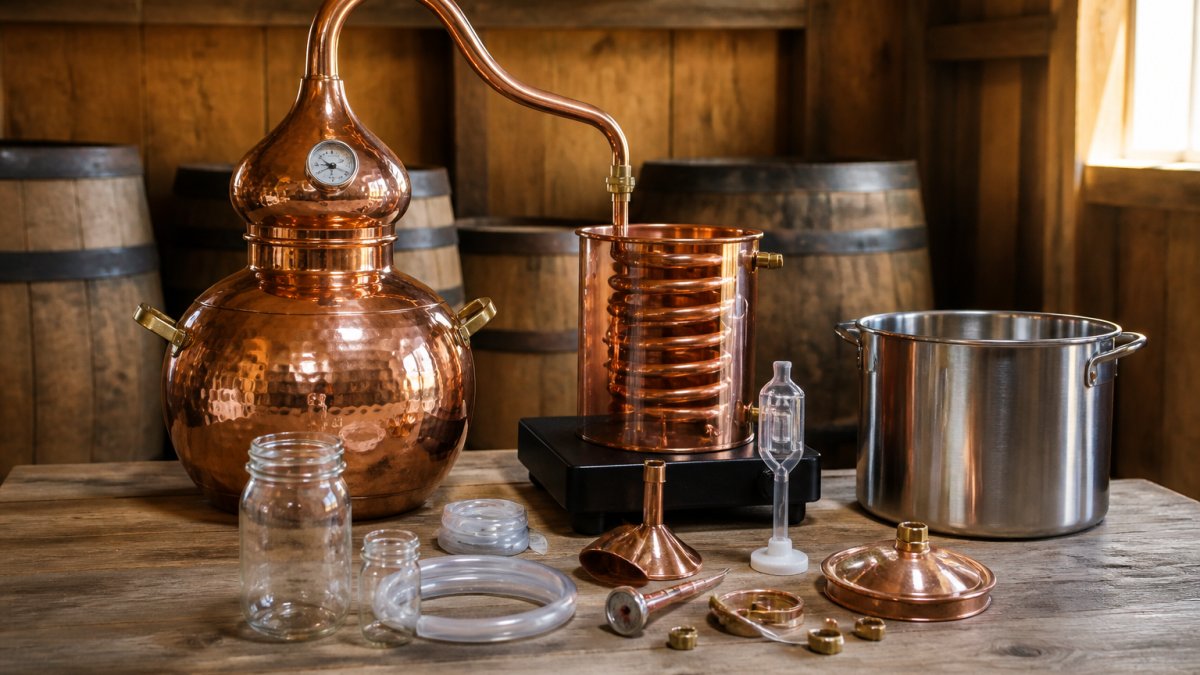
A "still" listing may or may not include the condenser, the cooling lines, a thermometer or gauge, and the collection vessel. Price the missing pieces before you compare two listings, because a cheaper still that ships without a condenser is not cheaper.
Step 5: Ask about support and spares
Before buying, ask three questions in writing: what is the copper gauge, what solder was used, and is the unit pressure tested. A vendor who answers specifically and quickly is usually a vendor who stands behind the build. A vendor who answers vaguely is telling you something too.
Frequently Asked Questions
What is the best gauge of copper for a still?
For hobbyist copper stills, 20-ounce (20 oz) copper is a common choice because it balances durability and heat conductivity. Thicker gauges like 20 oz resist dents and last longer, while thinner copper heats faster but may warp over time. Look for stills made from 99.9% pure copper with lead-free solder for safety.
Is it legal to buy a copper still in the United States?
Yes, it is legal to buy a copper still in the United States for personal use, such as distilling water, essential oils, or alcohol for fuel. However, distilling alcohol for drinking without a federal permit is illegal. Check your state and local laws, as regulations vary. Always use your still for lawful purposes.
What size copper still is best for a hobbyist?
Most hobbyists start with a 5-gallon copper still, which yields about 1 to 1.5 gallons of distillate per run. If you want larger batches, an 8-gallon still can produce 2 to 3 gallons. Consider your space, heat source, and how often you distill before choosing a size.
Are copper or stainless steel stills better?
Copper stills offer superior heat conduction and remove sulfur compounds, improving flavor. Stainless steel is more durable and easier to clean but lacks copper's catalytic benefits. For hobbyists focused on flavor, copper is often preferred. Some stills combine both materials for the best of both worlds.
How do I compare copper still brands and build quality?
Check the copper thickness (gauge), solder type (lead-free is essential), and construction methods like rolled and beaded seams. Look for pressure testing and warranties. Read independent reviews and ask about return policies. A reputable brand will provide detailed specifications and stand behind their product.