 how-to
How to Identify Lead-Free Solder: A 2026 Guide
Table of Contents
- Why Solder Identification Matters for Distillation Equipment
- Visual Inspection of Solder Joints: Shiny vs. Dull
- Lead-Free Solder Melting Point: What the Numbers Tell You
- Reading Packaging and Labels on Solder Wire
- Is Silver Bearing Solder Safe for Your Still?
- Field Testing Methods and Microscopic Analysis
- Safety Protocols for Melting Unknown Solder
- Frequently Asked Questions
Last Updated: September 23, 2026
Why Solder Identification Matters for Distillation Equipment
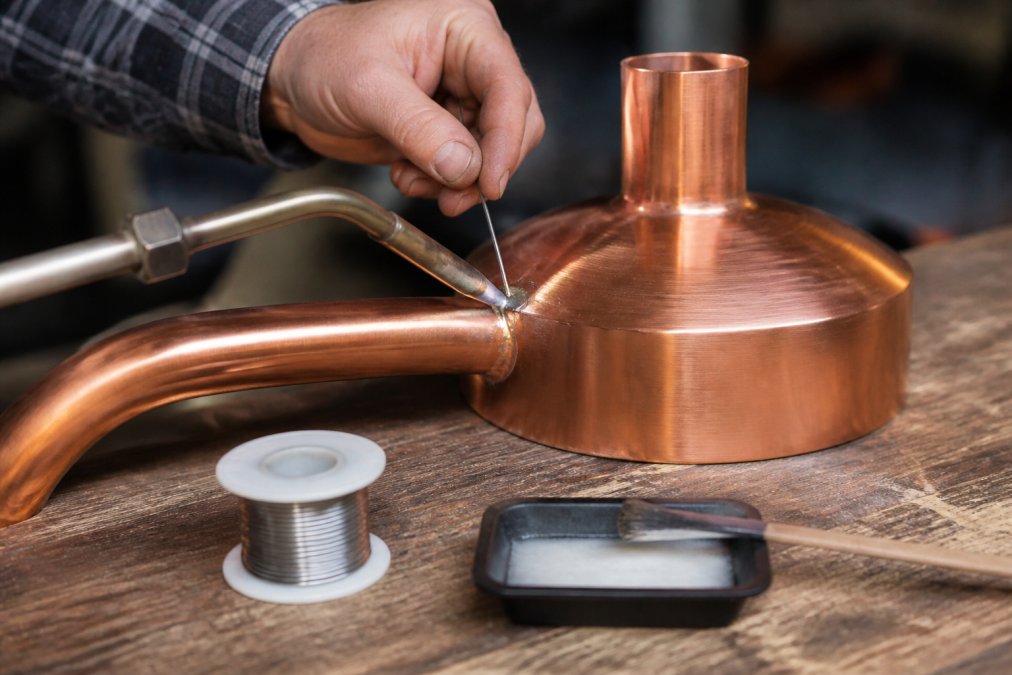
Learning how to identify lead free solder protects your health and your spirits. Solder holds your still together, and if it contains lead, heat and vapor can pull it into your batch. At Steven StillZ LLC, every still is built with 100% lead-free silver bearing solder.
Visual Inspection of Solder Joints: Shiny vs. Dull
Visual inspection is the fastest first check, but the least reliable on its own. Lead-free solder usually leaves a slightly dull, grainy, or satin finish; leaded solder cools into a bright, shiny bead.
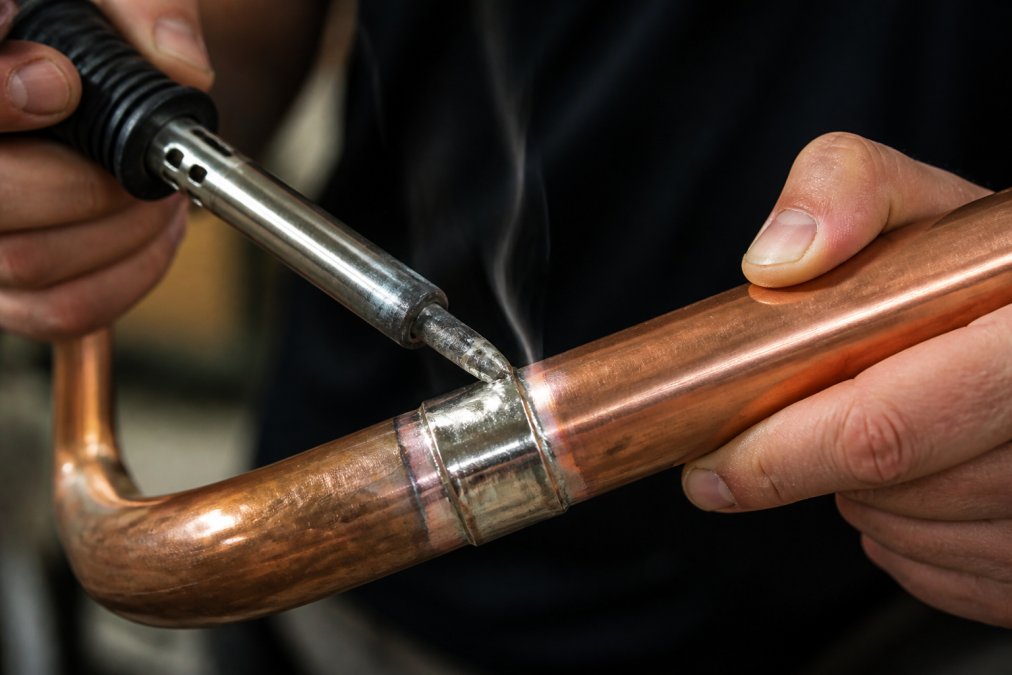
Look for these signs:
- Shiny, glassy surface → often leaded, but not always
- Satin or slightly grainy look → often lead-free
- Rounded, smooth fillet → common with leaded solder
- Flatter, less even fillet → more common with lead-free
Lead-Free Solder Melting Point: What the Numbers Tell You
The lead-free solder melting point is higher than most people expect, and that gap is one of your most useful identification clues. Standard tin-lead solder melts around 183°C (361°F); most common lead-free alloys melt between 217°C and 227°C (about 423°F to 441°F). That 34°C to 44°C spread changes how the solder flows and wets copper, giving you a measurable test.
| Alloy Type | Typical Melting Range | Lead Content | Common Use |
|---|---|---|---|
| Tin-lead (63/37) | ~183°C (361°F) | Yes | Older electronics |
| SAC305 (tin-silver-copper) | 217-220°C (423-428°F) | No | Modern electronics |
| Tin-copper | ~227°C (441°F) | No | Plumbing, general |
| Tin-silver | ~221°C (430°F) | No | High-reliability joints |
| Tin-bismuth | ~138°C (280°F) | No | Low-temp electronics |
Solidus, Liquidus, and the Eutectic Point
A pure metal melts at one temperature: the eutectic point. The classic 63/37 tin-lead alloy is eutectic, snapping from solid to liquid at 183°C with almost no pasty stage. Most blends are not eutectic; they melt across a range from the solidus temperature to the liquidus temperature, and between the two the alloy is mushy. The pasty range is a fingerprint: SAC305 transitions quickly near 217-220°C, while tin-copper looks slushy longer.
Running a Controlled Melt-Point Test
You do not need a lab furnace. A temperature-controlled iron with a digital readout, a scrap of clean copper, and a small sample of unknown solder will get you close.
- Set the iron to 185°C (365°F). Touch it to the sample. If the solder wets and flows almost immediately, you are likely looking at leaded solder.
- Step up to 220°C (428°F). If the sample that refused to flow at 185°C now wets and flows, you are likely looking at a lead-free alloy.
- Watch the pasty stage. A quick, clean transition points to a near-eutectic alloy. A long, slushy transition points to a wider-range alloy like tin-copper.
- Repeat on a second sample. One reading can be thrown off by oxidation, flux residue, or a dirty tip.
Where the Melt Test Fails
The melt test is a strong clue, not a verdict. Three things throw it off:
- Oxidized or contaminated surfaces raise the apparent melt point because solder cannot wet through the oxide layer.
- Mixed alloys from a repaired joint can produce a melt range matching neither the original leaded nor lead-free solder.
- Bismuth-bearing lead-free alloys melt well below leaded solder, so a low melt point does not automatically mean lead.
Reading Packaging and Labels on Solder Wire
The label on your solder wire is the best source of truth, so read it before you melt anything. Manufacturers must list the alloy composition on the spool.
Check for these details:
- Alloy code like SAC305, Sn99.3Cu0.7, or Sn63Pb37
- The letters "Pb", this is the chemical symbol for lead. If you see it, the solder contains lead.
- "Lead-free" or "Pb-free" printed clearly on the label
- RoHS compliance markings, which ban lead in covered products
- A percentage breakdown of tin, copper, silver, or other metals
Is Silver Bearing Solder Safe for Your Still?
Silver bearing solder is safe for a still when it is lead-free, and it is one of the best choices you can make. Silver improves joint strength, flow, and heat resistance, which is why quality still makers use it. The confusion comes from the word "silver": silver bearing solder is not pure silver, but usually tin with 2-4% silver plus copper, and that silver content boosts performance.
- No lead when labeled lead-free
- Stronger joints that hold up to heat cycles
- Better wettability, so solder flows into seams cleanly
- Higher melt point that resists softening under running heat
Field Testing Methods and Microscopic Analysis
Field testing lets you check solder without a lab. Chemical spot-test kits and microscope inspection give you the most confidence on a finished joint.
Non-Destructive Chemical Spot-Test Kits
Lead-detection swab kits are the most actionable tool a hobbyist can buy. The reagent changes color in the presence of lead ions: rub the swab on the joint, wait the specified time, and compare it to the color chart.
What to know before you buy:
- Look for kits that name the reagent chemistry on the label, such as rhodizonate-based lead test swabs. Kits that only say "lead test" without naming the chemistry are harder to trust.
- Check the detection threshold. Most consumer swabs are sensitive to lead at the surface, which is what you want for a finished joint.
- Test a known leaded sample and a known lead-free sample first. This gives you a baseline for what a positive and negative result actually look like on your bench.
- Follow the wait time exactly. Rushing the reaction is the most common cause of a false negative.
Microscopic Analysis Under a Digital Microscope
A jeweler's loupe at 10x shows surface texture; a digital microscope at 20x to 50x shows grain structure, where leaded and lead-free solder look different.
What to look for:
- Grain structure. Lead-free solder typically shows a rougher, more crystalline surface with visible grain boundaries. Leaded solder looks smoother and more uniform.
- Filament and dendrite patterns. Under magnification, some lead-free alloys show fine dendritic growth as they cool. Leaded solder rarely does.
- Fillet shape. Lead-free fillets tend to sit flatter against the copper. Leaded fillets pull into a more rounded, convex shape.
- Surface pitting and shrinkage. Lead-free joints are more prone to small pits and shrinkage marks because of the wider pasty range.
Magnet Test
Some lead-free alloys contain nickel or iron and respond slightly to a magnet; pure tin-lead does not. Many lead-free alloys are non-magnetic too, so treat a magnetic response as a hint, not proof.
Heat Test
Heat a small scrap sample and note the temperature where it turns fully liquid: near 183°C suggests lead, near 220°C suggests lead-free. The full procedure is in the melting point section above.
The Safe-to-Test Protocol
Before you run any heat-based test on unknown solder, follow this sequence:
- Move the work outside or to a bench with strong cross-ventilation. Never test in a closed garage or a room with no airflow.
- Put on nitrile gloves, eye protection, and a respirator rated for metal fumes and flux vapors.
- Work on a disposable surface such as cardboard or a dedicated test tile, not on your main bench.
- Keep the sample small. A piece the size of a grain of rice is enough for a melt test and produces far less fume than a full joint.
- Do not eat, drink, or smoke anywhere near the test area.
- Wash hands and forearms with soap and water immediately after the test, even if you wore gloves.
- Bag and label the scrap as unknown solder and dispose of it as hazardous waste, not in household trash.
Pairing the Tests
No single field test is perfect. The strongest combination for a finished joint is a chemical spot-test swab plus microscope inspection at 20x or higher. If the swab is negative and the grain structure looks crystalline and rough, you have two independent signals pointing the same way. If they disagree, treat the solder as unknown and do not use it on a still.
Safety Protocols for Melting Unknown Solder
Melting unknown solder can release lead fumes and other metal vapors, so safety comes first. Lead does not boil off at solder temperatures, but flux and metal dust can still harm you.
Follow these rules:
- Work outside or in strong ventilation, never in a closed garage
- Wear a respirator rated for metal fumes and flux vapors
- Use gloves and eye protection every time
- Never eat, drink, or smoke near the work area
- Wash hands and forearms right after handling
- Keep scrap separate and label it clearly
- Dispose of unknown solder as hazardous waste, not in the trash
Frequently Asked Questions
How do you tell what type of solder you have?
Check the label first for alloy markings like SAC305 or Sn99.3. If unmarked, inspect the joint appearance: lead-free solder typically produces a dull, slightly grainy finish, while leaded solder looks shiny. You can also test the melting point with a soldering iron set to a known temperature. Lead-free solder melts between 217-227°C (422-441°F), while 60/40 leaded solder melts at 183°C (361°F).
What is considered a lead-free solder?
Lead-free solder contains less than 0.1% lead by weight, per RoHS compliance standards. Common alloys include tin-copper (Sn99.3/Cu0.7), tin-silver-copper (SAC305), and tin-silver (Sn96.5/Ag3.5). Silver bearing solder is a popular lead-free option for distillation equipment because it offers strong joints and good thermal conductivity. Always verify the alloy composition on the packaging before use.
What are the visual differences between leaded and lead-free solder joints?
Leaded solder joints typically appear shiny, smooth, and bright silver. Lead-free solder joints often look dull, slightly grainy, and less reflective. However, visual inspection of solder joints alone is not definitive, as flux type and thermal profile can affect appearance. For critical applications like distillation equipment, combine visual checks with packaging verification and melting point testing for certainty.
Do you need special flux for lead-free solder?
Lead-free solder generally requires more active flux than leaded solder because it has higher surface tension and poorer wettability. Many lead-free solder wires come with a flux core designed specifically for the higher melting point. If using separate flux, choose a no-clean or water-soluble flux rated for lead-free work. Rosin mildly activated (RMA) flux also works well. Always match flux to your alloy for reliable solder joints.
Identifying the wrong solder can put lead into every batch you run, and no recipe or technique will fix that. Steven StillZ LLC removes the guesswork by building every still with 100% lead-free silver bearing solder, 99.9% pure copper, and rigorous water and air pressure testing on each unit. Our hand-made stills are backed by a 100% money-back or replacement guarantee, so you can distill with confidence. Order online 24/7 and get equipment built to keep your spirits clean from the first run.