 blog
blog
Moonshine Stills Alternative for Craft Enthusiasts
Table of Contents
- Why Craft Enthusiasts Outgrow Basic Moonshine Stills
- The Benefits of Pure Copper Distillation for Flavor and Durability
- Types of Distillation Setups and What Each One Does Best
- Legal Requirements for Home Distillation Equipment
- How to Maintain a Copper Still Between Runs
- Upcycled Vessels and Lower-Waste Distilling Practices
- What to Check Before Buying a Moonshine Stills Alternative
- Frequently Asked Questions
Last Updated: September 13, 2026
Why Craft Enthusiasts Outgrow Basic Moonshine Stills
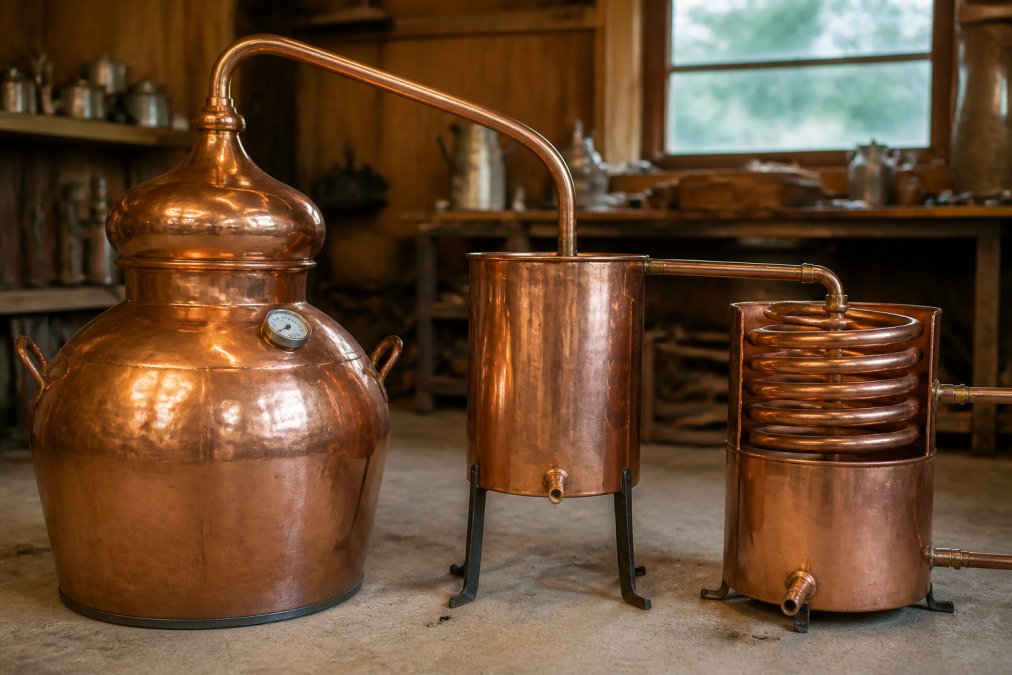
Most hobbyists don't upgrade because they want a bigger rig. They upgrade because their first still taught them what they actually care about: flavor, repeatability, and equipment that holds up run after run. This guide from Steven StillZ LLC covers what a moonshine stills alternative looks like for craft enthusiasts, and why the jump from a starter unit to a hand-built copper apparatus changes the entire process.
A moonshine still is a distillation apparatus that separates alcohol from a fermented wash by heating it and condensing the resulting vapor back into liquid. Basic units do this adequately. They rarely do it consistently.
Three things drive the upgrade decision:
- Thin metal and loose seams introduce leaks and off flavors over time
- Inconsistent vapor paths make batch-to-batch results hard to repeat
- Cheap fittings limit which heat sources and configurations you can run
Below, we'll walk through copper construction, still types, legal considerations, and maintenance so you can judge whether a professional-grade alternative is worth it for your setup.
The Benefits of Pure Copper Distillation for Flavor and Durability
Copper isn't a cosmetic choice. It's a functional material with two properties that matter during a run: high thermal conductivity and reactivity with sulfur compounds.
Thermal conductivity determines how evenly heat moves through the column and condenser. Copper transfers heat faster than stainless steel, which means fewer hot spots and a smoother vapor path. Reactivity matters because copper binds sulfur compounds produced during fermentation. Those compounds carry through to the distillate as harsh, rotten-egg notes if nothing strips them out. Copper surfaces strip them naturally.
How Copper Reacts With Vapors During a Run
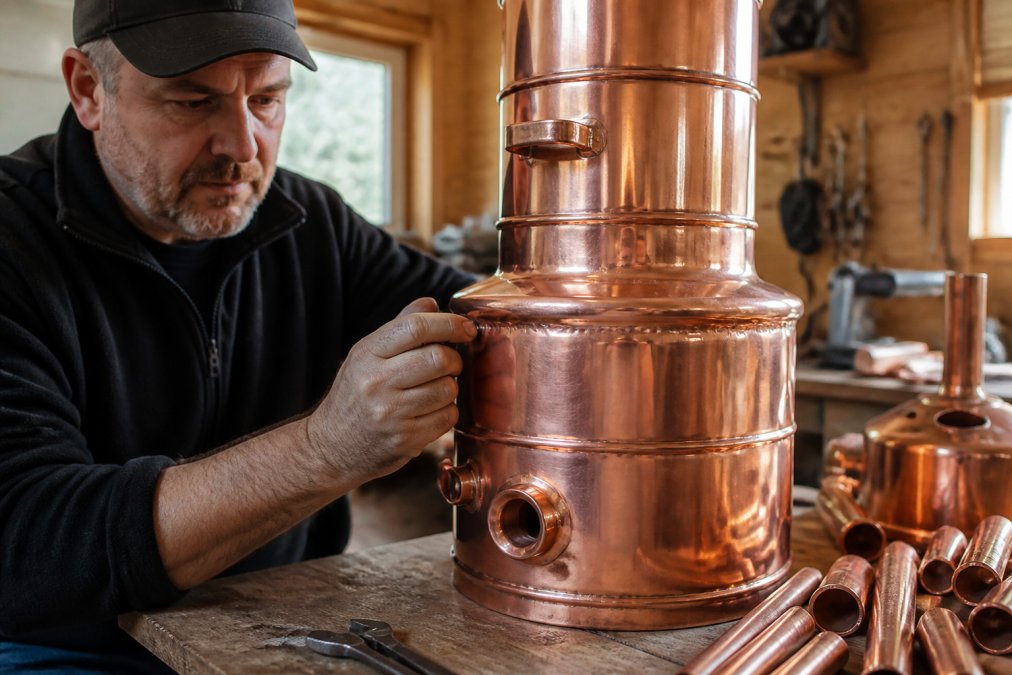
Vapor rising off a heated wash carries more than ethanol. It carries sulfur-bearing molecules that copper surfaces capture through a chemical reaction, forming dark copper sulfide deposits on the interior walls. This is why a well-used copper column darkens over time, and it's a sign the metal is doing its job.
A common mistake is assuming any copper-colored metal will perform the same way. Thin decorative copper and copper-plated steel don't have enough reactive surface area to strip sulfur effectively.
What Copper Thickness and Solder Quality Tell You
Thickness determines how long a still survives repeated heating cycles. Light-gauge copper dents, warps, and eventually develops hairline cracks at stress points. Heavier stock holds its shape.
Solder quality is the safety question. Lead-free silver bearing solder is the standard serious builders use, because lead-bearing solder can introduce contamination into the vapor path. Ask any supplier directly what solder they use and whether they test finished units for leaks.
Steven StillZ LLC builds every still from 20oz, 99.9% pure Paul Revere Copper with 100% lead-free silver bearing solder, and pressure-tests each unit before it ships.
Types of Distillation Setups and What Each One Does Best
Three configurations cover most craft setups: pot stills, reflux columns, and thumper kegs. Each produces a different character of spirit.
| Setup | Best For | Flavor Character | Complexity |
|---|---|---|---|
| Pot still | Whiskey, rum, brandy | Full, retains congeners | Low |
| Reflux column | Neutral spirits, vodka | Clean, high proof | Medium |
| Thumper keg | Doubling proof mid-run | Richer, faster | Medium |
| Pot + thumper | Flavored spirits at higher proof | Balanced | Medium-high |
Pot Stills, Reflux Columns, and Thumper Kegs Compared
A pot still is a simple boiler-and-condenser arrangement that runs one distillation pass at a time, producing a flavorful, lower-proof distillate. It's the classic choice for whiskey and rum because it preserves the character of the wash.
A reflux column adds internal packing or plates that force vapor to condense and re-vaporize repeatedly before reaching the condenser. This is fractional distillation in practice: each cycle concentrates ethanol and strips flavor compounds, pushing proof higher and flavor cleaner.
A thumper keg sits between the boiler and condenser and holds a small charge of liquid. Hot vapor bubbles through it, picking up additional alcohol and flavor before condensing. It raises proof without a second full run.
For craft enthusiasts chasing a specific house character, the pot still plus thumper combination gives the most control. For neutral base spirits destined for infusion, a reflux column wins.
Legal Requirements for Home Distillation Equipment
Federal law prohibits distilling beverage spirits at home for personal consumption, and owning a still does not exempt you from that restriction. The relevant rules sit with the Alcohol and Tobacco Tax and Trade Bureau, which regulates distilled spirits production and requires permits for lawful operations.
This is the part many equipment listings gloss over. Buying a still is legal in most states. Operating it to produce drinking alcohol without the proper federal permit is not.
The practical distinction craft enthusiasts need to understand is intended use, not equipment ownership. Federal rules treat these categories differently:
- Beverage spirits, Producing drinking alcohol requires a federal distilled spirits permit, a bonded premises, and compliance with labeling and tax requirements. There is no hobby exemption.
- Fuel alcohol, Small-scale production of alcohol for fuel use falls under a separate permit pathway with its own annual limits and reporting. It is not a loophole for beverage production.
- Non-beverage uses, Distilling water, essential oils, and some botanical extracts generally falls outside distilled spirits regulation, though state and local rules still apply.
State law adds a second layer. A handful of states permit limited home distillation for personal use, most do not, and enforcement priorities vary widely. Because permit requirements, fees, and application procedures change, check the TTB directly for current requirements rather than relying on forum posts.
For craft enthusiasts who want to stay clearly on the right side of the line, the practical path is to confirm your state's position and the federal permit status before your first run, not after. If your interest is in the craft of distillation itself, copper work, column design, flavor development, you can pursue that fully through lawful non-beverage applications while keeping your beverage runs compliant or off the table entirely.
Alcohol and Tobacco Tax and Trade Bureau permit information is the starting point for anyone evaluating whether a permit pathway applies to their setup.
How to Maintain a Copper Still Between Runs
Copper rewards maintenance. Skip it and you get pitting, green verdigris, and metallic off-flavors that no recipe adjustment will fix. The routine is straightforward once you know the sequence.
Cleaning, Passivating, and Storing Copper Parts
Passivation is the process of building a stable, protective oxide layer on copper so it resists corrosion between runs. It happens naturally with use, but you can encourage it with a mild acid rinse followed by thorough drying.
Follow this order after every run:
- Rinse the column and condenser with warm water immediately, before residue dries
- Wash interior surfaces with a mild acid solution to remove copper sulfide buildup
- Rinse again with clean water and dry completely
- Store parts in a dry, ventilated space with the column open to air
Never seal a damp copper column in a closed container. Trapped moisture is what produces the green film that ruins the next batch.
Upcycled Vessels and Lower-Waste Distilling Practices
The most overlooked angle in home distilling is reuse. A surprising number of craft setups are built around vessels that were never designed as stills, then modified with a proper copper head and condenser. This is where craft enthusiasts can out-engineer commercial buyers, and where almost no competing guide goes deep.
Common starting points include stainless beer kegs, large stock pots, and repurposed milk cans. The vessel handles the boil; the copper column and condenser handle the separation. This split lets enthusiasts spend their budget where it actually affects distillate quality.
Vessel Selection and Safety Checks
Not every food-grade vessel is safe to heat. Before repurposing anything, verify:
- Interior coating, Some liners break down under sustained heat and introduce compounds into the vapor path. Bare stainless is the safe choice. Aluminum and non-stick surfaces are not.
- Wall thickness, Thin walls flex under heat cycling and can crack at weld points. Heavier-gauge stock holds up.
- Fitting compatibility, The vessel needs a clean way to mate with your copper head. Tri-clamp fittings are the standard for a reason: they seal reliably and come apart for cleaning.
- Volume headroom, Never fill a boiler past roughly two-thirds capacity. Foam and expansion during a run need space, or you get wash pushed into the condenser.
Lower-Waste Distilling in Practice
Sustainability enters through water use as much as materials. Condenser cooling is the biggest water draw in most home setups. Running tap water straight to drain can consume many gallons per run. Recirculating chilled water through a reservoir, a tub of water with frozen bottles or a small chiller, cuts consumption substantially and keeps cooling temperature more consistent, which improves condenser performance.
Other low-waste practices worth building into your routine:
- Re-run feints, The heads and tails you separate out still contain recoverable alcohol. Collecting and re-distilling them instead of discarding reduces waste and stretches each batch.
- Compost wash solids, Spent grain and yeast residue from the ferment are compostable and return nutrients to soil.
- Reuse cooling water, Water that has cycled through the condenser is still clean enough for non-potable uses like irrigation.
What to Check Before Buying a Moonshine Stills Alternative
Before you buy, run through this checklist. It separates equipment built to last from equipment built to look the part.
- Confirm the copper is measured by weight, not described vaguely as "heavy duty"
- Ask what solder is used and whether it's lead-free
- Verify the unit is pressure-tested and leak-tested before shipping
- Check that seams are rolled, hemmed, and beaded rather than flat
- Confirm compatibility with your existing heat source, whether propane or electric
- Review the return and replacement policy in writing
- Ask whether replacement parts are available individually
That last point matters more than most buyers realize. A still is a long-term purchase, and a supplier who can't sell you a replacement gasket or fitting in two years isn't really supporting the product.
Occupational Safety and Health Administration guidance on flammable liquids is worth reviewing if you're running a propane burner indoors or in an enclosed garage, since vapor accumulation is a genuine hazard in small spaces.
This is where Steven StillZ LLC takes a different position from volume sellers. Every unit is 100% hand-made, pressure-tested for leaks, and backed by a 100% money-back or replacement guarantee. For hobbyists worried about spending more on a professional-grade still than they did on their first setup, that guarantee is the answer to the risk question.
Frequently Asked Questions
Is it illegal to buy a copper still in the United States?
Buying and owning a copper still is legal in the United States. Federal law under 26 U.S.C. Chapter 51 prohibits distilling spirits for drinking without a permit, but it does not ban owning the equipment itself. Stills are legally sold for essential oil extraction, water distillation, and educational use. If you plan to produce beverage alcohol, you need approval from the Alcohol and Tobacco Tax and Trade Bureau (TTB) first. Check your state rules too, since some states add their own restrictions on still ownership.
What makes pure copper better than stainless steel for distillation?
Copper pulls sulfur compounds out of the vapor during a run, which is why distillate from a copper still often tastes cleaner than the same recipe run through stainless steel. Copper also moves heat faster than stainless, so temperatures respond quicker when you adjust the burner. Stainless steel costs less and never needs passivating, but it does not bind sulfides. Many craft enthusiasts run a copper column or copper packing inside a stainless boiler to get both benefits.
How do I know the copper and solder in a still are what the seller claims?
Ask for the specifics in writing: copper grade, thickness in ounces, and solder composition. A 99.9% pure copper build with lead-free silver bearing solder should be stated plainly, not hinted at. Look for a seller who pressure-tests every unit and offers a money-back or replacement guarantee, since that puts the risk on them. If a listing stays vague about materials, treat that as a signal to keep looking.
How often should I clean and maintain a copper still?
Rinse the boiler and column with warm water after every run, and do a deeper clean every five to ten batches depending on what you distilled. Copper darkens with use, and that patina is normal, but heavy green or blue-green buildup means it is time to clean. A mild acid wash followed by a thorough rinse restores the surface. Store the still dry and covered so moisture does not sit inside the column between sessions.
The real challenge with upgrading isn't finding a still that works. It's finding one built well enough that you stop thinking about the equipment and start focusing on your recipe. Steven StillZ LLC hand-builds each still from 20oz Paul Revere Copper with lead-free silver bearing solder, pressure-tests every unit for leaks, and stands behind it with a money-back or replacement guarantee. Order online 24/7 and get a still built to outlast your hobby.