 how-to
How Do You Clean a Copper Still Without Damaging It?
Last Updated: October 25, 2026
Quick Summary
To clean copper still, wash every part in hot water with mild dish soap, then wipe copper surfaces with a diluted solution of one part white vinegar to three parts water and rinse well. Dry all parts completely and run a sacrificial water or vinegar run before first use. Between runs, flush the condenser and worm with hot water and vinegar, and never use bleach or abrasive pads on copper.
- Wash copper parts in hot water at 120-140°F with a few drops of mild dish soap for 2-3 minutes.
- Diluted white vinegar at one part vinegar to three parts water sits 10-15 minutes before rinsing.
- Never use bleach or chlorine-based cleaners on copper, and never mix acids with bleach.
- Flush the worm with hot water in the direction of vapor flow, then fill with diluted vinegar for 10-15 minutes.
- Do a vinegar wipe-down of all copper surfaces every 3-5 runs and a citric acid soak every 10-15 runs.
Table of Contents
- Why Copper Stills Need a Cleaning Routine
- How to Clean a Copper Still Before First Use
- Choosing a Copper Still Cleaning Solution
- How to Clean a Copper Still Condenser and Worm
- Routine Cleaning Between Distillation Runs
- Harmless Patina vs. Harmful Corrosion
- How to Store a Copper Still Between Runs
- Ordering a Still Built to Stay Clean
- Frequently Asked Questions
Why Copper Stills Need a Cleaning Routine
Copper is reactive: a clean copper still tarnishes, holds residue, and traps sulfur compounds from fermentation. Skip cleaning and those compounds end up in your spirit.
At Steven StillZ LLC, we build every still from 99.9% pure Paul Revere Copper.
Cleaning a copper still is not about scrubbing it shiny.
A simple routine protects three things:
- Flavor. Clean copper means no metallic or rotten-egg notes.
- Structure. Residue holds moisture against seams and speeds corrosion.
- Longevity. A still that gets cleaned and dried lasts far longer than one that sits wet.
The routine takes minutes, not hours. What matters is doing it every time, in the right order.
How to Clean a Copper Still Before First Use
A new copper still needs a full clean before it touches any wash, manufacturing leaves oils, flux residue, and dust on the metal.
Here is the sequence we recommend:
- Disassemble the still completely. Remove the dome, condenser, worm, and any fittings.
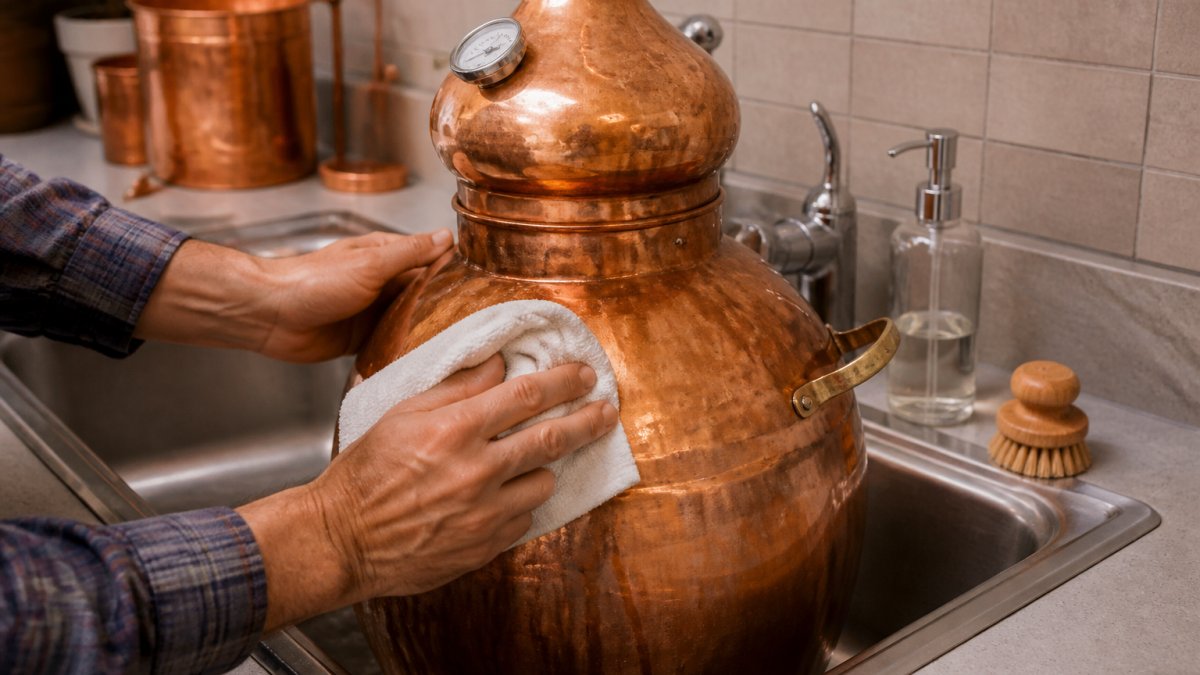
- Wash every copper part in hot water with a few drops of mild dish soap.
- Rinse with clean water until no soap film remains.
- Mix a diluted vinegar solution, roughly one part white vinegar to three parts water.
- Wipe down all copper surfaces with the solution, then rinse again.
- Dry every part with a clean cloth and let it air dry fully before assembly.
- Run a sacrificial water run or vinegar run to finish the job.
That last step matters most. A sacrificial run is a throwaway distillation with plain water or diluted vinegar that pulls remaining residue out of the seams and the worm.
Watch out: skipping the sacrificial run is the most common first-use mistake.
Choosing a Copper Still Cleaning Solution
The best copper still cleaning solution comes from pantry staples, but the difference between a clean still and a damaged one is in the ratios, temperatures, and contact times.
What each cleaner does to copper
- Hot water and mild dish soap lifts oils, organic residue, and loose soil, but not tarnish or bound sulfur. Use it as the first step, not the only step.
- White vinegar (acetic acid) dissolves light oxide films and mineral scale. It is slow-acting and safe on thin copper at short contact times.
- Citric acid is a stronger chelator that lifts heavier tarnish and corrosion faster than vinegar, but is more aggressive on thin copper if left too long.
Dilution, temperature, and contact-time table
| Solution | Best for | Dilution | Temperature | Contact time | Rinse |
|---|---|---|---|---|---|
| Hot water and mild dish soap | Routine washing, light residue | A few drops per basin | 120-140°F | 2-3 minutes | Hot water until no film |
| Diluted white vinegar | Tarnish, mineral film, general cleaning | 1 part vinegar to 3 parts water | Warm, not boiling | 10-15 minutes | Clean water |
| Citric acid | Heavier tarnish and corrosion | 1-2 tablespoons per quart of warm water | Warm, not boiling | 15-20 minutes | Clean water |
| Water and vinegar run | Interior cleaning, seams, worm | 1 part vinegar to 3 parts water in the boiler | Full distillation cycle | Full run | Dump output, rinse |
| Hydrogen peroxide | Stubborn tarnish, spot treatment | Spot test first; do not soak | Room temperature | A few minutes | Clean water |
Safety and chemical compatibility
The wrong cleaner can pit copper, leave residue, or create hazardous fumes.
- Never use bleach or chlorine-based cleaners on copper. Chlorine attacks the metal and can pit the surface. It also can release irritating fumes when mixed with acids.
- Do not mix vinegar or citric acid with bleach. Acid plus chlorine produces chlorine gas. Keep them separate and rinse between steps.
- Ventilate the work area. Work near an open window or with a fan moving air.
How to choose for the job in front of you
- Light residue after a run: hot water and mild soap, then a clean-water rinse.
- Dull brown tarnish: diluted vinegar wipe-down, 10-15 minutes, then rinse.
- Green or crusty corrosion: citric acid soak on removable parts, 15-20 minutes, then rinse and inspect.
If you want to understand how cleaning choices affect the flavor of your final spirit, our guide on preventing metallic taste in spirits explains what causes off-flavors and how to stop them.
How to Clean a Copper Still Condenser and Worm
The condenser and worm collect more residue than any other part, vapor travels through them on every run, and buildup hides inside.
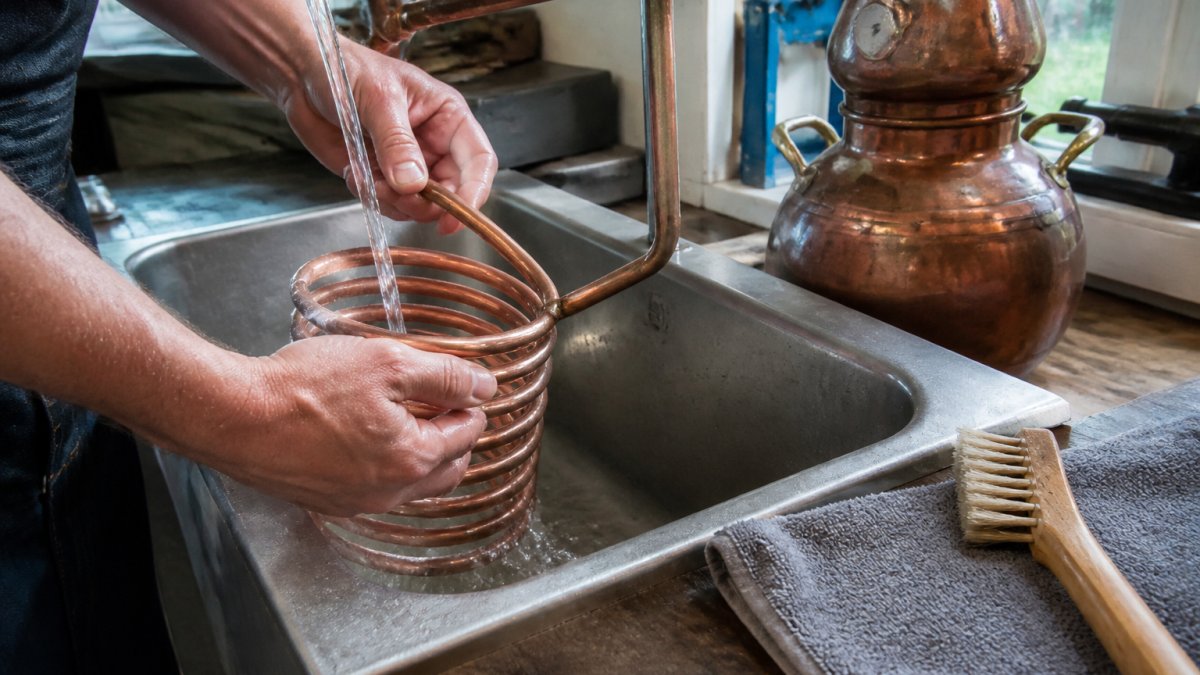
Follow this process:
- Flush the worm with hot water in the direction of vapor flow.
- Fill the coil with diluted vinegar and let it sit for 10-15 minutes.
- Flush again with clean hot water until the water runs clear.
- Inspect for blockages by looking through the coil against a light.
- Dry the worm by hanging it so water drains out completely.
A blocked worm shows up as slow output or pressure building in the boiler. For seam issues you spot while cleaning, our step-by-step guide on fixing leaking still seams walks through the repair.
One insider note: the outside of the worm matters too. Mineral scale from cooling water builds up on the coil and slows heat transfer.
Routine Cleaning Between Distillation Runs
Between runs, cleaning a copper still should take ten minutes, but the job changes by component and by what you distilled. This routine breaks it down by part and by soil type.
Component-by-component routine
Boiler (pot):
- Empty while still warm. Rinse with hot water to lift sugars and grain solids before they set.
- Wash with mild soap and a soft cloth. Do not scour the interior with abrasives.
- Rinse until the water runs clear. Wipe dry and leave open to air.
Dome and column:
- Wash with soapy water and a soft brush. Rinse.
- Wipe down with diluted vinegar every few runs to remove tarnish and sulfur film.
- Dry fully before storage. Vapor path residue here affects flavor as much as the boiler.
Condenser and worm:
- Flush with hot water in the direction of vapor flow.
- Fill with diluted vinegar for 10-15 minutes every few runs, then flush clear.
- Inspect for blockages by looking through the coil against a light.
Joints, fittings, and seams:
- Wipe with a vinegar-dampened cloth, then dry.
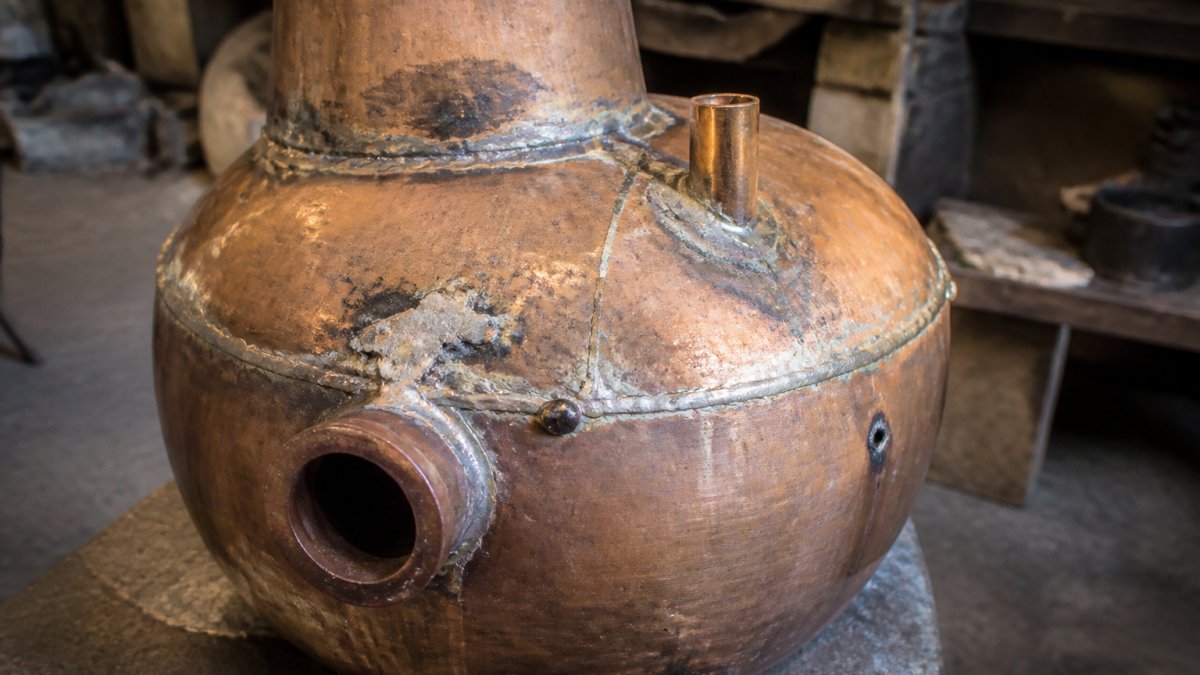
- Check for white crusty deposits along solder joints. These signal seepage or corrosion and need attention.
- Leave fittings slightly loose during storage so air can move.
Match the routine to the soil type
- Sugar washes: leave sticky residue and caramelized sugars. Rinse with hot water immediately after the run, before the residue cools and sets.
- Grain washes: leave grain solids and proteins. Use a soft brush and mild soap, and pay attention to the bottom of the boiler where solids settle.
- Fruit washes: leave pulp and pectin. Rinse thoroughly and check the dome for sticky film.
Maintenance schedule
| Frequency | Task |
|---|---|
| After every run | Hot-water rinse of boiler, soap wash of dome and column, condenser flush, dry all parts |
| Every 3-5 runs | Vinegar wipe-down of all copper surfaces, vinegar soak of worm |
| Every 10-15 runs, or when heavy tarnish appears | Citric acid soak of removable components, full inspection of seams and joints |
| Seasonally or before long storage | Full disassembly, deep clean, complete dry, storage checklist |
A still used weekly needs more attention than one used monthly. The rule: if the copper looks dull brown or smells sharp, it is due.
Troubleshooting persistent problems
- Slow output or pressure building: the worm may be blocked. Flush with hot water, then a citric acid soak if flushing does not clear it.
- Persistent sharp or sulfur odor after cleaning: bound sulfur has penetrated the surface layer. Vinegar soak, rinse, and repeat after the next run until the smell clears.
- Green spots returning after cleaning: this is corrosion, not patina. Clean with citric acid, dry fully, and check the area again after the next run. If it returns, the seam or joint may need repair.
Harmless Patina vs. Harmful Corrosion
Corrosion is different. Look for these signs:
- Green or blue-green powdery spots, which signal copper salts forming.
- Pitting, meaning small holes or rough craters in the surface.
- White crusty deposits along seams or solder joints.
Patina wipes off with vinegar and comes back. Corrosion keeps coming back after cleaning and gets worse.
Too much scrubbing is its own problem: chasing a mirror shine every week wears down the copper surface.
If you want a deeper look at how copper quality affects the taste of your spirits, read our article on whether copper quality affects taste.
How to Store a Copper Still Between Runs
Storage is where clean stills quietly go bad. A still put away wet grows green spots in weeks.
Our storage checklist:
- Every part is fully dry, inside and out
- The boiler is empty and wiped down
- The worm has drained completely
Moisture is the enemy. Trapped damp air against copper starts corrosion faster than anything else.
A light coat of food-safe mineral oil on exterior surfaces helps for long storage.
For the full picture on what makes a still last, our copper quality durability guide covers how material quality affects long-term care.
Ordering a Still Built to Stay Clean
Cleaning gets easier when the still is built for it. Shop Stillz to browse stills designed for easy maintenance.
Every Steven StillZ LLC still is 100% handmade from 20oz, 99.9% pure Paul Revere Copper. Parts are rolled, hemmed, and beaded for structural integrity.
We back every still with a 100% money-back or replacement guarantee. If it does not perform as described, we make it right.
Frequently Asked Questions
Can copper be washed with Dawn dish soap?
Yes, a small amount of mild dish soap in warm water is fine for routine cleaning of a clean copper still. Use a soft cloth or sponge, then rinse thoroughly with hot water so no soap film remains. Avoid abrasive pads and heavy scrubbing, which scratch the copper surface and create places for residue to collect. Skip dish soap entirely for the inside of the boiler if you plan a sacrificial water run afterward.
How often should I clean a copper still?
Clean the boiler and removable components after every distillation run with hot water and a soft scrub. Deep-clean with a diluted vinegar or citric acid solution every few runs, or sooner if you notice heavy tarnish, persistent odors, or buildup. The condenser and worm need a rinse after each use and a fuller soak when flow slows. Store the still dry and covered between runs to reduce how often deep cleaning is needed.
How do you clean green oxidation from a copper still?
Green oxidation, or verdigris, comes off with a mild acid bath. Mix one part white vinegar with two parts water, or use a citric acid solution, and soak the affected copper parts for 15 to 30 minutes. Scrub gently with a soft brush, rinse with hot water, then dry completely. For stubborn spots, a paste of baking soda and water works on external surfaces. Rinse and dry right away so new oxidation does not form.
How should I store a copper still between runs?
Dry every component completely before storage, since trapped moisture drives tarnish and corrosion. Store the boiler, dome, and condenser separately if possible, in a cool, dry place away from humidity. Cover openings with a clean cloth or breathable cover rather than sealing them tight, which can trap moisture. Keep the worm coil hung or laid flat so water does not pool inside it, and check for condensation before the next run.
Cleaning a copper still is a habit, not a chore. Build the routine, protect the copper, and your spirit stays clean run after run. Get started with Steven StillZ LLC and order a hand-built copper still that is pressure-tested, lead-free, and built to stay clean. Order online 24/7.