 ultimate-guide
Benefits of Heavy Gauge Copper in Distillation Equipment
Table of Contents
- Why Heavy Gauge Copper Outperforms Thin Gauge in Distillation
- How to Verify Copper Purity Before You Buy
- Lead-Free Silver Bearing Solder: Safety and Strength
- Structural Integrity of Distillation Equipment: What Thickness Delivers
- Heat Distribution and Thermal Management in Copper Stills
- Cost vs. Value: Why Heavy Gauge Copper Pays Off Long-Term
- Cross-Industry Applications of Heavy Gauge Copper
- Conclusion
- Frequently Asked Questions
Last Updated: September 19, 2026
Why Heavy Gauge Copper Outperforms Thin Gauge in Distillation
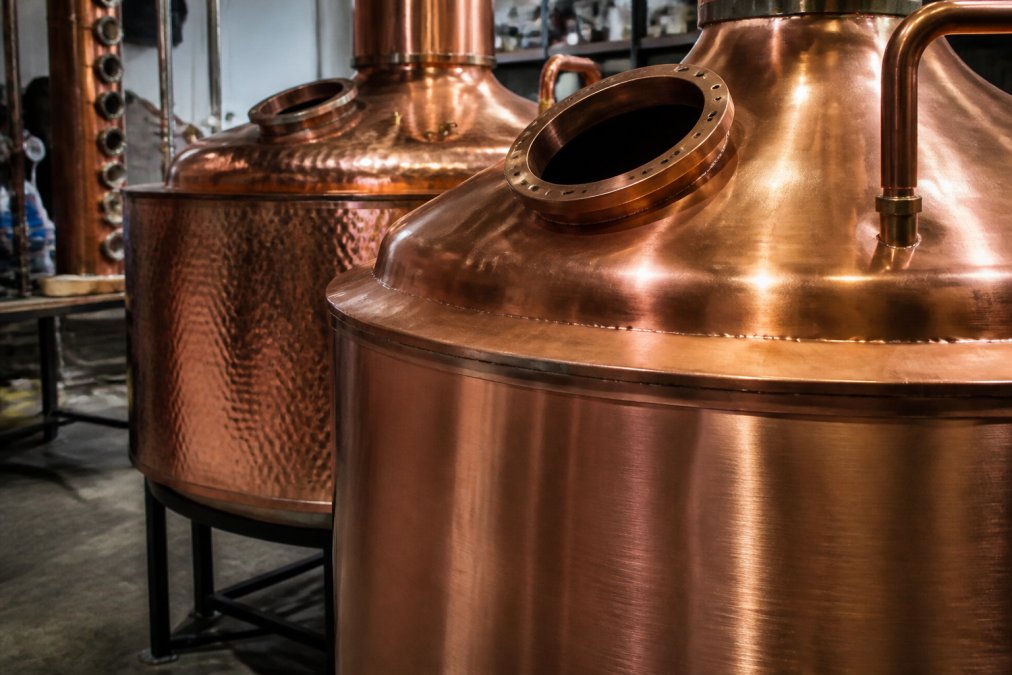
Heavy gauge copper delivers measurable advantages in distillation because its greater material thickness improves heat distribution, resists warping under thermal cycling, and holds up to years of repeated use. Thinner copper saves money upfront but often develops stress cracks, hot spots, and leaks far sooner. At Steven StillZ LLC, we build every still from 20oz, 99.9% pure Paul Revere Copper precisely because that thickness changes how the equipment performs over its lifetime.
How to Verify Copper Purity Before You Buy
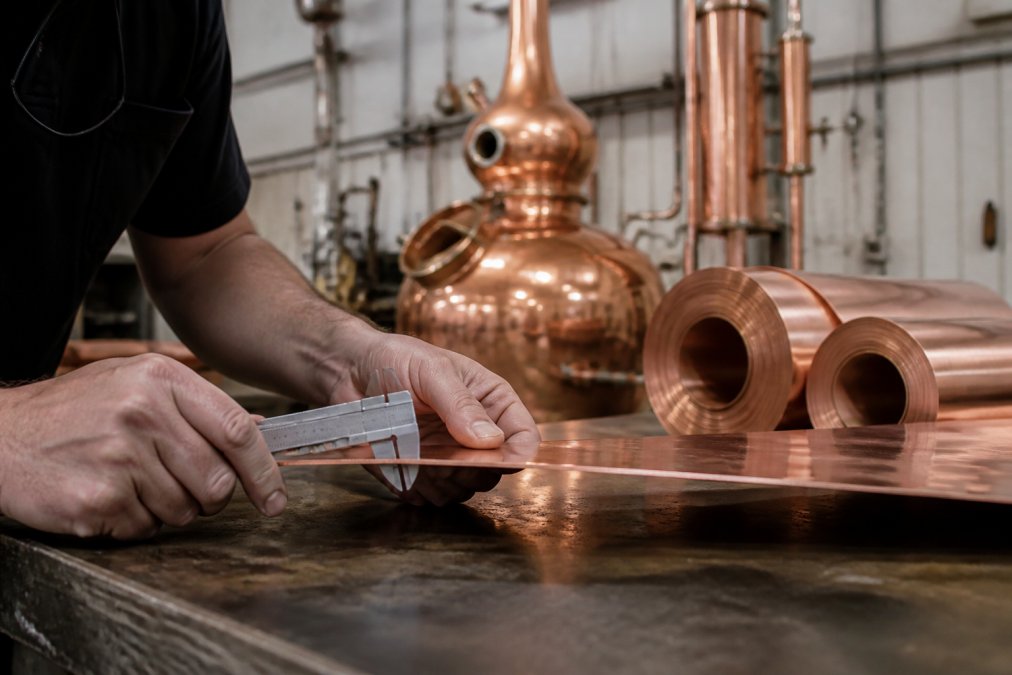
You can verify copper purity by requesting a material certification, checking for a documented alloy grade, and inspecting the surface for consistent color and grain. Reputable makers will show you the mill certificate rather than ask you to take their word for it.
Testing Methods and Certifications to Look For
- Mill test reports (MTRs): Documentation from the copper mill stating alloy composition and grade
- Alloy designation: Copper grades such as C11000 (electrolytic tough pitch) indicate high conductivity and purity
- Surface inspection: Uniform salmon-pink color with no green oxidation patches or gray inclusions
- Weight check: Heavier sheet for the same dimensions signals greater thickness
The Copper Development Association's guide to copper alloys explains how alloy designations map to real-world performance. For solder safety specifically, the OSHA guidance on lead exposure is worth reviewing before any build that involves heat and metal.
Lead-Free Silver Bearing Solder: Safety and Strength
Lead-free silver bearing solder joins copper with a strong, food-safe bond while eliminating the lead contamination risk that tin-lead solders carry. Silver content improves flow and joint strength, which matters at the seams where a still is most likely to fail.
Structural Integrity of Distillation Equipment: What Thickness Delivers
Structural integrity in distillation equipment comes down to material thickness, seam construction, and how the vessel handles repeated thermal expansion. Heavier copper resists denting, holds its shape through heating cycles, and keeps rolled seams tight.
| Thickness Approach | Durability | Heat Behavior | Long-Term Cost |
|---|---|---|---|
| Thin gauge | Dents and warps easily | Uneven, hot spots | Frequent replacement |
| Mid gauge | Moderate flex under heat | Better distribution | Occasional repairs |
| Heavy gauge (20oz) | Holds shape, resists dents | Even, stable | Decades of service |
Heat Distribution and Thermal Management in Copper Stills
Copper's thermal conductivity is the reason it dominates distillation, and heavier gauge copper manages heat more predictably than thin sheet. A thicker wall spreads heat across the boiler surface instead of concentrating it in one zone.
Cost vs. Value: Why Heavy Gauge Copper Pays Off Long-Term
Heavy gauge copper costs more per square foot upfront, but the lifecycle math favors it for anyone running more than a handful of batches. The reason is simple: the dominant cost of a thin gauge still is not the purchase price, it is the replacement cycle. A still that lasts decades spreads its cost across hundreds of runs, while a thin gauge unit that fails in a few seasons gets bought again, and again.
The Thickness-to-Ounce Conversion Most Buyers Never See
Copper sheet thickness in the U.S. is sold by weight, not by gauge, and the two scales do not line up the way most buyers assume. A few reference points are worth memorizing before you compare quotes:
| Nominal Weight | Approx. Thickness (inches) | Approx. Thickness (mils) | Typical Use |
|---|---|---|---|
| 16 oz | ~0.0216 in | ~22 mils | Light architectural flashing, decorative |
| 20 oz | ~0.027 in | ~27 mils | Distillation boilers, roofing, gutters |
| 24 oz | ~0.032 in | ~32 mils | Heavy roofing, marine trim |
| 32 oz | ~0.043 in | ~43 mils | Industrial and high-stress service |
| 48 oz | ~0.064 in | ~64 mils | Specialty structural work |
Where the Money Actually Goes
A cheap still is not cheap if it leaks in year two. The real cost of ownership breaks into four buckets:
- Purchase price. Higher for heavy gauge, but paid once.
- Repairs. Thin gauge copper work-hardens at the seams as it cycles hot and cold. Solder joints crack, rolled seams loosen, and each repair introduces new heat stress to the surrounding metal.
- Replacement. A thin gauge boiler that warps typically cannot be re-formed without annealing the whole vessel, which most small shops will not do economically. Replacement, not repair, is the common outcome.
- Downtime. Lost batches during a failed run are a real cost that never shows up on an invoice.
What to Ask Before You Compare Prices
Price quotes for distillation equipment vary widely by size, configuration, and material, so it is worth pulling current pricing directly rather than estimating from a competitor's listing. When you do, ask three questions:
- What is the copper weight in ounces per square foot?
- Is the boiler wall a single sheet or a laminated assembly?
- What does the warranty actually cover, materials, workmanship, or both?
Cross-Industry Applications of Heavy Gauge Copper
Heavy gauge copper shows up wherever conductivity, corrosion resistance, and durability matter at once. Distillation is one application, but the same material properties drive its use across electrical, HVAC, marine, architectural, and musical applications. The unifying thread is not the industry, it is the service environment. Wherever a component faces heat, moisture, mechanical stress, or electrical load simultaneously, heavier copper tends to outlast the lighter alternative.
A Cross-Industry Application Matrix
| Industry | Typical Form | Why Heavy Gauge Wins | Failure Mode of Thin Gauge |
|---|---|---|---|
| Electrical distribution | Busbars, grounding conductors | Low resistance plus structural rigidity under fault current | Flexing at terminations, hot spots at bolted joints |
| HVAC and refrigeration | Refrigerant tubing, condenser coils | Withstands pressure cycling and vibration | Fatigue cracks at bends and braze joints |
| Plumbing | Supply lines, drain assemblies | Handles thermal expansion and water chemistry | Pinhole leaks at stress points |
| Marine and industrial | Hull trim, seawater piping | Resists chloride pitting and erosion-corrosion | Rapid wall loss in salt spray |
| Architectural | Roofing, flashing, gutters | Holds shape through freeze-thaw and wind uplift | Oil-canning, seam separation |
| Musical instruments | Brass and bronze windings, bells | Consistent density for predictable resonance | Inconsistent tone, faster fatigue |
| Distillation | Boiler walls, columns, condensers | Even heat spread, stable seam geometry | Warping, hot spots, seam leaks |
Why the Same Property Wins in Every Column
Three material properties explain the pattern:
- Thermal conductivity. Copper moves heat roughly an order of magnitude faster than stainless steel of comparable thickness. A thicker wall does not slow that transfer, it spreads it, which is why heavy gauge copper resists hot spots in a boiler and why it dissipates heat quickly in a busbar under load.
- Ductility. Copper work-hardens under repeated flexing. Thicker sheet has more material to absorb that cycle before a crack initiates, which is why heavy gauge survives vibration in HVAC lines and thermal cycling in distillation columns alike.
- Oxide film formation. Copper forms a tenacious protective oxide that slows further corrosion. A thicker wall means more sacrificial material before the oxide layer is breached, which is why heavy gauge copper performs in marine and plumbing service where thin sheet pits through.
Where the Standards Come From
The reference points for copper thickness and grade are set by consensus standards bodies, not by individual manufacturers. The Copper Development Association's guide to copper alloys explains how alloy designations such as C11000 (electrolytic tough pitch) map to real-world conductivity and corrosion performance. For electrical work specifically, conductor sizing follows the AWG system, where lower numbers mean larger cross-sectional area, a 6 AWG conductor carries substantially more current than a 12 AWG conductor of the same length.
The Common Thread
The industries look unrelated, but the selection logic is identical. Whenever a component faces heat, moisture, mechanical stress, or electrical load, the question is not whether copper works, it is whether the copper is thick enough to outlast the service environment. Thin gauge fails early in every column of the matrix above. Heavy gauge is the answer in all of them.
Conclusion
Choosing distillation equipment is really a question of how long you want it to last and how consistent you need your runs to be. Steven StillZ LLC builds every still by hand from 20oz, 99.9% pure Paul Revere Copper, joined with 100% lead-free silver bearing solder and tested for water and air pressure before it ships. Each unit is rolled, hemmed, and beaded for structural integrity, and every order is backed by a 100% money-back or replacement guarantee.
Frequently Asked Questions
Why is heavy gauge copper preferred for distillation equipment?
Heavy gauge copper provides superior structural integrity, better heat distribution, and greater durability than thin gauge alternatives. Its thickness resists denting and warping during repeated heating and cooling cycles. The higher copper mass also improves thermal stability, which helps maintain consistent vapor temperatures during distillation. For hobbyists and small commercial producers, this translates to equipment that lasts longer and performs more reliably batch after batch.
How does copper thickness affect the structural integrity of a still?
Thickness directly determines how well a still withstands mechanical stress, thermal expansion, and accidental impacts. Heavier gauge copper, such as 20oz, resists deformation under pressure and maintains its shape through years of use. Thin gauge copper can dent, crack at seams, or warp when heated unevenly. The structural integrity of distillation equipment depends on both material thickness and quality joining methods like hemming, beading, and lead-free silver bearing solder.
Does copper purity matter as much as copper thickness?
Both matter, but they serve different roles. Purity affects chemical inertness and thermal conductivity. Impurities can leach into distillate or reduce heat transfer. Thickness determines mechanical strength and durability. A still made from 99.9% pure copper in a heavy gauge offers the best of both: clean, consistent performance and long-term structural reliability. When evaluating a still, ask for documentation on copper purity and verify solder composition.
What are the long-term benefits of using high-quality, thick-gauge copper?
Thick-gauge copper resists corrosion and pitting far longer than thin alternatives, especially when exposed to acidic vapors and repeated cleaning. It holds its shape, so seals stay tight and leaks are less likely. The higher thermal mass also means less energy wasted on temperature swings, which can reduce operating costs over time. For anyone producing spirits regularly, the durability and consistent output typically justify the higher upfront investment.