 listicle
7 Best Copper Stills for Home Distilling in 2026
Table of Contents
- Why Copper Still Construction Matters for Home Spirits
- 7 Best Copper Stills for Home Use: Feature Comparison
- StillZ 10 Gallon: The Perfect Starter Still
- CopperHolic 5-Liter: Compact Essential Oil Extractor
- American Copper Works: Patented Efficiency Design
- VEVOR 5-Gallon: Budget-Friendly Starter Kit
- Still Spirits Copper Turbo 500: Condenser Upgrade
- StillZ 22 Gauge: High-Purity C110 Copper
- Copper-Pro: Professional-Grade Home Unit
- Pot Still vs Reflux Still for Beginners: Which to Choose?
- How We Evaluated the Best Copper Stills
- Safety Checklist for Home Distillation
- Legal Requirements for Home Distillation
- How to Clean a Copper Still: Maintenance Guide
- Which Copper Still Should You Buy?
- Frequently Asked Questions
Last Updated: September 8, 2026
Why Copper Still Construction Matters for Home Spirits
The single biggest variable in spirit quality is the material your vapor touches. Copper stills are the industry standard because copper catalytically removes sulfur compounds that create harsh, rubbery notes. A stainless steel column cannot replicate this chemical interaction, which is why nearly all craft distilleries use copper in their vapor path.
For the home distiller, choosing the best copper still means balancing material purity, construction integrity, and capacity against your batch goals. At Steven StillZ LLC, we hand-build every unit from 99.9% pure copper with lead-free silver bearing solder, and we pressure test each vessel before it ships.
Most guides treat copper thickness and solder composition as afterthoughts. They are not. A 20 oz copper sheet behaves differently under heat than a thinner 16 oz sheet, and unverified solder can introduce lead contamination. We will show you exactly what to inspect before you commit.
7 Best Copper Stills for Home Use: Feature Comparison
Still | Capacity | Best For | Standout Feature |
|---|---|---|---|
StillZ 10 Gallon | 10 gallons | Beginner hobbyists | Handcrafted 20 oz pure copper |
CopperHolic 5-Liter | 5 liters | Essential oil extraction | Compact handcrafted design |
American Copper Works | Varies | Efficiency seekers | Patented reduced-scorch design |
VEVOR 5-Gallon | 5 gallons (20L) | Budget starter kits | Includes thumper keg and pump |
Still Spirits Turbo 500 | Boiler not included | System upgrades | Copper condenser for sulfur removal |
StillZ 22 Gauge | 20 oz capacity | Purity enthusiasts | 99.9% C110 copper |
Copper-Pro | Home scale | Serious hobbyists | Professional-grade operation |
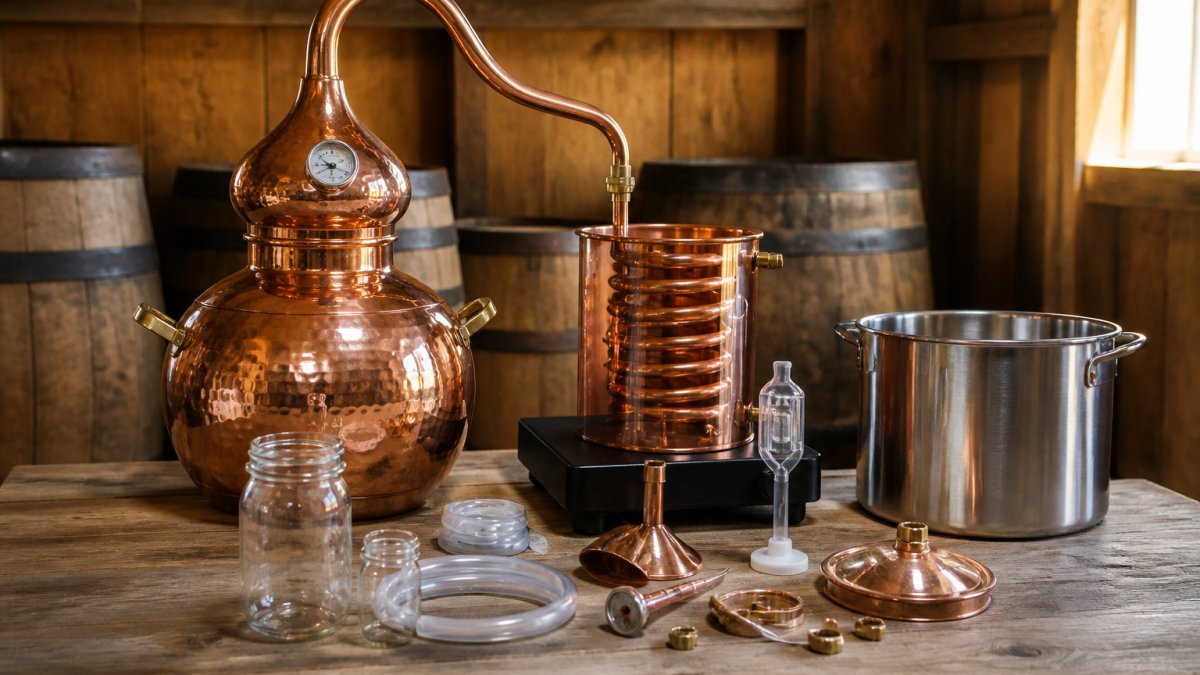
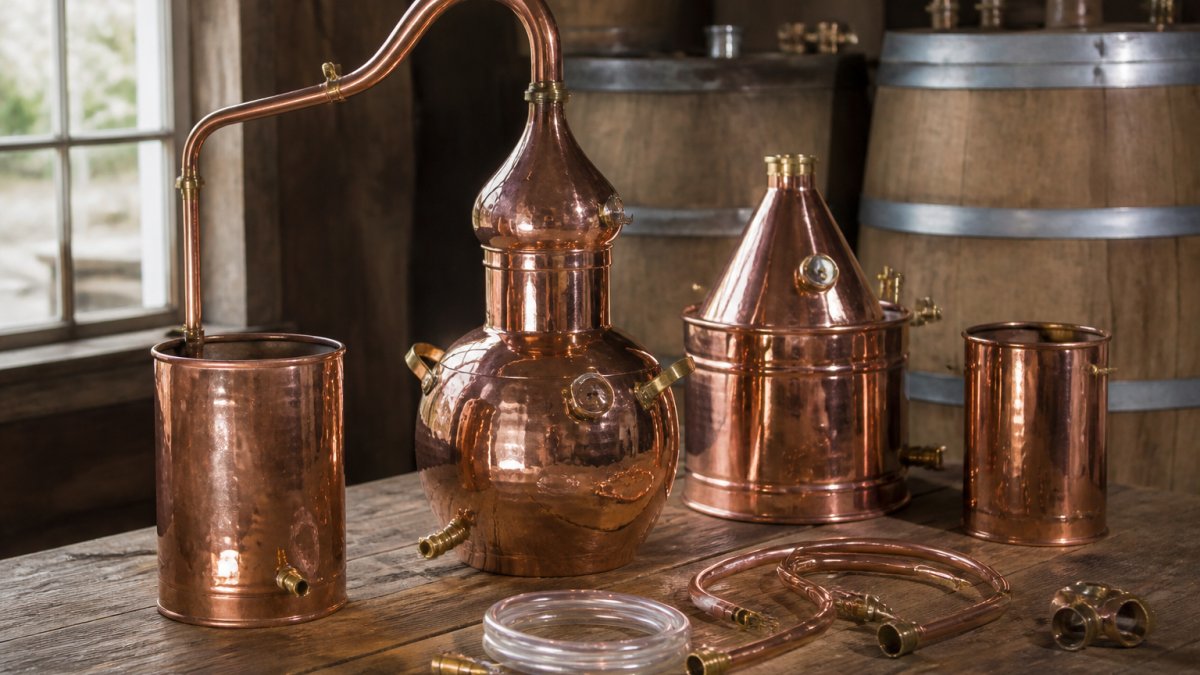
A row of polished copper distillation stills in varying sizes and designs arranged on a wooden workbench inside a home garage workshop, warm afternoon light reflecting off the metal surfaces
StillZ 10 Gallon: The Perfect Starter Still
The StillZ 10 Gallon unit is built with material integrity. Each still is 100% hand-made from machine-cut, 20 oz, 99.9% pure Paul Revere Copper, with every part rolled, hemmed, and beaded for structural strength. The 10-gallon capacity suits a weekend hobbyist running a meaningful batch without managing an industrial-scale operation.
The defining advantage is build verification. Every StillZ unit undergoes rigorous water and air pressure testing before shipping, eliminating the leak risks that plague cheaper assembled stills. The lead-free silver bearing solder is a non-negotiable safety feature, as standard soft solder can introduce toxic lead into your vapor path.
CopperHolic 5-Liter: Compact Essential Oil Extractor
American Copper Works: Patented Efficiency Design
VEVOR 5-Gallon: Budget-Friendly Starter Kit
Still Spirits Copper Turbo 500: Condenser Upgrade
StillZ 22 Gauge: High-Purity C110 Copper
Copper-Pro: Professional-Grade Home Unit
Pot Still vs Reflux Still for Beginners: Which to Choose?
The distinction between pot stills and reflux stills determines the character of your final spirit. A pot still produces a strong, flavorful spirit with more congeners and character, ideal for whiskey, rum, and brandy. A reflux still uses a packed column to purify the vapor multiple times, producing a higher-proof, cleaner neutral spirit suited for vodka and gin.
For beginners, the pot still is the more forgiving and educational choice. It teaches you to read the vapor temperature and make cuts based on smell and taste, the heart of craft distilling. Reflux stills automate much of this process, but they strip out the flavor compounds that make artisanal spirits distinctive.
How We Evaluated the Best Copper Stills
Our evaluation framework weights four factors: material purity, construction integrity, safety features, and practical usability. Material purity examines the copper grade and thickness, since thinner copper can develop hot spots and fail prematurely. Construction integrity covers the solder type, joint quality, and whether the unit is pressure tested for leaks.
Safety features are non-negotiable. Every still must use lead-free solder, and the vapor path must be free of any materials that could leach contaminants at temperature. Practical usability considers setup complexity, cleaning ease, and whether the unit works with standard heat sources like propane burners or electric hot plates. We prioritize units a home distiller can operate safely on a weekend, not just display on a shelf.
Safety Checklist for Home Distillation
Distillation involves boiling flammable liquids and managing pressurized vapor, so a disciplined safety routine is essential. Before every run, work through this checklist:
- Verify all connections are tight and leak-free, using a soapy water solution to check for bubbles at joints.
- Confirm adequate ventilation to prevent vapor accumulation, especially if using a propane burner indoors.
- Keep a fire extinguisher rated for flammable liquid fires within reach.
- Never seal the system completely; the still must have an open vent path to prevent pressure buildup.
- Discard the foreshots, the first liquid to come off the still, as they contain volatile compounds like methanol.
- Inspect the solder joints and copper surfaces for any signs of corrosion or pitting before each use.
The safety guidance from the American Distilling Institute emphasizes that proper ventilation and leak testing are the two most critical habits for home distillers. Ignoring either can turn a routine batch into a serious hazard.
Legal Requirements for Home Distillation
The legal landscape for home distillation is stricter than many hobbyists realize. Distilling spirits at home without a permit is illegal under federal law, regardless of whether the spirit is for personal consumption. The Alcohol and Tobacco Tax and Trade Bureau regulations require a federal permit for any distillation of alcohol, and operating without one carries significant penalties.
Some states allow distillation for non-alcohol purposes, such as essential oils or water, but the equipment must not be used to produce beverage alcohol. The distinction matters: owning a still is legal in many jurisdictions, but using it to distill spirits is not. Before purchasing, review your state's specific laws, as they vary considerably. Many hobbyists choose to focus on the legal aspects of brewing and fermentation, which are permitted for personal use, while leaving distillation to licensed craft distilleries.
How to Clean a Copper Still: Maintenance Guide
Cleaning a copper still is a straightforward process that protects both your equipment and your spirit quality. After each use, rinse the boiler and condenser with hot water to remove residual wash and oils. For a deeper clean, a solution of hot water and citric acid will remove the copper oxides that form during distillation, restoring the bright finish.
Do not use abrasive scouring pads or harsh chemical cleaners, as they can scratch the copper surface and leave residues that contaminate the next batch. A soft cloth and a paste of salt and vinegar works well for stubborn tarnish. After cleaning, rinse thoroughly and dry completely to prevent oxidation. The copper maintenance guidance from the Copper Development Association notes that proper care extends the lifespan of copper equipment significantly.
Which Copper Still Should You Buy?
The right choice depends entirely on your goals and your willingness to invest in quality. If you want a single still that will serve you for years, the StillZ 10 Gallon offers a strong combination of material purity, verified construction, and practical capacity. The 100% money-back or replacement guarantee makes it a low-risk purchase.
The common thread across all recommendations is this: verify the copper purity, confirm lead-free solder, and ensure the unit is pressure tested. Those three factors determine whether your still is a safe, reliable tool or a liability. Our team at Steven StillZ LLC builds every unit to those standards, and we stand behind them with a guarantee that makes your first batch risk-free.
Choosing the best copper still for home distillation is a decision about safety, craft, and longevity. The cheapest option will cost you more in frustration and potential health risks, while a properly built copper still becomes a lifelong tool. Steven StillZ LLC builds each still from 99.9% pure copper with lead-free solder, rigorously tests every unit for leaks, and backs the work with a 100% money-back guarantee. Order online 24/7 and start your distilling journey with equipment that will not let you down.
Frequently Asked Questions
What gauge copper is best for a still?
Look for 20 oz or 22 gauge copper, which is roughly 0.032 inches thick. This thickness provides good thermal conductivity for efficient heating while maintaining the structural rigidity needed to hold its shape and withstand repeated use. Thinner copper can dent easily and may create hot spots that scorch your wash. Thicker material, like the 20 oz copper used in premium stills, offers better durability and heat distribution, leading to a more consistent spirit run and a longer-lasting piece of equipment.
Is it legal to own a copper still for home distillation?
Owning a copper still is legal in most areas, but using it to distill spirits without a permit is not. Federal law requires a permit from the TTB for distilling alcohol, even for personal use. However, stills can be legally used for other purposes like distilling water or extracting essential oils. You must check your state and local regulations, as some areas have their own specific restrictions on still ownership and operation.
What is the difference between a pot still and a reflux still?
A pot still is the traditional design for making whiskey, rum, and brandy. It produces a spirit with more flavor and character from the wash. A reflux still uses a column packed with material to continually distill the vapor, resulting in a much higher-proof, cleaner spirit, similar to vodka or gin. For beginners interested in full-flavored spirits, a pot still is often simpler to operate and understand. If you plan to make neutral spirits, a reflux still is the better choice.
Why is 99.9% pure copper preferred for distillation equipment?
Pure copper reacts with sulfur compounds produced during fermentation, converting them into less volatile compounds. This removes unpleasant smells and off-flavors, resulting in a cleaner, better-tasting spirit. Copper also provides excellent thermal conductivity, ensuring even heating and better control over the distillation process. When selecting a still, ensure it is built with high-purity copper and 100% lead-free solder to avoid any risk of lead contamination in your final product.