 listicle
8 Best Professional Grade Distillation Equipment Picks
Last Updated: October 24, 2026
Quick Summary
The best professional grade distillation equipment is built with heavy-gauge copper, welded or silver-soldered joints, food-grade gaskets, and full pressure testing before shipment. Match the configuration to your spirit and size the boiler to your realistic weekly output, then confirm your utilities and installation budget can support it.
- Professional builds use 20oz Paul Revere copper joined with 100% lead-free silver bearing solder.
- Pot stills suit whiskey, rum, and brandy; column stills suit vodka and grain-neutral spirits.
- Size the boiler to target weekly output divided by realistic runs, then add 15-25% headroom.
- Steam is the most common heating choice once batch sizes pass roughly 200-300 gal.
- Ask suppliers for a written capacity statement at a stated proof and run time.
Table of Contents
- What Separates Professional-Grade Distillation Equipment From Hobby Kits
- Pot Still vs Column Still: Matching the Configuration to Your Spirit
- The Best Professional Copper Still Builds and What They Get Right
- Comparing Commercial Distilling Equipment by Capacity and Throughput
- How Distillation Equipment Manufacturers Differ on Custom Builds and Turnkey Systems
- Utilities, Installation, and Facility Readiness Before Your Still Arrives
- Ordering a Professional-Grade Still From Steven StillZ LLC
- Frequently Asked Questions
What Separates Professional-Grade Distillation Equipment From Hobby Kits
Professional-grade distillation equipment is built to hold up under repeated runs, higher heat, and real production volume, while hobby kits are built to hit a lower price. At Steven StillZ LLC, we build every still by hand from 20oz Paul Revere copper, so we know exactly where the two categories split. The gap shows up in three places: wall thickness, joint construction, and how the unit is tested before it ships.
Materials That Decide Performance: Copper, 304 Stainless Steel, and Food-Grade Components
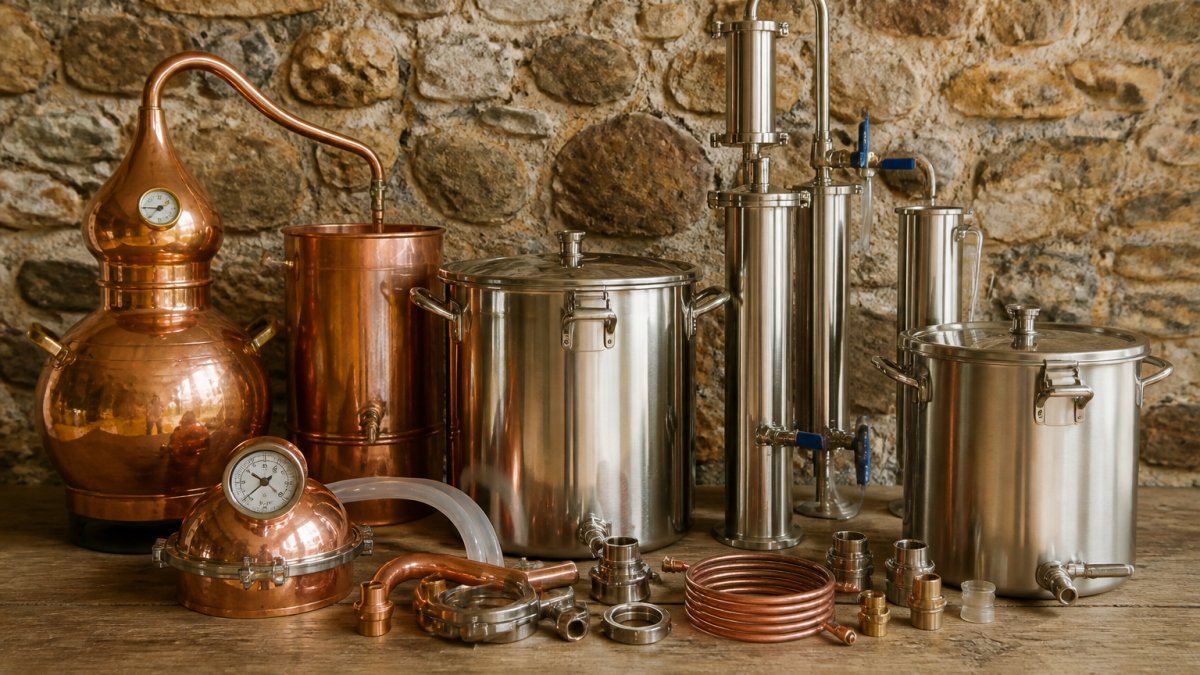
Copper conducts heat evenly and reacts with sulfur compounds during distillation, which is why traditional spirit production leans on it. Stainless steel resists corrosion and cleans easily, but it does not offer the same chemical interaction. Many commercial systems combine both: copper in the vapor path, 304 stainless steel in the boiler or column shell. For a deeper look at why copper quality changes results, read our breakdown of the benefits of heavy gauge copper in distillation equipment.
Welds, Gaskets, and Leak Testing: Where Cheap Builds Fail
Leaks are the most common failure point in low-cost stills. Thin seams, soft solder, and undersized gaskets all pass a quick inspection and then fail under heat and pressure. A professional build uses welded or silver-soldered joints, food-grade gaskets, and a full pressure test before delivery. If you want to check a still yourself, our step-by-step guide to testing a still for leaks walks through the process.
Pot Still vs Column Still: Matching the Configuration to Your Spirit
A pot still runs batch by batch and carries flavor compounds through, which suits whiskey, rum, and brandy. A column still separates more precisely and reaches higher proof in fewer passes, which suits vodka and grain-neutral spirits. A hybrid still combines a pot and a column so one unit can handle both styles. Choosing between a pot still and a column still comes down to what you plan to make most often, not which one sounds more advanced.
The Best Professional Copper Still Builds and What They Get Right
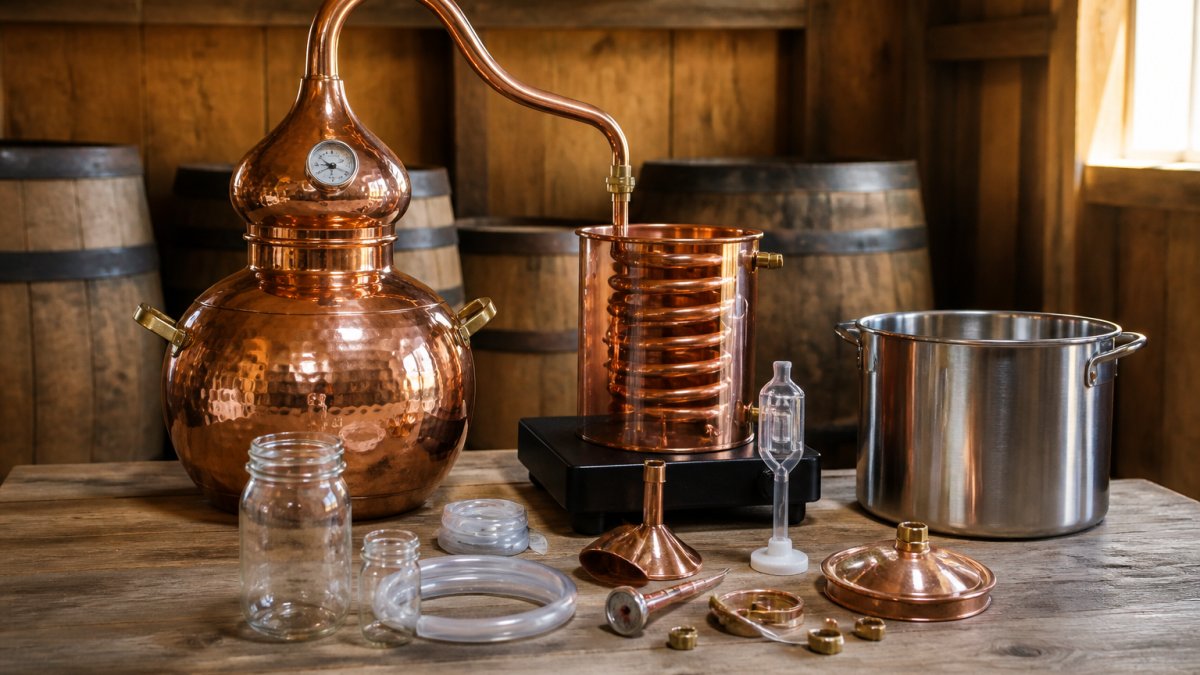
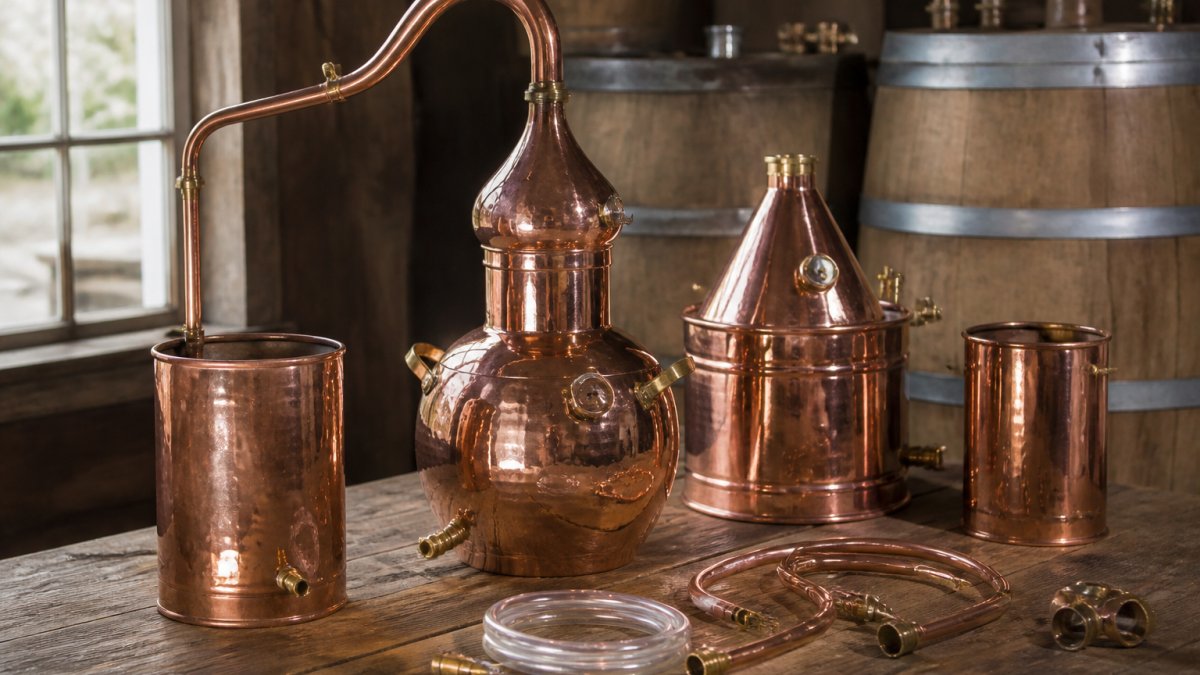
The strongest professional copper still builds share a handful of traits: heavy-gauge copper, hand-formed parts, lead-free solder, and pressure testing before shipment.
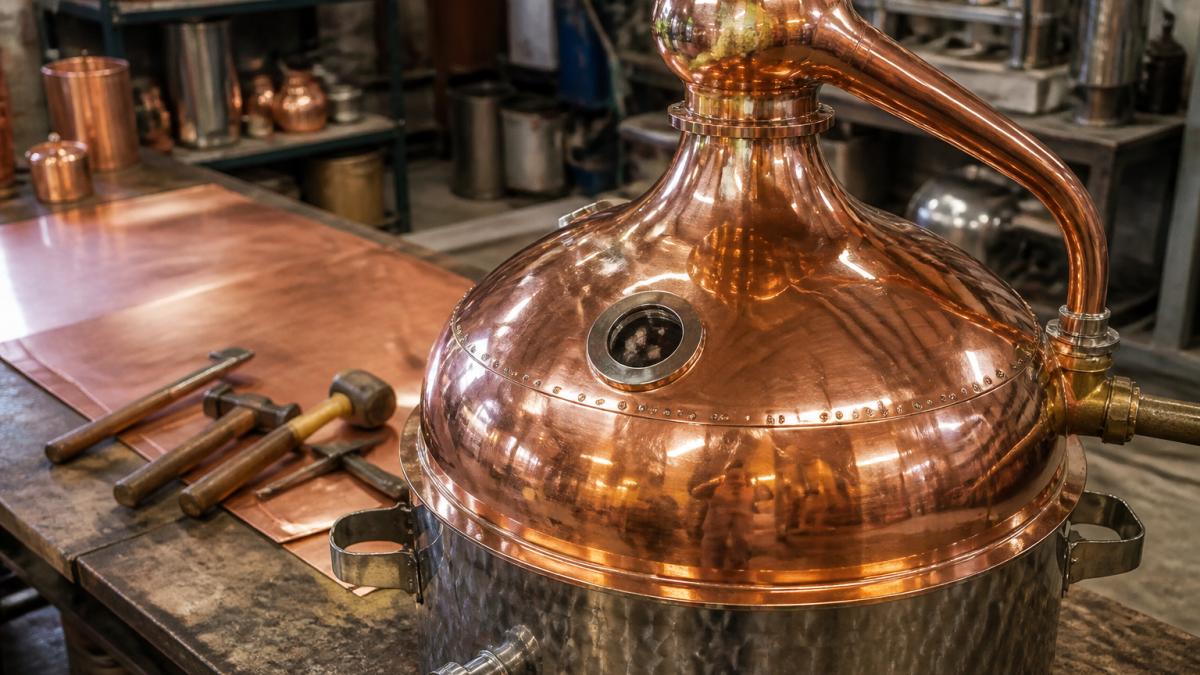
A common mistake is judging a still by its photos alone. Ask what gauge the copper is, what solder was used, and whether the unit was pressure tested. Those three answers tell you more than any product photo.
Comparing Commercial Distilling Equipment by Capacity and Throughput
Capacity and throughput decide whether a system fits your production goals, and they are the two numbers buyers most often get wrong. Batch size (the volume of wash in the boiler) sets how much you can run at once. Throughput (batch size times completed runs per week) sets your real weekly output.
A useful rule of thumb: size the boiler to your target weekly output divided by the number of runs you can realistically complete, then add 15-25% headroom for growth.
Batch Size, Throughput, and Heating Method by Scale
| Scale | Typical Boiler Capacity | Runs per Week (typical) | Heating Method | Footprint (approx.) | Best For | Key Consideration |
|---|---|---|---|---|---|---|
| Pilot / test system | 20-100 gal | 3-5 | Electric or direct fire | Small skid or bench | Recipe development, staff training, small releases | Fast turnaround; low volume; easy to relocate |
| Craft distillery | 100-500 gal | 4-8 | Steam (low-pressure) or direct fire | 200-600 sq ft still room | Limited-release spirits, tasting-room supply | Balance of speed and control; steam simplifies heat control |
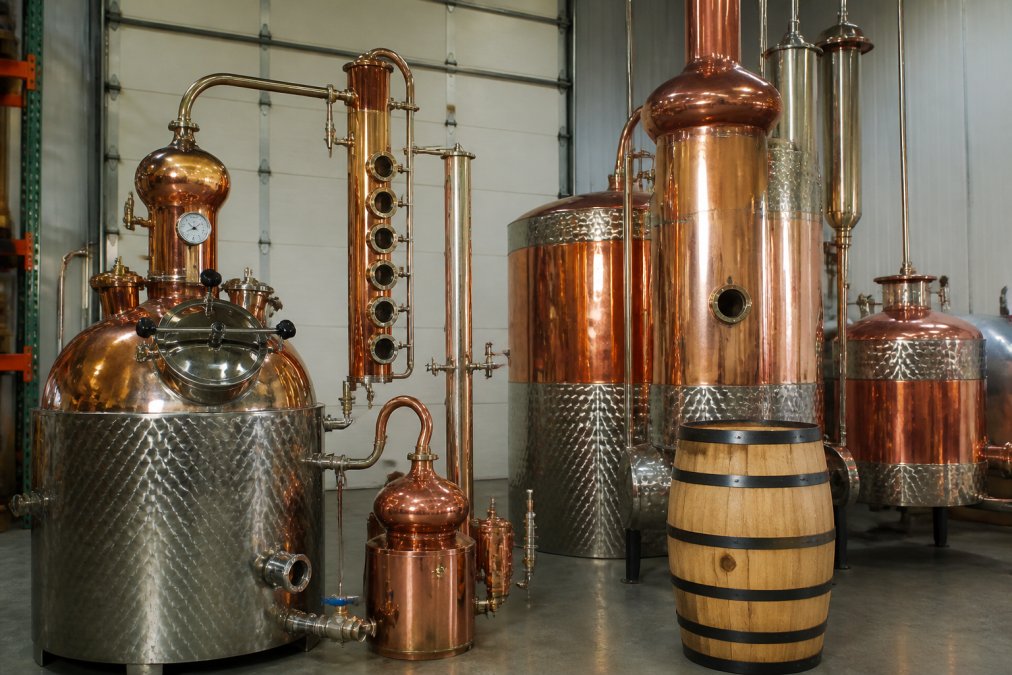
| Commercial-scale | 500-2,000+ gal | 6-12 (multi-shift) | Steam or thermal-fluid | 800-2,500+ sq ft | Steady production, wholesale accounts | Utilities, cooling load, and floor loading dominate cost |
Treat the ranges above as planning bands, not catalog specs, actual capacity depends on column diameter, condenser size, and the proof you run to. A pot still running a slow whiskey spirit will complete fewer runs per week than a column still of the same boiler size running neutral spirit.
Heating Method Trade-Offs That Affect Throughput
- Direct fire (propane or natural gas): Lowest upfront cost and fast heat-up, but harder to control precisely, requires ventilation and fire-code review, and can scorch wash if the boiler is not designed for it.
- Electric (immersion or jacket): Clean, easy to control, no combustion ventilation, but limited by available electrical service, a large electric boiler can require a dedicated 3-phase circuit.
- Steam (low-pressure): Best control and repeatability at craft and commercial scale, but adds a boiler, feedwater treatment, and pressure-vessel inspection requirements. Steam is the most common choice once batch sizes pass roughly 200-300 gal.
Total Cost of Ownership, Not Just Purchase Price
The purchase price of a still is only part of the investment. A realistic budget should account for:
- Equipment: The still itself, plus condensers, parrot, CIP fittings, and any automation package.
- Shipping and rigging: Crating, freight, and a forklift or crane to set the unit, oversized boilers often require rigging that costs more than the freight.
- Installation: Steam boiler, feedwater, electrical service, ventilation, and drainage work, typically quoted by a mechanical contractor.
A common pattern is that installation and utilities together can approach or exceed the still's purchase price at commercial scale, especially when a new steam boiler or electrical service is required. Get contractor quotes before you commit to a boiler size, not after.
Match the system to your realistic weekly output, then confirm the utilities and installation budget can support it. That two-step check prevents the most expensive mistake in distillery build-outs: buying a still the building cannot run.
How Distillation Equipment Manufacturers Differ on Custom Builds and Turnkey Systems
Distillation equipment manufacturers split into two camps: those who sell standard catalog units and those who fabricate to order. Custom-built equipment lets you specify boiler size, column height, condenser type, and heating method around your facility. A turnkey system bundles the still with supporting components so the setup arrives ready to install. You can start a custom order request to specify your build.
Utilities, Installation, and Facility Readiness Before Your Still Arrives
Facility readiness is the step buyers underestimate most, and it is where equipment selection intersects with building codes, fire safety, and permitting. The still you choose determines the utilities you must provide, and the building you have determines which stills you can actually run. Map the installation before you order, not after the crate shows up.
Utilities Checklist by System Type
| Utility | What to Confirm | Why It Matters |
|---|---|---|
| Electrical service | Available amperage, voltage, and phase; dedicated circuit for electric boilers and controls | Large electric boilers can require 3-phase service; undersized service forces a costly upgrade |
| Steam | Boiler capacity, feedwater supply, blowdown, and pressure-vessel inspection | Steam systems add a boiler, water treatment, and inspection requirements |
| Cooling water | Flow rate, temperature, and whether a chiller or cooling tower is needed | Condenser performance sets distillation speed; insufficient cooling caps throughput |
| Ventilation | Makeup air and exhaust for combustion gases and ethanol vapor | Fire codes and indoor air quality govern how stills can be installed indoors |
| Drainage | Floor drains, trench drains, and washdown capacity | Spills and washout are routine; poor drainage creates slip and corrosion problems |
| Floor loading | Point loads from boiler, column, and full wash charge | A full commercial boiler can exceed the load rating of a standard slab |
| Water supply | Potable water for wash and cleaning, plus hot water | Cleaning and sanitation depend on adequate supply |
Regulatory, Safety, and Permitting Considerations
Equipment selection is not just an engineering decision, it is a regulatory one. Before a still is installed, confirm:
- Alcohol-production licensing. Distilling spirits requires a federal permit and a bonded premises; the still must be located within the approved bonded area, and the equipment must be described in the application. State and local licenses layer on top.
- Fire codes. Stills, especially direct-fire and gas-fired units, are governed by fire codes that address separation distances, ventilation, and ignition sources. Local fire officials typically review the installation before operation.
- Pressure-vessel requirements. Steam boilers and any jacketed or pressure-rated vessels may fall under pressure-vessel codes and require inspection and certification. Confirm with your local authority having jurisdiction (AHJ) before purchase.
Commissioning: What Happens After the Crate Arrives
Commissioning is the bridge between delivery and production. A typical sequence:
- Rigging and placement. Set the unit on its pad or stand, confirm clearances, and check floor loading.
- Utility connections. Connect electrical, steam, water, and drainage per the supplier's drawings.
- Leak and pressure test. Water-test and air-pressure-test the system before any wash goes in.
- First run and calibration. Run a water or sacrificial charge to verify heat-up, reflux, and condenser performance, and to calibrate thermometers and any automation.
- Operator training. Walk staff through startup, shutdown, cleaning, and emergency procedures.
- Documentation. Record as-built utility connections, settings, and maintenance schedules for inspections and future service.
A still that arrives without a commissioning plan often sits idle for weeks while contractors catch up. Build the utility and permitting timeline into the purchase schedule, and confirm with the supplier what commissioning support they provide, drawings, remote guidance, or on-site startup, before you sign.
Ordering a Professional-Grade Still From Steven StillZ LLC
Ordering starts with a clear picture of your production goals. From there, you choose the configuration, copper thickness, and components that fit your setup. Every Steven StillZ LLC still is hand-made from 99.9% pure copper, assembled with lead-free silver bearing solder, and pressure tested before it ships, backed by our 100% money-back or replacement guarantee. You can shop StillZ to browse current builds, or contact us with your specifications and we will walk you through the options.
Frequently Asked Questions
What should you look for in professional-grade distillation equipment?
Start with material thickness and purity: 20oz copper and lead-free silver bearing solder are the baseline for a professional copper still. Check that every unit is water and air pressure tested for leaks, that seams are rolled, hemmed, and beaded rather than spot-welded, and that gaskets are food-grade. Then confirm capacity and throughput match your batch size, and that the manufacturer stocks replacement parts. Ask for the pressure test record and the solder specification in writing before you order.
What is the difference between a pot still and a column still?
A pot still distills in batches and produces a heavier, more flavorful spirit, which suits whiskey, rum, and brandy. A column still runs continuously through stacked plates and produces a lighter, higher-proof spirit, which suits vodka and grain-neutral spirits. Hybrid stills combine a pot body with a column section so one unit covers both profiles. Your choice of pot still vs column still should follow the spirits you plan to sell, not the other way around.
How do you choose the right still capacity for a craft distillery?
Work backward from your target weekly output and your fermenter size. A still should run one full fermenter charge per batch, so undersized equipment forces double runs and wastes labor. Account for heat-up and cool-down time in your throughput math, since a larger still with slow heating can be slower than a smaller one with good temperature control. Leave headroom for growth, but avoid buying capacity you cannot keep fed with wash.
Is professional-grade distillation equipment worth it for a serious hobbyist?
It comes down to how often you run and how much you value repeatability. A hand-made copper still with pressure-tested seams and lead-free solder gives you consistent temperature behavior, no metallic off-flavors from poor materials, and a unit that holds up to repeated heating cycles. Hobbyists running every weekend usually notice the difference in batch consistency first. If you distill a few times a year, a smaller professional copper still still makes more sense than replacing a failing budget unit twice.
Does a professional still work with different heat sources?
Most professional copper stills are built to accept propane burners, electric elements, or steam jackets, but the connection type and base design determine which. Confirm the heating method before ordering so the manufacturer can build the right base, fitting, or jacket. If you already own a propane burner, tell the builder the burner diameter and output so the still sits correctly and heats evenly. Ask about temperature control options at the same time, since retrofitting controls later costs more.
The difference between a still that lasts and one that leaks is decided long before the first run. If you are ready to move up to professional-grade equipment built to hold its shape and its seal, Steven StillZ LLC builds each unit by hand, pressure tests it, and stands behind it with a full money-back or replacement guarantee. Get started with Steven StillZ LLC and equip your distillery with copper that performs.