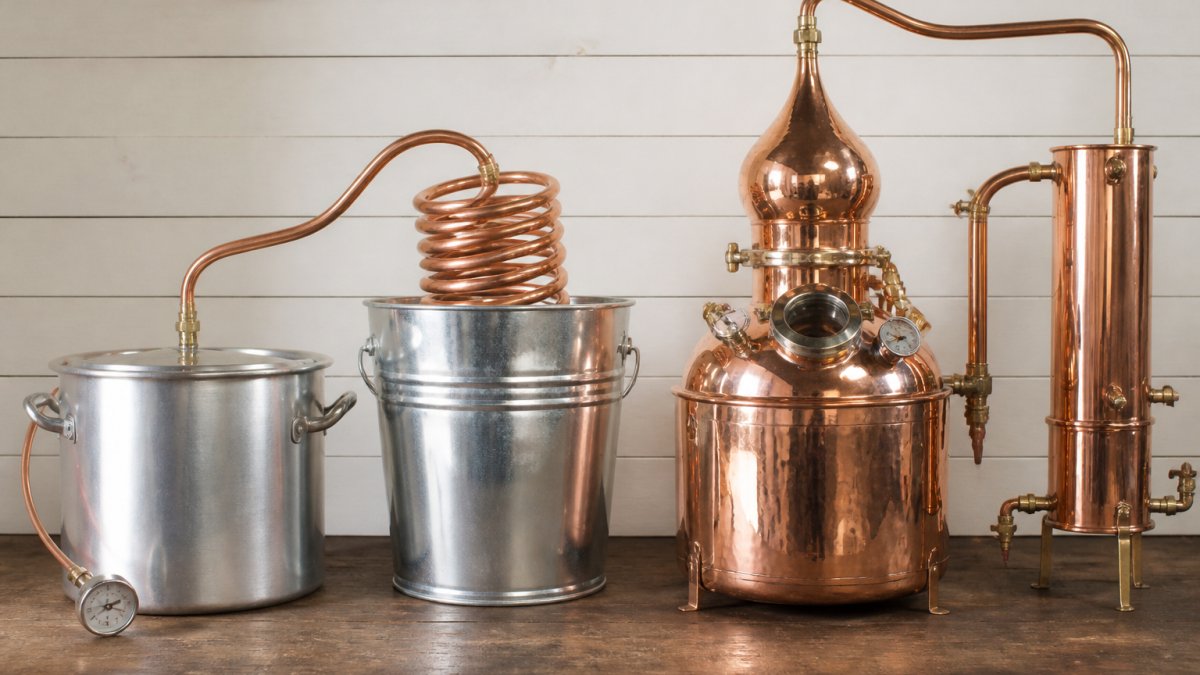
 comparison
Premium Distillation Gear 2026: Honest Reviews
Table of Contents
- What Premium Distillation Gear Should Deliver in 2026
- Home Distillation Equipment Comparison: What We Tested and How
- The Best Copper Still for Home Use: Our Top Pick
- Still Capacity Comparison: 12L, 20L, and 30L Explained
- Copper Still Buying Guide: Price, Value, and Long-Term Ownership
- Legality, Safety, and the Alcohol vs. Water Distillation Distinction
- Verdict: Who Should Buy Premium Distillation Gear in 2026
- Frequently Asked Questions
Last Updated: October 18, 2026
What Premium Distillation Gear Should Deliver in 2026
Premium distillation gear is equipment built to hold its shape, seal, and material purity through repeated runs, not just to survive a first batch. At Steven StillZ LLC, we build every still from 20-ounce, machine-cut Paul Revere copper with lead-free silver bearing solder, then pressure test each unit before it ships. That standard matters because the gap between budget and premium equipment shows up in three places: seam construction, solder composition, and whether the maker actually verifies leaks before delivery. The 2026 market makes big claims about all three. Fewer makers document them.
Home Distillation Equipment Comparison: What We Tested and How
Our home distillation equipment comparison starts with a simple rule: verify materials before you trust performance claims. We examine copper thickness and grade, check solder composition against lead-free standards, and confirm that rolled, hemmed, and beaded seams hold under pressure. The U.S. Consumer Product Safety Commission maintains guidance on lead exposure in consumer products, which is why solder composition deserves scrutiny rather than a glance at a spec sheet.
Verifying Copper Purity and Solder Composition
Ask for the copper grade in writing. A serious maker will tell you the ounce weight and confirm lead-free solder without hesitation. If the answer is vague, treat the claim as unverified.
Pressure Testing and Leak Checks
A still that leaks vapor wastes product and creates a fire risk. We water test and air pressure test every unit before it leaves the shop. Ask any supplier whether they test each piece or just a sample from the batch.
The Best Copper Still for Home Use: Our Top Pick
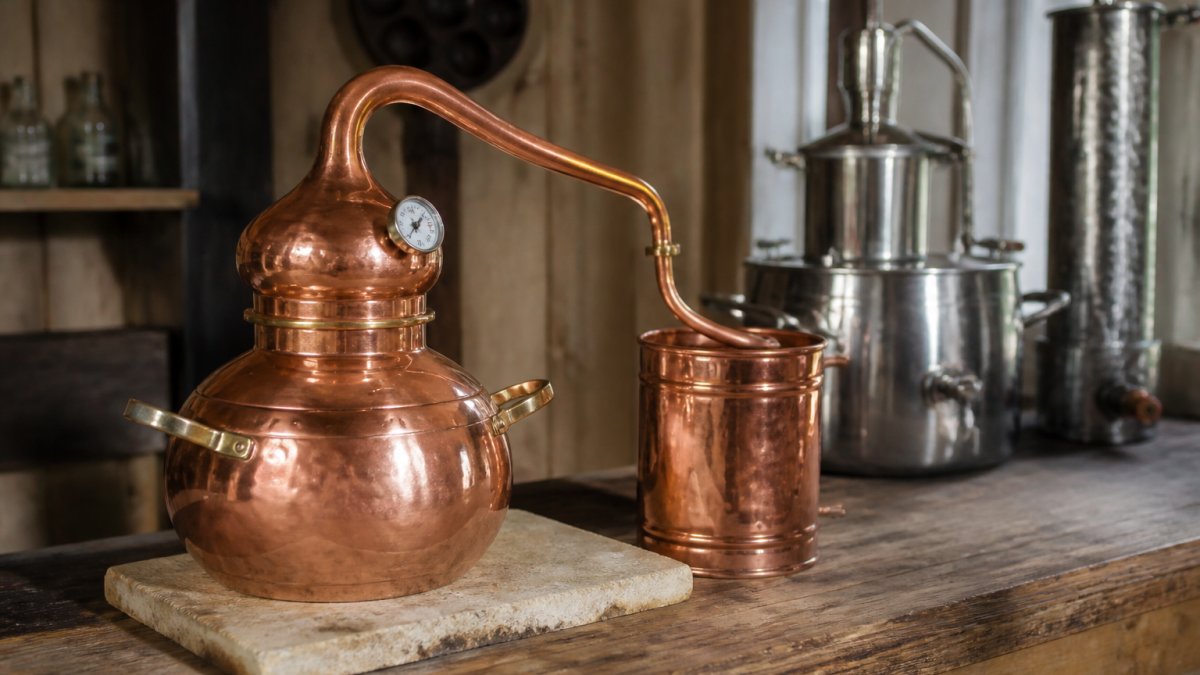
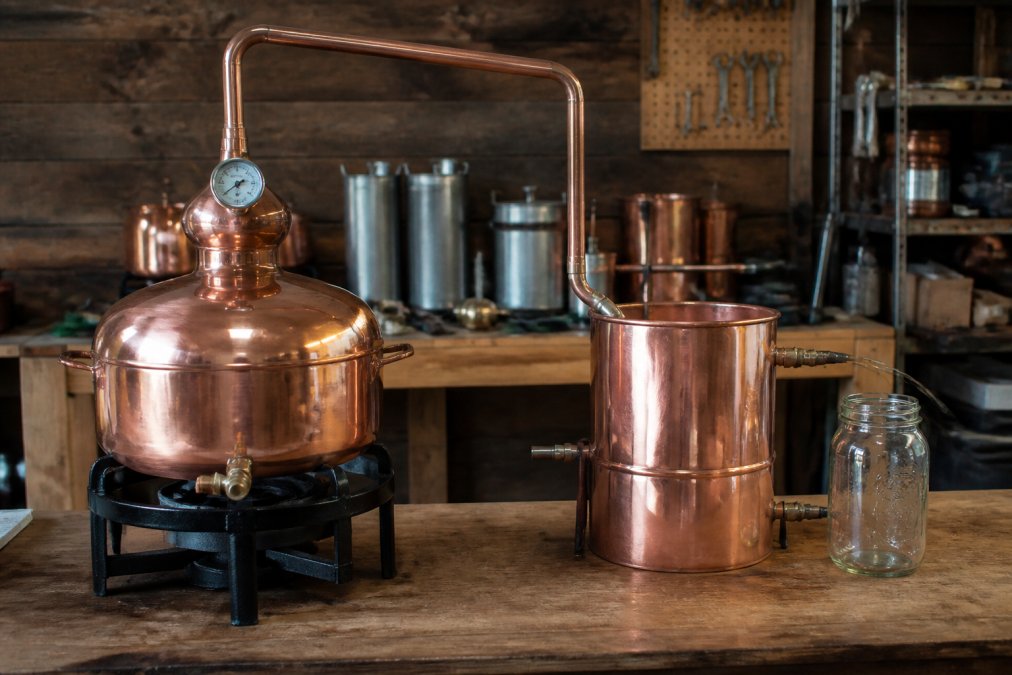
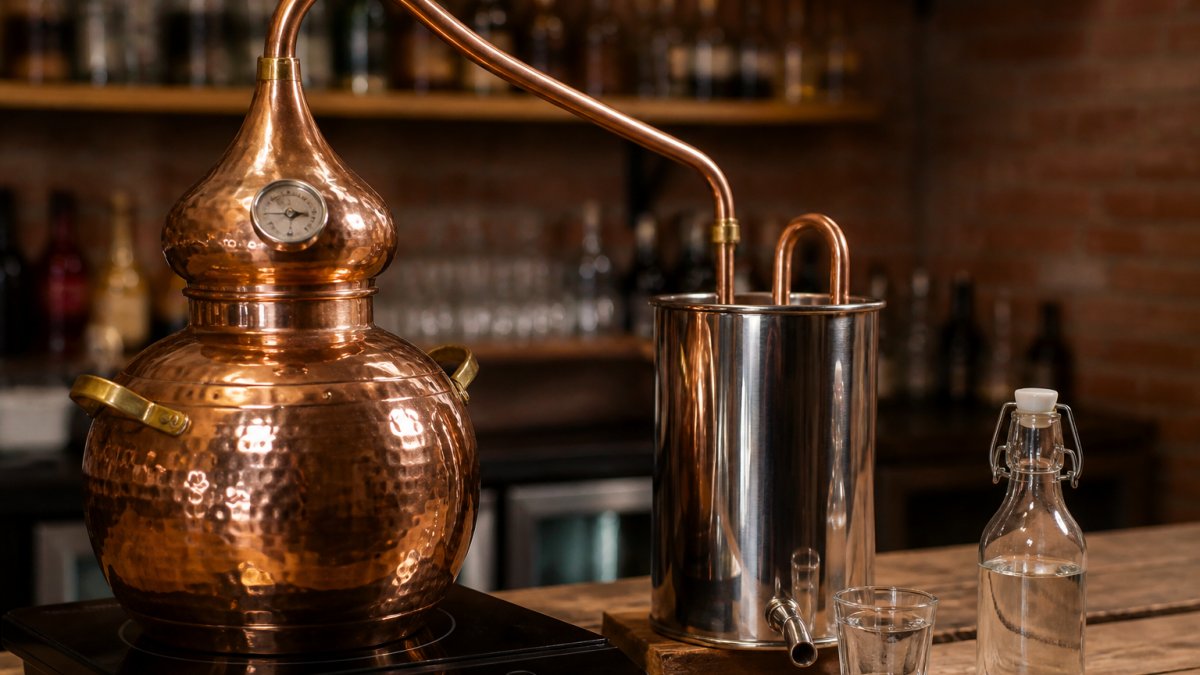
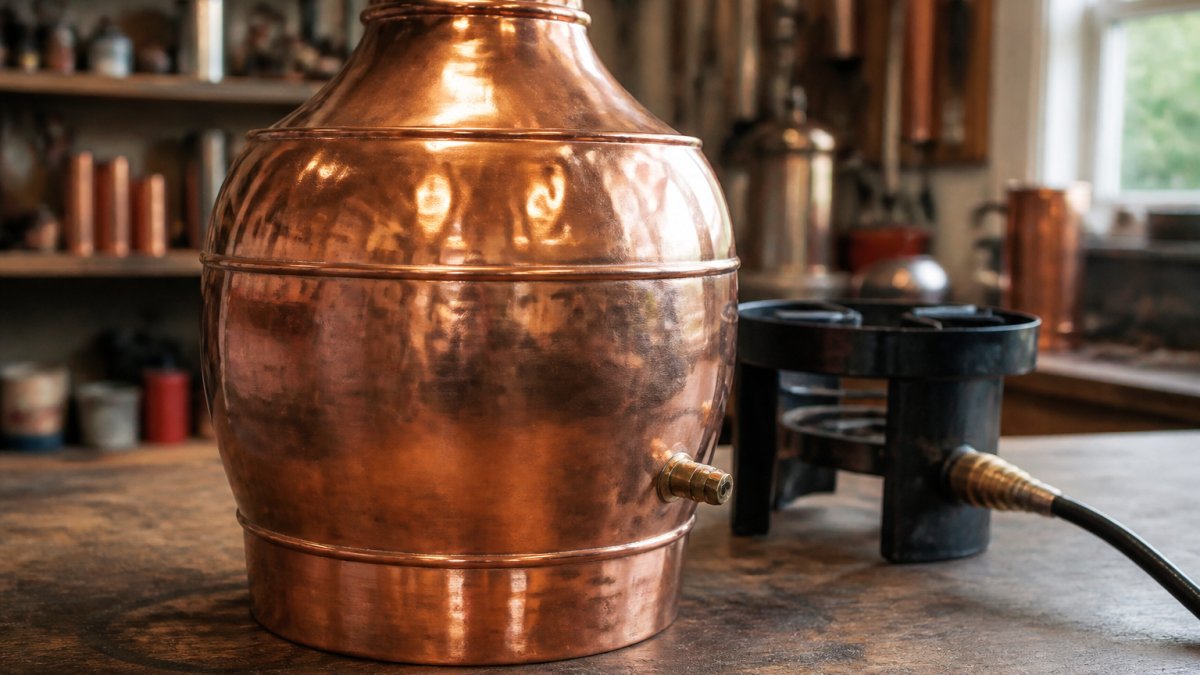
The best copper still for home use is one you can inspect, verify, and trust run after run. Our pick is the Steven StillZ hand-built copper still, made from 99.9% pure Paul Revere copper with 100% lead-free silver bearing solder and backed by a 100% money-back or replacement guarantee.
Construction Details That Matter
Every part is rolled, hemmed, and beaded for structural integrity. Machine-cut 20-ounce copper holds its form better than thinner sheet, and the silver bearing solder resists the cracking that cheaper joints develop over time. Every unit gets a water and air pressure test before shipping.
Where It Falls Short
Hand-built copper costs more than stamped imports, and the finish shows hammer marks and hand-worked character rather than factory uniformity. If you want a mass-produced look, this is not that product.
Still Capacity Comparison: 12L, 20L, and 30L Explained
Capacity decides how much wash you can run per session, how much headspace you leave for foam, and whether your heat source can bring the pot to temperature in a reasonable time. Most 2026 roundups list the three common sizes and stop there. The numbers below are the ones that actually change a buying decision.
A useful rule of thumb: fill the pot to no more than about 75% of its rated capacity. The remaining quarter is foam headroom. A 12L still therefore runs roughly 9L of wash per session; a 20L runs about 15L; a 30L runs about 22.5L. That headroom is not optional, wash that foams into the column contaminates the run and, on a pot still, can carry wash solids into your condenser.
| Capacity | Practical wash per run (75% fill) | Typical heat source | Approximate time to reach temperature | Best For | Space Needs |
|---|---|---|---|---|---|
| 12L | ~9L | 1,000-1,500W electric hot plate or small propane burner | 25-40 minutes | Beginners, test recipes, small experimental batches | Countertop friendly; needs 12-18 in. clearance above the column |
| 20L | ~15L | 1,500-2,000W electric element or medium propane burner | 35-55 minutes | Most home distillers running standard washes | Dedicated work area with ventilation |
| 30L | ~22.5L | 2,000W+ element or high-output propane burner | 50-75 minutes | Larger washes, small commercial or educational use | Strong heat, active ventilation, floor space for the pot and burner |
Those time ranges assume a wash at room temperature and a covered, insulated pot. A cold garage in January adds 15-20 minutes to any of them. A 30L pot on a 1,000W hot plate is a mismatch, the element cannot keep up, and the run stalls before it reaches temperature.
Match capacity to your heat source before you match it to your batch ambitions. Electric elements are easier to control and safer indoors; propane heats faster but requires ventilation and a CO alarm. If you are renting or working in a shared space, the 12L or 20L on electric is the lower-friction choice. If you are running back-to-back washes for a craft or educational program, the 30L amortizes heat-up time across more product per session.
One more 2026-specific check: confirm the rated capacity is the pot volume, not the total system volume including the column and condenser. Some listings quote a combined number that overstates usable batch size by 20-30%. Ask the maker for the pot volume in writing.
Copper Still Buying Guide: Price, Value, and Long-Term Ownership
A copper still buying guide should talk about total ownership, not sticker price. Most 2026 roundups stop at the purchase price and a star rating. That is the wrong number. The right number is purchase price plus energy per run plus replacement parts plus the cost of a failed batch, and that number is what separates a still that pays for itself from one that quietly drains money.
Purchase price. Pricing depends on capacity, copper weight, and finish, so we quote each build individually rather than publishing a flat number. As a general pattern, hand-built copper costs more up front than stamped imports of the same rated capacity. The gap is in seam construction, solder composition, and per-unit pressure testing, the three things a spec sheet rarely documents.
Energy per run. A 1,500W electric element running a 4-hour session uses about 6 kWh. At a typical residential rate, that is a few dollars per run, small on its own, but it compounds across a season of back-to-back washes. Propane is harder to meter but usually costs more per run than electric for the same heat input. If you run weekly, electric wins on operating cost; if you run occasionally and need fast heat-up, propane is the practical choice.
Replacement parts and maintenance. The parts that wear are the seals, gaskets, and any flexible tubing. Ask the maker whether replacement seals are stocked and what they cost. A still with proprietary seals that are out of stock in 2027 is a still you cannot run. Cleaning supplies are minor, a soft brush, a food-safe cleaner, and time, but a still with inaccessible joints takes longer to clean and gets cleaned less often.
The cost of a failed batch. A leaking seam or a cracked solder joint does not just waste the wash; it wastes the heat, the time, and the ingredients. For a 20L wash, that is a full session gone. Two failed batches usually erase the savings from buying the cheaper unit.
2026 verification checklist. Before you buy, confirm in writing:
- Copper grade and ounce weight (not just "copper")
- Solder composition, lead-free, and specifically what alloy
- Per-unit pressure testing, not batch sampling
- Warranty terms and whether replacement is money-back or credit-only
- Current availability and whether the listed specifications match the shipped unit
- Spare-parts availability for seals and gaskets
That last point matters more in 2026 than it did a few years ago. Several listings still carry older year references and near-identical product claims across different sellers, which suggests the specs have not been re-verified. Treat a spec sheet as a claim until the maker confirms it in writing.
Value, in one line. Premium gear front-loads the cost and reduces the repair cycle. Cheap gear spreads the cost across failed seams, re-soldering, and lost batches. The break-even point is usually the second or third season, which is exactly the horizon most 2026 roundups ignore.
Legality, Safety, and the Alcohol vs. Water Distillation Distinction
Home distillation of alcohol is regulated at the federal level, and operating a still for spirits without the required authorization is illegal. The Alcohol and Tobacco Tax and Trade Bureau oversees distilled spirits permits and rules. Water distillers and essential-oil stills are a different category entirely, and many 2026 roundups blur that line. Before you buy, confirm what the equipment is intended for and what permits your situation requires.
Verdict: Who Should Buy Premium Distillation Gear in 2026
Premium distillation gear 2026 buyers should expect verified materials, documented testing, and a real guarantee. If you are a serious hobbyist upgrading from a thin import, a craft producer, or an educator who needs reliable training equipment, hand-built copper earns its cost. If you want a cheap appliance for occasional water distillation, a countertop unit fits better.
Frequently Asked Questions
Is home distilling legal in the United States?
Federal law requires a permit from the Alcohol and Tobacco Tax and Trade Bureau (TTB) to distill spirits, and distilling alcohol at home without one is illegal. Water distillation and essential-oil distillation fall under different rules and are generally legal. State and local laws add their own requirements, so check with your state alcohol control board before buying any distillation gear. Owning a still is not the same as operating it legally for spirits.
What should I look for when buying a copper still?
Check the copper thickness and purity first: 20oz, 99.9% pure copper resists corrosion and conducts heat evenly. Confirm the solder is lead-free silver bearing, since lead contamination is a real risk in cheap builds. Ask whether every unit is water and pressure tested before shipping. Look at how seams are joined, whether parts are rolled and hemmed, and what the return policy covers. A leak-free guarantee matters more than a long feature list.
How do I compare still capacity and construction quality?
Match capacity to your batch size: 12L suits small experimental runs, 20L fits most serious hobbyists, and 30L works for larger or small commercial batches. For construction, compare copper gauge, solder composition, seam construction, and whether the maker pressure tests each unit. Ask for the actual copper source and thickness rather than a general claim. A heavier, hand-built still usually costs more but lasts longer and holds temperature more predictably.
What materials are used in premium distillation equipment?
Premium stills use high-purity copper, often Paul Revere Copper, at around 20oz thickness, joined with lead-free silver bearing solder. Cheaper units may use thin copper-plated steel, leaded solder, or unidentified alloys. Copper is preferred because it reacts with sulfur compounds during distillation and improves spirit quality. Ask the maker to specify copper purity, solder composition, and testing procedures in writing before you buy.
How much does distillation cost over time?
Operating costs depend on your heat source, batch size, and how often you run the still. Propane and electric elements both work with most copper stills, so you are not locked into one setup. Long-term ownership costs include replacement gaskets, cleaning supplies, and energy. A well-built still with thick copper and lead-free solder usually needs fewer repairs, which offsets a higher purchase price over several years of regular use.
The challenge with premium distillation gear is separating verified claims from marketing noise. Steven StillZ LLC builds each still by hand from Paul Revere copper with lead-free solder, pressure tests every unit, and backs it with a 100% money-back or replacement guarantee. Order online 24/7 and get equipment built to hold up run after run.