 how-to
Does Copper Quality Affect Taste? What You Need to Know
Table of Contents
- How Copper Quality Affects Taste
- Purity, Alloys, and What They Change
- Metallic and Bitter Taste Thresholds
- Why Does Copper Water Taste Bitter?
- Copper Leaching Into Water: What Drives It
- Copper and Acidic Drinks: What Reacts and Why
- How to Find the Source of a Copper Taste
- How to Test Copper Levels and Read the Results
- Safe Use and Care of Copper Bottles and Cookware
- Frequently Asked Questions
Last Updated: October 20, 2026
How Copper Quality Affects Taste
Copper quality affects taste because the purity of the metal and the alloys mixed into it decide how much copper can dissolve into your water or spirit. Pure copper releases ions slowly and predictably.
The short answer: yes, copper quality affects taste, but the metal is only half the story. Water chemistry, contact time, and temperature do the rest.
Here is what most guides get wrong. They blame "copper" as a single thing. Copper is not one material. A cheap decorative bottle and a hand-built still can share the same label and behave nothing alike.
Purity, Alloys, and What They Change
Purity is the first variable. Copper quality refers to how pure the metal is and what else is blended into it. Higher purity means fewer trace metals that can react with your drink.
- Pure copper (near 99.9%) reacts in a predictable, slow way
- Copper alloys like brass or bronze mix in zinc or tin, and those metals have their own taste signatures
- Recycled or low-grade copper can carry residual impurities from whatever it touched before
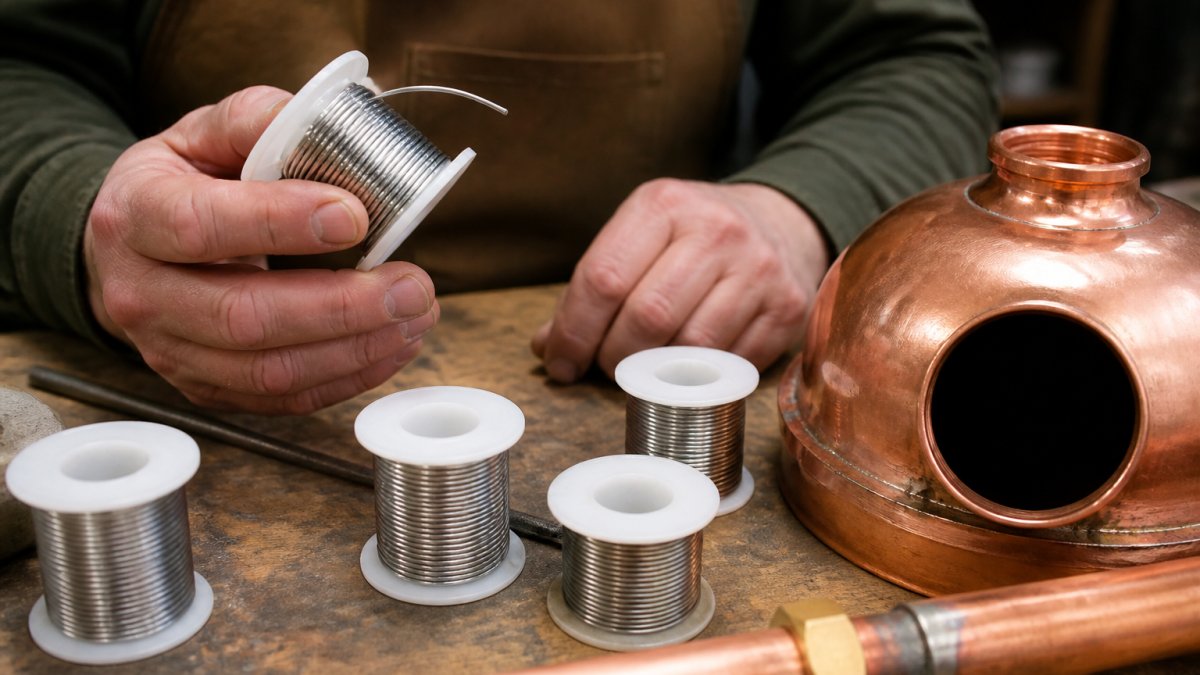
What most guides miss is the solder and the lining. A pure copper vessel joined with lead solder is not a pure copper vessel anymore. That is why we use 100% lead-free silver bearing solder on every still we build, and why every unit gets water and air pressure testing before it ships.
Metallic and Bitter Taste Thresholds
Most people can detect copper in water at low concentrations, well before the level becomes a health concern. The exact threshold varies by person, but the pattern is consistent: metallic taste shows up first, bitterness follows as concentration climbs.
A useful way to think about it is in bands rather than a single cutoff.
- Slight metallic note (roughly the low end of the range): often described as "flat" or "coin-like"
- Clear metallic taste (middle of the range): unmistakable, usually paired with a faint aftertaste
- Bitter edge (upper end and beyond): appears as concentration rises, and lingers longer
Taste perception is not linear. Doubling the copper does not double the taste. It can push a drink from "slightly off" straight to "undrinkable" because bitterness compounds the metallic note. Two mechanisms explain most of the person-to-person variation.
The EPA's drinking water regulations on copper set a treatment threshold for public systems, but taste complaints often arrive long before any regulatory limit is reached.
Why Does Copper Water Taste Bitter?
Copper water tastes bitter because dissolved copper ions interact with your taste receptors, and bitterness is the sensation that lingers longest. The metallic note fades. The bitter note stays.
Three things drive it:
- Dissolved copper concentration. More copper in the water means more bitterness.
- Contact time. Water sitting in a copper vessel overnight picks up more than water poured and drunk right away.
- Water chemistry. Soft, acidic water pulls copper out of the metal faster than hard, alkaline water does.
A common mistake is assuming the bottle is defective. Usually it is not. The water sat too long, or the water itself is aggressive toward metal.
Copper Leaching Into Water: What Drives It
Copper leaching into water is the movement of copper ions from the metal surface into the liquid touching it. It happens constantly at some rate. The question is how fast.
Four factors control the rate:
- Acidity (pH): lower pH means faster leaching
- Temperature: warm water leaches faster than cold
- Stagnation time: still water in contact with metal picks up more
- Water quality: mineral content and dissolved solids change how aggressive the water is
Stagnation Time, Temperature, and Water Quality
Stagnation is the factor people underestimate. Water that sits in a copper vessel for eight hours will taste noticeably different from water that sits for twenty minutes. Temperature compounds it. A bottle left in a warm car leaches faster than one in a fridge.
Water source matters just as much. Well water with low mineral content and a low pH is far more aggressive toward copper than municipal water with higher hardness. If your tap water already tastes fine but your copper bottle does not, the water chemistry is likely the culprit, not the bottle.
Copper and Acidic Drinks: What Reacts and Why
Copper and acidic drinks react because acid strips the protective oxide layer on the copper surface.
The oxide layer is copper's natural shield. It forms on its own when clean copper meets air. Acid removes it.
- Citrus juices and lemon water: high acid, fast reaction
- Tomato-based drinks: acidic and salty, a double hit
- Vinegar drinks and shrubs: aggressive toward bare copper
- Coffee: mildly acidic, and hot, so it leaches faster than cold water
The practical rule: drink water from copper. Serve acidic drinks from glass, ceramic, or a lined vessel. This is not a knock on copper. It is how the metal works.
For distillers, this matters at the condenser. Vapors are hot and can carry acidity. Quality copper handles that contact well because it is thick, pure, and built for the job.
How to Find the Source of a Copper Taste
Finding the source of a copper taste takes one afternoon and a few clean glasses. The goal is to isolate the variable: is it the water, the plumbing, or the vessel?
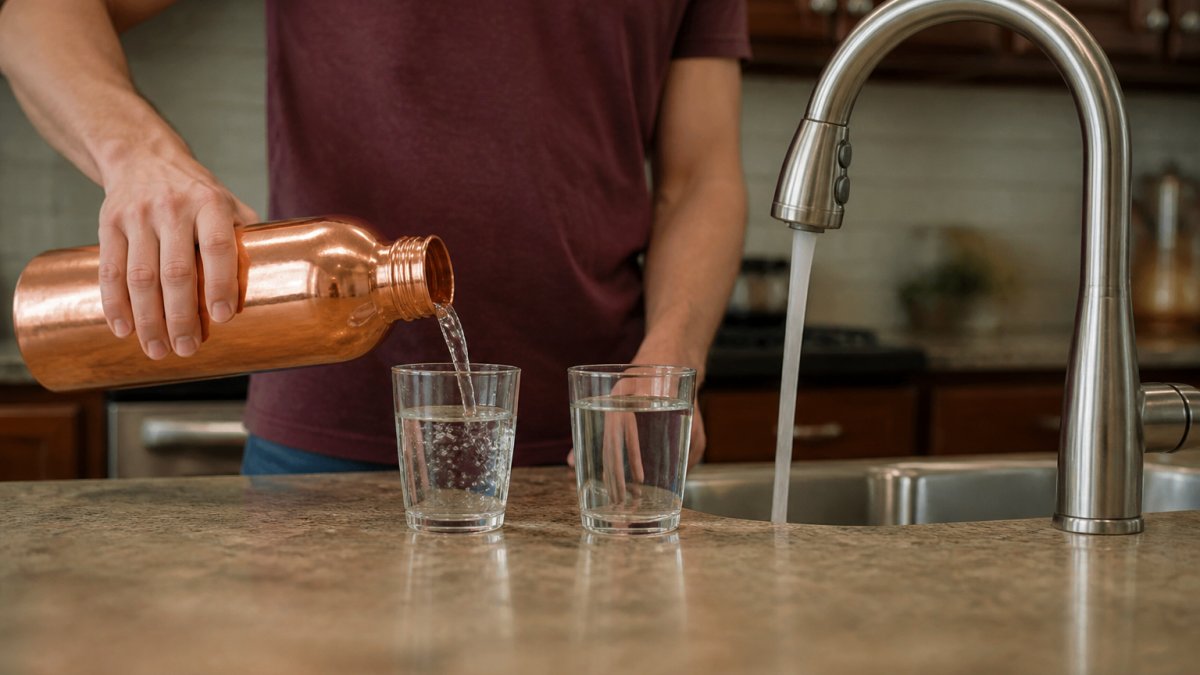
Work through this in order:
- Fill one glass straight from the tap. Taste it. Metallic? The problem is upstream.
- Fill a second glass from a filtered source. Taste both side by side.
- Run the tap for two minutes, then fill a third glass. If the taste fades, stagnation in your pipes is the cause.
- Fill a glass from your copper vessel after 20 minutes. Then another after 8 hours. Compare.
- Repeat with cold water only. Warm water leaches faster, so cold isolates the metal variable.
If the tap water is clean and only the vessel water tastes off, the vessel or your storage habits are the source. If tap water tastes off from every faucet, call your water utility.
How to Test Copper Levels and Read the Results
A home copper test kit gives you a number, and the number tells you whether to worry, but only if you sample correctly. Kits are inexpensive and widely available at hardware stores and online.
The sampling method matters more than the brand of kit. A single sample poured at random tells you almost nothing, because copper levels swing with stagnation, temperature, and time of day. Use a two-sample approach instead:
- First-draw sample. Fill a clean container from a faucet that has not run for at least six hours, ideally first thing in the morning. This captures what sat in your pipes overnight and is the sample most likely to show elevated copper.
- Flushed sample. Run the cold tap for two to three minutes, then fill a second container. This shows what the supply delivers after the stagnant water clears.
Compare the two. If the first-draw sample is elevated and the flushed sample is low, the copper is coming from your own plumbing, not the utility.
A few handling rules keep the reading honest. Use the cold tap only, since hot water dissolves more metal and will inflate the result. Do not aerate or shake the sample.
What the results generally mean:
- Very low reading: consistent with normal background copper, no action needed
- Elevated reading after stagnation, low after flushing: flush your pipes before drinking and retest
- Elevated reading from a vessel: stop storing drinks in it and clean or retire it
- Elevated reading from every tap: contact your water utility and retest after flushing
For a definitive answer, a certified lab test is the standard. The CDC's guidance on copper in drinking water explains what the numbers mean for health, and your utility's annual water quality report shows what arrives at your home before it touches your pipes.
Safe Use and Care of Copper Bottles and Cookware
Safe copper use comes down to three habits: keep it clean, keep contact short, and keep acid out.
- Rinse and dry after every use. Moisture left on the surface invites corrosion.
- Clean with lemon and salt, then rinse well. This removes tarnish without harsh abrasives.
- Store water no longer than a few hours. Overnight is where taste problems start.
- Keep acidic drinks out. Use glass or lined vessels for juice, vinegar, and tomato.
- Skip the dishwasher. Heat and detergent are hard on the surface.
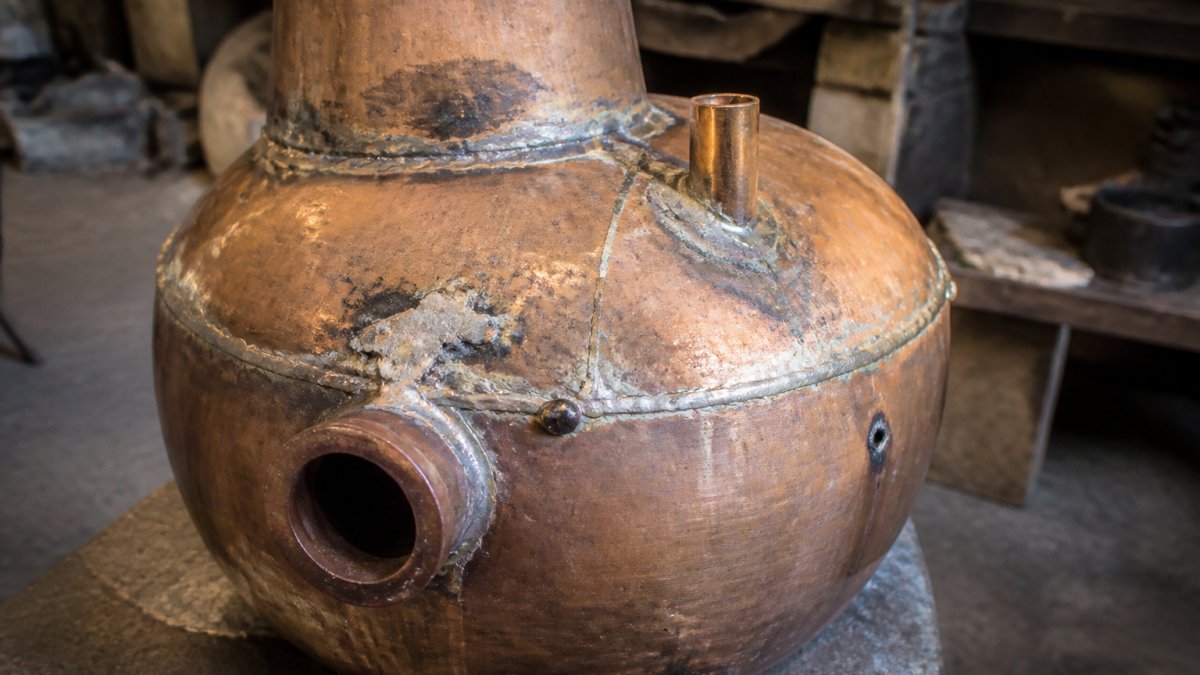
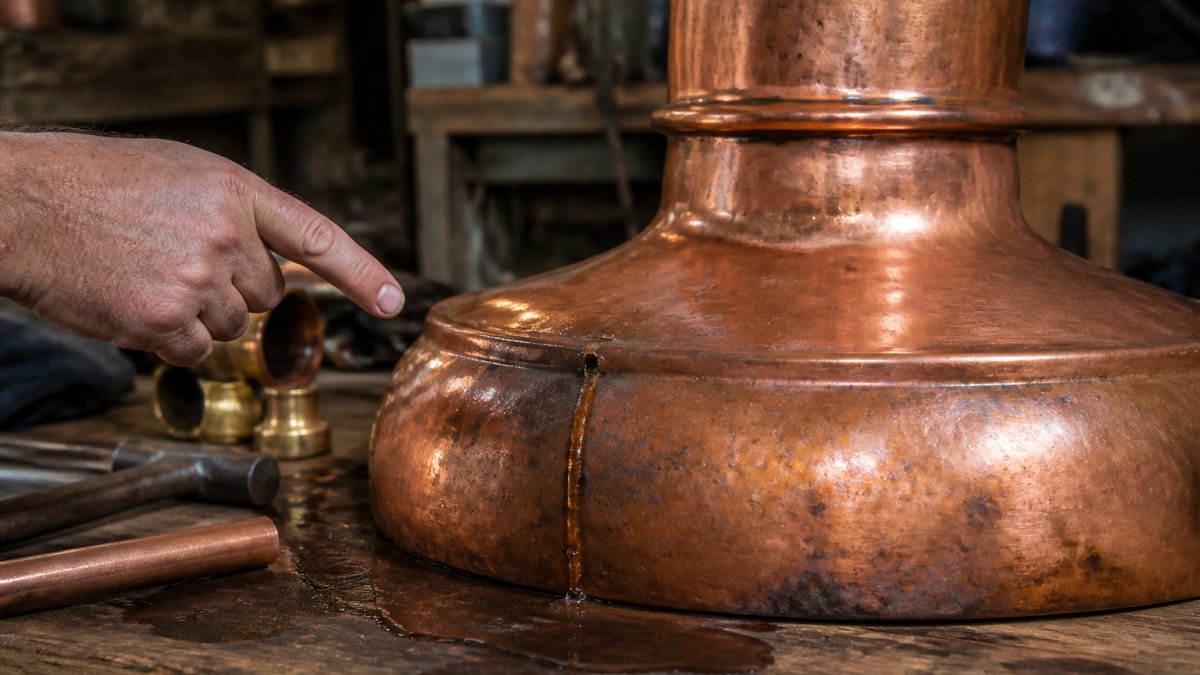
- Inspect seams and solder lines. A failing seam is where contamination enters.
For cookware, the same logic applies. Copper pots with a tin or stainless lining are built for acidic sauces. Bare copper is for sugar work and quick tasks.
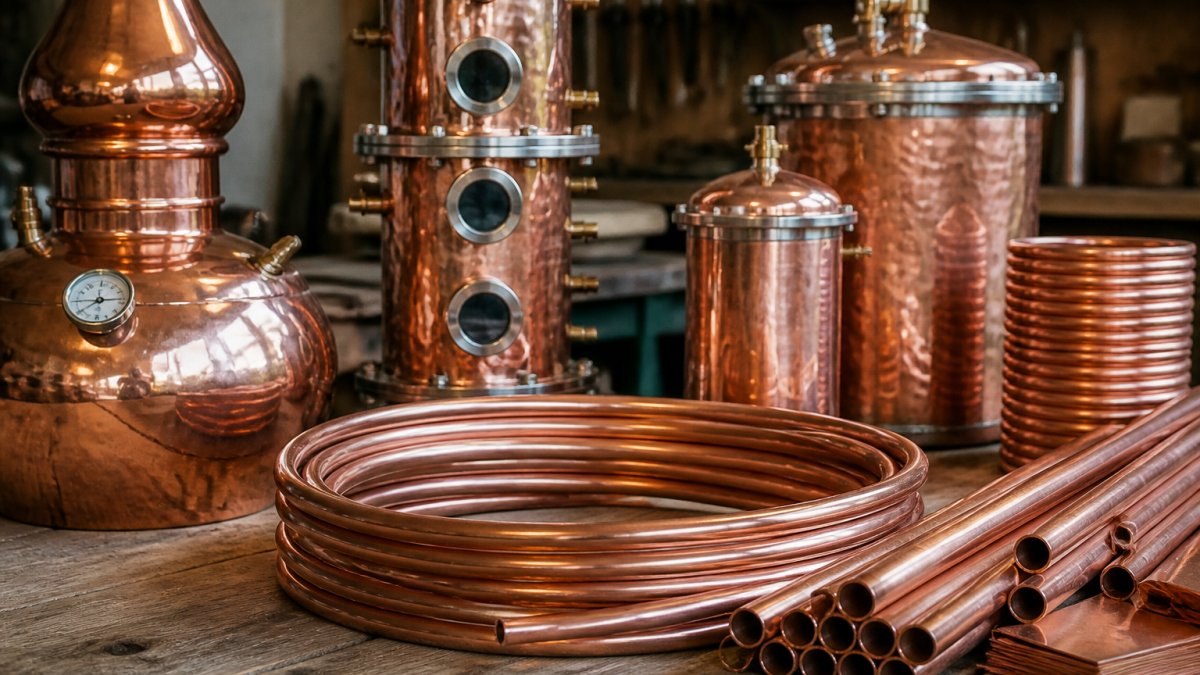
This is the standard we hold our own equipment to. Every still we build is hand-made from 20oz, 99.9% pure copper, with parts rolled, hemmed, and beaded for structural integrity, then pressure tested for leaks. A still that holds its shape and its seams holds its performance, batch after batch.
Frequently Asked Questions
Does copper quality affect the taste of water?
Yes. Purity and surface condition change how much copper dissolves into what you drink. High-purity copper with a clean, well-formed interior releases less than alloys, poorly finished metal, or vessels with exposed seams. Concentration matters too: below the taste threshold most people notice nothing, while higher dissolved copper reads as metallic or bitter. Water chemistry, contact time, and temperature decide how much copper ends up in the glass, so the same vessel can taste neutral with cold quick pours and harsh after hours of stagnation.
Why does my water from a copper bottle taste bitter?
Bitterness usually traces to dissolved copper ions, not the metal itself. Water sitting in the bottle for hours, warm storage, or slightly acidic water pulls more copper into solution. A patina or oxidation layer inside the bottle adds to it. Empty and refill the bottle every few hours, store it cool, and clean the interior with a mild acid wash (lemon juice or vinegar) followed by thorough rinsing. If bitterness persists after that routine, the water itself may be corrosive and worth testing.
Does copper react with acidic drinks?
Acidic drinks react with copper far more than plain water. Citrus juice, tomato juice, vinegar-based drinks, and carbonated beverages lower pH and speed copper dissolution. The longer the contact and the warmer the drink, the more copper enters the liquid. Keep copper vessels for water, and use glass or lined containers for acidic drinks. If you do serve something acidic in copper, keep it brief and rinse immediately afterward.
How can I tell if it's real copper?
Real copper has a distinct reddish-orange tone that darkens to brown over time, and it is non-magnetic. A magnet should not stick. Scratch a hidden spot: solid copper stays the same color underneath, while plated metal shows a different base layer. Weight and feel also help, since copper is dense for its thickness. For cookware and bottles, check the label for purity claims and look at seams and solder joints, which are where lower-grade construction usually shows first.
Copper taste problems almost always trace back to three things: metal quality, contact time, and water chemistry. Fix those and the metallic note disappears. If you are ready to upgrade from basic equipment to a still built from pure Paul Revere Copper with lead-free solder and pressure-tested seams, Steven StillZ LLC backs every unit with a 100% money-back or replacement guarantee. Order online 24/7 and taste the difference quality copper makes in your spirit.