 Comparison
Professional vs Hobby Stills: Is Pro Distilling Gear Necessary?
Last Updated: November 1, 2026
Quick Summary
Professional grade distilling equipment is not necessary for hobby learning, but it becomes necessary once you have a permit and a customer, because inconsistent batches turn into a business cost. The upgrade pays off when repeatability, not capacity, is your bottleneck.
- A hobby still can produce a pleasant batch for personal use, but a professional-grade still repeats that result batch after batch.
- Manual heat input is the single largest source of run-to-run variation between hobby and small craft setups.
- The purchase price of a still is usually the smallest line in the total cost of ownership.
- Buy small craft distillery startup equipment in stages, starting with a quality pot still and reliable heat source.
- Home distillation of beverage alcohol is not legal at the federal level, and a federal permit is required to distill ethanol for drinking.
Table of Contents
- Professional vs Hobby Stills: What Actually Changes
- What Distillery Equipment Requirements Look Like at Each Scale
- Commercial Distilling Equipment: When the Upgrade Pays Off
- Copper Still vs Glass Still: Which Material Belongs in Your Setup
- Small Craft Distillery Startup Equipment: A Staged Investment Plan
- The Legal and Safety Boundaries Home Distillers Must Know
- Choosing Your Still Setup with Steven StillZ LLC
- Frequently Asked Questions
Professional vs Hobby Stills: What Actually Changes
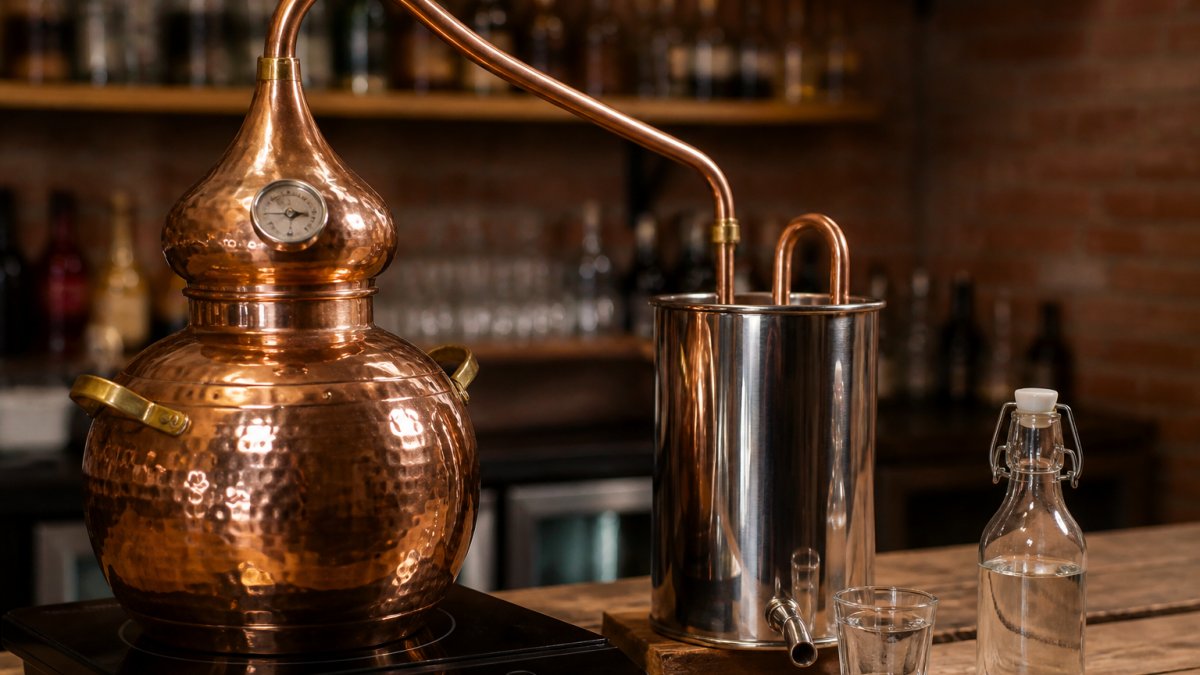
Whether professional grade distilling equipment is necessary depends on one thing: what you plan to do with the spirit you make. A hobby still can produce a pleasant batch for personal use. A professional-grade still is built to repeat that result, batch after batch, without leaks, off-flavors, or constant repairs.
Where the Two Tiers Diverge
Three differences separate hobby equipment from professional-grade equipment:
What Distillery Equipment Requirements Look Like at Each Scale
Distillery equipment requirements scale with output, not ambition. The table below maps the three practical tiers against the equipment, utilities, and constraints that typically change.
| Scale | Typical Setup | Throughput Reality | Key Constraint |
|---|---|---|---|
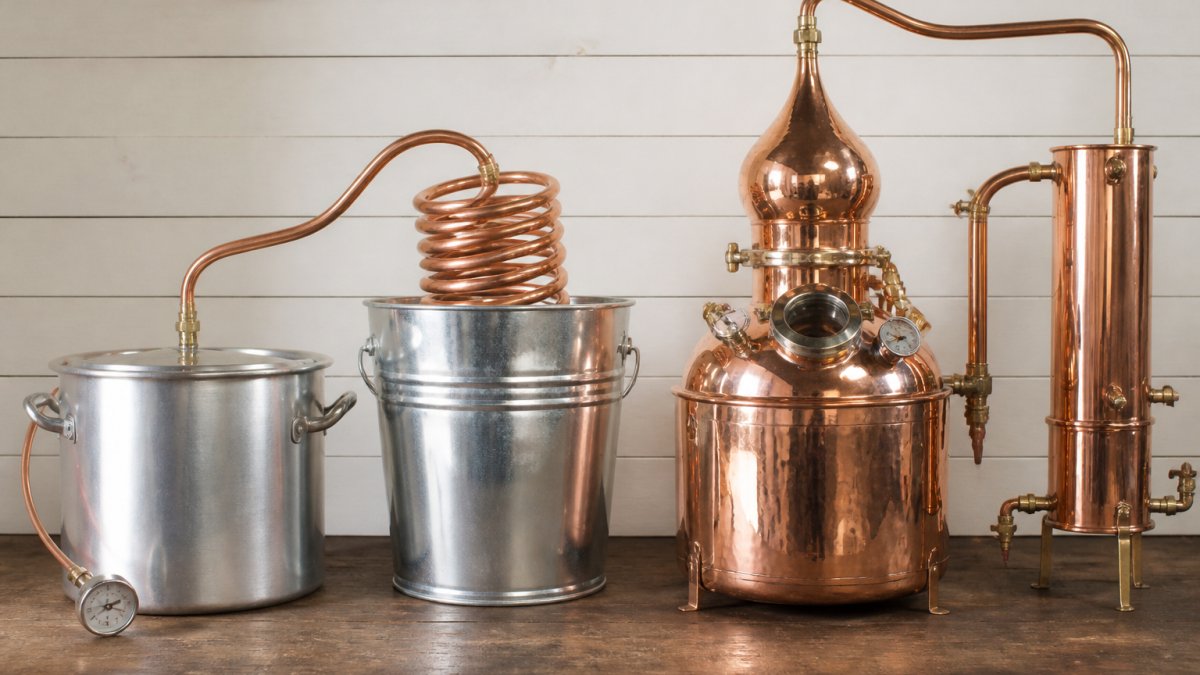
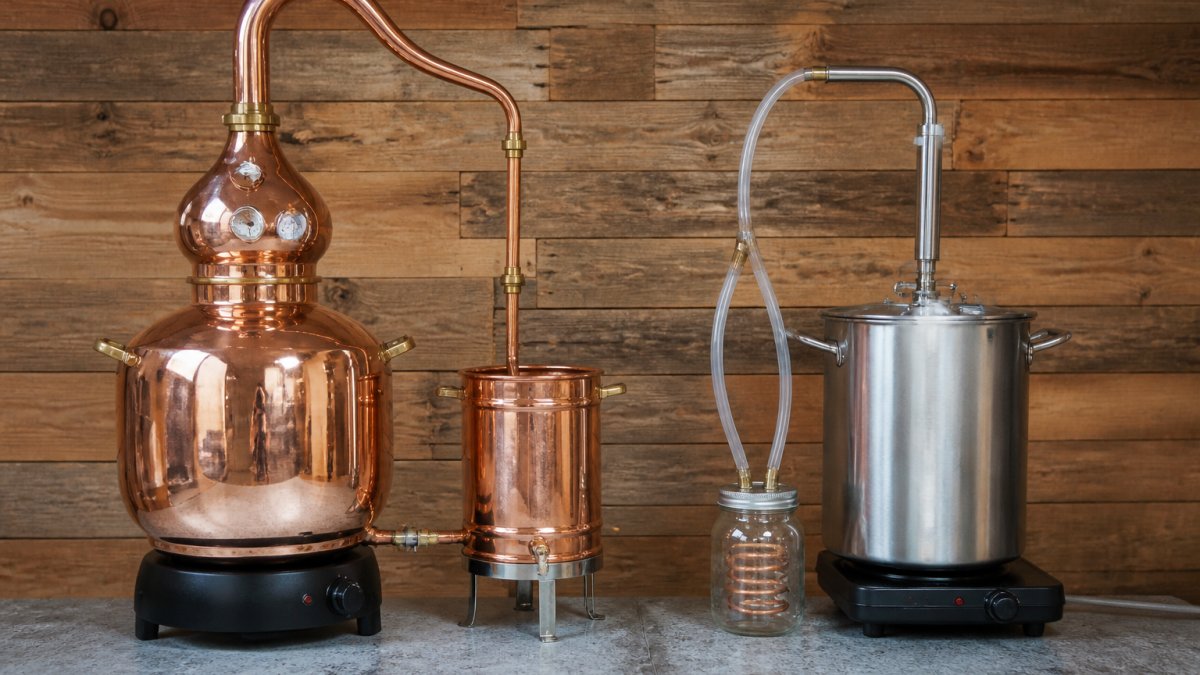
| Hobby / learning | 5-20 gallon pot still, propane or electric heat, bucket or carboy fermenter, worm or liebig condenser | A few gallons of finished spirit per run, run intermittently | Batch size, repeatability, and safety ventilation |
| Licensed small craft | 50-500 gallon pot or hybrid column still, jacketed or direct-fire boiler, temperature-controlled fermenters, glycol chiller | Several barrels per week at full utilization | Consistency across batches, utility capacity, compliance records |
| Commercial distillery | Column still plus pot still for finishing, jacketed fermenters, dedicated chilling loop, mash tun, proofing and bottling line | Continuous or near-continuous production | Throughput, downtime, energy cost per proof gallon, regulatory audit trail |
What Actually Changes Between Tiers
Heating and control. A hobby setup usually runs on a propane burner or a simple electric element with manual adjustment.
Fermentation. At hobby scale, a bucket or carboy with an airlock is normal. At small craft scale, fermenters need temperature control because fermentation heat is the largest uncontrolled variable in flavor development. Commercial operations add jacketed fermenters, CIP (clean-in-place) capability, and recorded fermentation logs that a regulator can review.
Cooling and utilities. A hobby condenser can run on tap water. A small craft still needs a chiller or a cooling tower because a 100-gallon stripping run will overwhelm a household water supply.
Records and compliance. At hobby scale, records are for your own notes. The Alcohol and Tobacco Tax and Trade Bureau requires distilled spirits producers to keep records of production, storage, and disposition, and the equipment you choose determines how easily you can produce those records.
The jump from hobby to small craft is where most people get stuck.
Commercial Distilling Equipment: When the Upgrade Pays Off
Commercial distilling equipment earns its cost when your bottleneck is repeatability, not capacity. The honest answer to whether professional-grade equipment is necessary depends on which of three situations you are in: hobby learning, licensed small-scale production, or commercial operation. Each has a different break-even point, and the upgrade only pays off when the constraint you are hitting is one the equipment actually removes.
A Direct Answer by Use Case
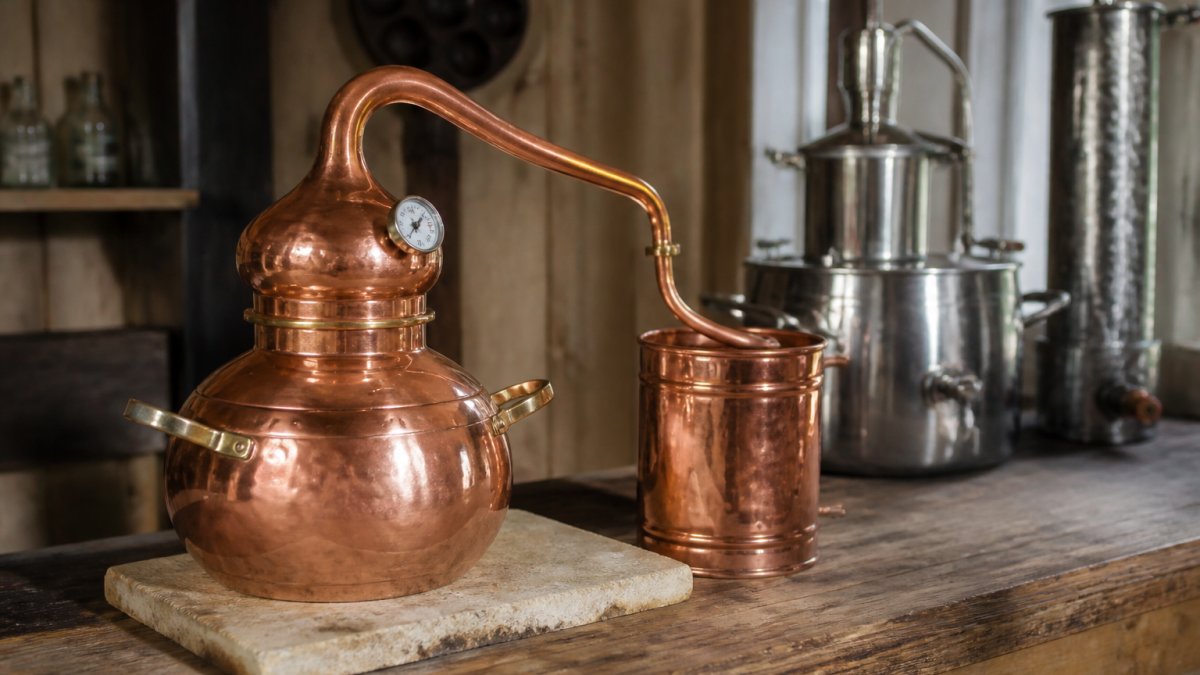
Hobby learning. Professional-grade equipment is not necessary. A well-built hobby pot still with lead-free solder and a stable heat source will teach you cuts, fermentation, and proofing. What professional equipment buys you at this stage is safety margin and repeatability you do not yet need.
Licensed small-scale production. Professional-grade equipment becomes necessary once you have a permit and a customer. At that point, inconsistent batches are a business cost, not a learning experience. The equipment that matters first is the equipment that removes variables: temperature-controlled fermenters, a jacketed boiler, and a condenser sized to your run length.
Commercial operation. Professional-grade equipment is necessary, but the specification that matters is throughput and uptime, not prestige. A commercial buyer should be comparing energy cost per proof gallon, mean time between failures, and cleaning time per run, not boiler size.
Total Cost of Ownership, Not Purchase Price
The purchase price of a still is usually the smallest line in the total cost of ownership. A realistic budget compares:
- Purchase and freight. The still, condenser, and any included accessories.
- Installation. Electrical service upgrades, steam or glycol piping, ventilation, and floor loading.
- Utilities. Propane, electricity, water, and chilling load per run, the cost that compounds with every batch.
- Maintenance and replacement. Gaskets, seals, solder joint inspection, and the expected life of the boiler.
- Testing and compliance. Pressure testing, calibration, and recordkeeping labor.
A common pattern is that a lower-priced still with thin copper and folded seams costs more per proof gallon over three years than a heavier-gauge unit, because the thin still loses vapor at the seams and needs more frequent repair. That is the trade-off to model before you buy.
Professional vs Entry-Level: What Actually Differs
| Attribute | Entry-Level | Professional-Grade |
|---|---|---|
| Material thickness | Thin copper or copper-plated steel | Heavier-gauge copper that holds shape and conducts heat evenly |
| Construction | Folded or simple joints | Rolled, hemmed, and beaded seams |
| Control | Manual heat, no reflux control | Stable temperature and reflux control |
| Repeatability | Batch-to-batch variation is expected | Designed for repeatable cuts and yield |
| Durability | Shorter service life under frequent runs | Built for sustained production |
| Safety features | Basic; pressure testing not guaranteed | Pressure-tested before shipment; lead-free solder confirmed |
| Cost | Lower upfront | Higher upfront, often lower per proof gallon over time |
Performance Metrics That Signal It's Time to Upgrade
Track these before you spend:
- Yield per batch. If your hearts cut shrinks run to run, your still is likely losing vapor at the seams.
- Leak frequency. Any recurring leak at a joint is a structural problem, not a maintenance issue.
- Cleaning time. If cleaning takes longer than the run, the design is fighting you.
- Energy cost per proof gallon. A rising trend usually means heat is going somewhere other than the wash.
- Off-flavor complaints. Metallic or harsh notes that persist after recipe changes usually trace to reactive materials.
Two or more of these trending the wrong way means the equipment is the constraint. That is the point at which professional-grade equipment pays off, not before.
Before committing to an upgrade, it helps to understand why professional stills cost more and where that money actually goes.
Copper Still vs Glass Still: Which Material Belongs in Your Setup
Copper is traditionally used in spirit production because it reacts with sulfur compounds during distillation. Glass is inert and useful for small experimental runs.
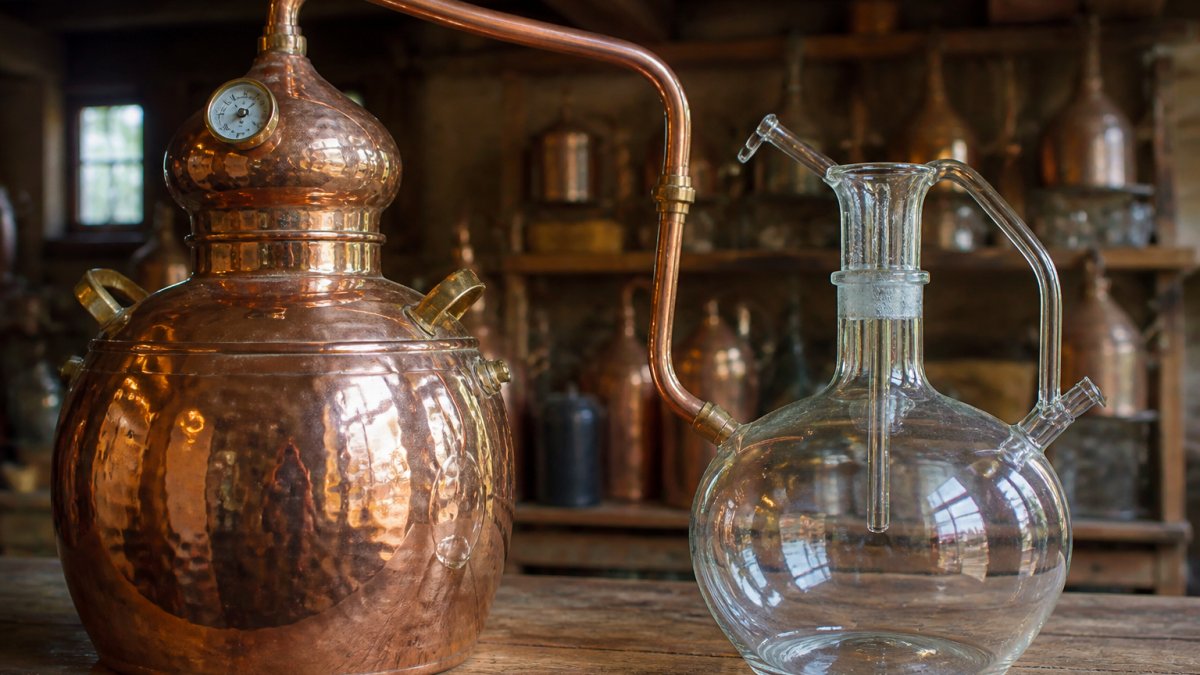
If you are weighing materials in detail, our guide to high quality copper distillation equipment covers gauge, solder, and seam construction.
Confirm that every joint on your equipment uses lead-free solder before your first run.
Small Craft Distillery Startup Equipment: A Staged Investment Plan
Small craft distillery startup equipment should be bought in stages, not all at once. Spending the full budget on day one leaves nothing for the problems you have not met yet.
Here is how we would sequence it:
- Stage one: a quality pot still and a reliable heat source. Get one spirit repeatable before adding anything.
- Stage two: fermentation control. Fermenters with temperature control remove the largest source of batch variation.
- Stage three: cooling and chilling. A proper cooling system lets you run longer and cleaner.
- Stage four: a column still or larger capacity. Add this only when demand, not curiosity, justifies it.
Our professional grade still setup guide walks through each stage in more detail.
The Legal and Safety Boundaries Home Distillers Must Know
Home distillation of beverage alcohol is not legal at the federal level. The Alcohol and Tobacco Tax and Trade Bureau regulates distilled spirits production, and a federal permit is required to distill ethanol for drinking. Some states have passed their own allowances, but federal rules still apply. Check the TTB's permit requirements and your state's alcohol control board before you buy equipment.
Safety boundaries matter just as much. Never run a still indoors on a propane burner, never seal a pot still completely, and never leave a run unattended. The Occupational Safety and Health Administration treats ethanol vapor as a fire hazard, and a poorly ventilated space is the most common way hobbyists get hurt.
None of this is a reason to skip the craft. It is a reason to know the rules before you spend money.
Choosing Your Still Setup with Steven StillZ LLC
The honest answer to whether professional-grade distilling equipment is necessary: not for everyone, but for anyone who wants repeatable results, yes. If you are making a batch a few times a year for yourself, a hobby still is fine. If you are chasing consistency, planning a small commercial operation, or tired of leaks and metallic notes, the upgrade pays for itself.
That is the case we build for. Every still from Steven StillZ LLC is 100% hand-made with machine-cut, 20oz, 99.9% pure Paul Revere Copper. We use 100% lead-free silver bearing solder on every joint. Parts are rolled, hemmed, and beaded for structural integrity. Each unit is water and air pressure tested before it ships, and it comes with a 100% money-back or replacement guarantee.
You can browse the shop to see current builds.
Frequently Asked Questions
Is professional-grade distilling equipment necessary for a small craft distillery?
For a licensed small craft distillery, yes. Commercial production requires equipment that holds consistent temperatures, handles repeated batches without leaks, and meets food-grade standards. Professional-grade distilling equipment built from pure copper and lead-free solder is designed for consistent production. A hobby still rated for occasional weekend use will not hold up to daily throughput, and failures cost more in lost batches than the equipment upgrade would have.
What is the difference between a home still and a commercial still?
A home still typically runs smaller batches, uses thinner materials, and relies on simpler heating and cooling setups. Commercial distilling equipment also factors in cleaning, maintenance access, and durability across hundreds of runs. The gap shows up in consistency, yield, and how often you have to stop production to fix something.
Are copper stills better than glass distillation equipment?
Copper is traditionally used in spirit production because it reacts with sulfur compounds during distillation. Glass stills are useful for lab work and visual demonstrations. If your goal is drinkable craft spirits with a clean flavor profile, copper is the practical choice.
Can you make your own commercial still, and what regulations apply?
Distilling alcohol for drinking generally requires permits. Check the requirements of the relevant federal and state regulators before you buy or build equipment.
What equipment is needed to start a craft distillery?
At minimum you need a still (pot or column), fermentation vessels, a heating system, a cooling system, and food-grade storage. Add a mash tun, temperature controls, cleaning supplies, and testing instruments for proof and quality. Small craft distillery startup equipment should also include enough capacity to meet your first-year production targets without running around the clock. Plan the layout so cleaning and maintenance are easy, since those tasks take more time than most new operators expect.
The real challenge is not choosing between cheap and professional. It is knowing which one your next batch actually needs. If you are ready to stop guessing, Steven StillZ LLC builds copper stills with verified materials, pressure-tested seams, and a guarantee that backs the work. Get started with Steven StillZ LLC and run your next batch on equipment built to repeat it.