 Listicle
7 Benefits of Using Pure Copper Stills for Better Spirits
Last Updated: November 19, 2026
Quick Summary
Using pure copper stills binds sulfur compounds in the vapor and removes harsh, off-putting notes before they reach your collection jar. Copper also conducts heat far better than stainless steel for even distribution, and a well-built still can last for many years and be repaired by a metalsmith.
- Copper forms copper sulfide on its interior as sulfur binds to the metal, so clean the still after each run.
- Stainless steel does not bind sulfur compounds, so off-notes pass straight through to the collection jar.
- Ask for the copper grade in writing; C11000 electrolytic tough pitch copper is about 99.9% copper.
- Confirm every vapor-contact and liquid-contact component and its material, since mixed-metal builds behave differently.
- A magnet should not stick to pure copper; if it does, there is steel underneath.
Table of Contents
- Why Pure Copper Stills Change What Comes Out of the Condenser
- Benefit 1: Copper Strips Sulfur Compounds and Harsh Notes
- Benefit 2: Heat Conductivity and Even Heat Distribution
- Benefit 3: Durability, Longevity, and Repairability
- Copper Still Pros and Cons: What You Gain and What You Give Up
- Copper vs Stainless Steel Still: Material Properties and Flavor Impact
- How to Verify Copper Purity Before You Buy
- Copper Still Safety: Solder, Food Contact, and Oxidation
- Frequently Asked Questions
Why Pure Copper Stills Change What Comes Out of the Condenser
The benefits of using pure copper stills start at the molecular level: copper reacts with sulfur compounds in the vapor and pulls them out of the distillate before they reach your collection jar.
Here's the honest version. Copper is not a magic filter, and it will not rescue a stressed fermentation or a sloppy cut.
Benefit 1: Copper Strips Sulfur Compounds and Harsh Notes
Copper is a catalyst. As vapor passes over the copper surface, sulfur compounds that cause rotten-egg, cabbage, and burnt-match odors bind to the metal and stay there instead of landing in your spirit. The result is a cleaner, smoother distillate with fewer harsh notes, especially on the heads and early hearts.
What Copper Actually Does to Sulfur Odors
During distillation, sulfur-bearing compounds vaporize along with the alcohol. When that vapor contacts copper, the sulfur reacts and forms copper sulfide, which clings to the still's interior. Your condenser output carries measurably less of the stuff that makes a spirit smell off.
Copper's sulfur-binding effect is most relevant for spirits such as whisky, rum, and fruit brandies, where sulfur notes can be part of the fermentation.
The Limits of Sulfur Removal
Copper won't fix a bad wash. If fermentation ran hot or stalled, copper reduces the symptoms but doesn't cure the cause. It also has a ceiling: once the interior coats with copper sulfide, it stops binding new sulfur until you clean it. Distillers who run back-to-back batches without cleaning often blame the still for off-flavors that are really a maintenance problem.
Benefit 2: Heat Conductivity and Even Heat Distribution
Copper conducts heat far better than stainless steel, so the wash heats evenly and hot spots are rare.
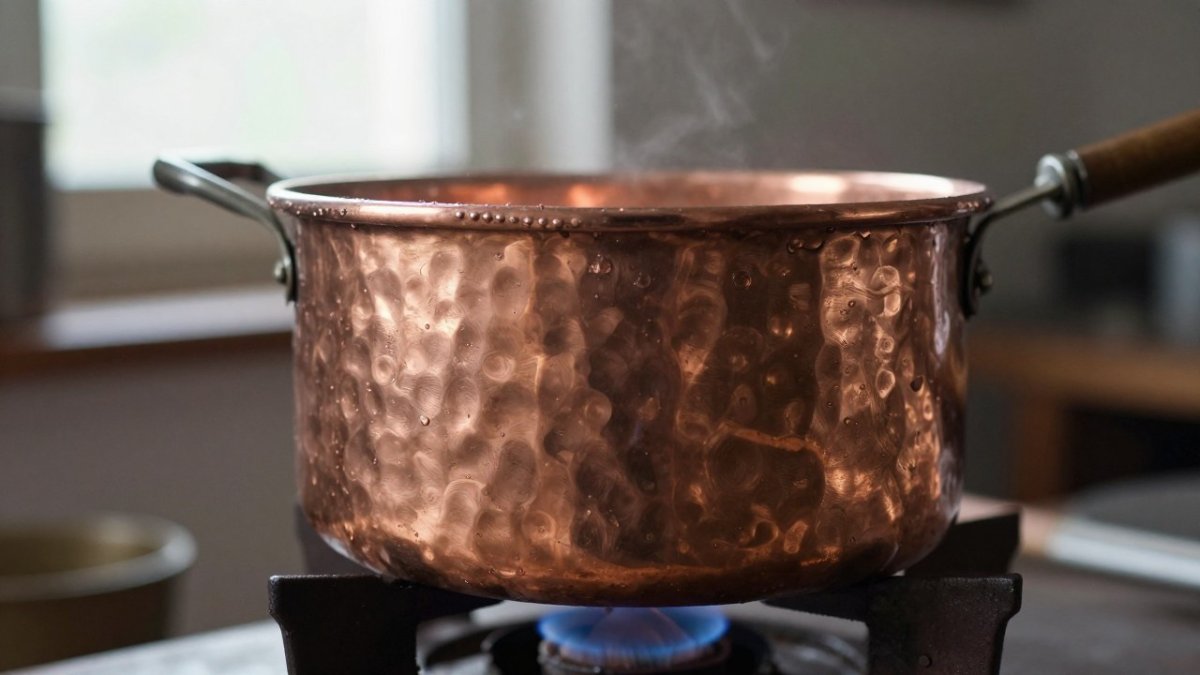
In practice, this changes how you run the still. For a deeper look at how wall thickness affects this, read our guide to heavy gauge copper in distillation equipment.
Benefit 3: Durability, Longevity, and Repairability
A well-built copper still can last for many years. Copper is generally a durable metal that can be repaired by a competent metalsmith rather than replaced.
Build quality is where stills separate. If you want to understand what separates a durable still from a fragile one, our copper quality guide breaks down the construction details that matter.
Copper Still Pros and Cons: What You Gain and What You Give Up
Copper stills involve trade-offs, and buyers should go in with eyes open. Here's a general ledger:
| Pros | Cons |
|---|---|
| Binds sulfur compounds for a cleaner spirit | Higher purchase price than stainless |
| Superior heat conductivity and even distribution | Requires regular cleaning to keep working |
| Durable, repairable, decades of service | Patina and oxidation need managing |
| Better flavor quality on whisky, rum, brandy | Heavier than comparable stainless units |
| Holds resale value | Solder quality varies by maker |
The pros outweigh the cons for anyone chasing flavor quality. If you only run sugar washes and want zero maintenance, stainless is the simpler tool.
Copper vs Stainless Steel Still: Material Properties and Flavor Impact
Copper and stainless steel are not interchangeable, and the difference can show up in the condenser output. Stainless steel is generally inexpensive and easy to clean, but it does not bind sulfur compounds. Copper requires care, but it can change the distillate. The table below is the starting point; the paragraphs after it are where the real decision lives.
| Property | Pure Copper | Stainless Steel |
|---|---|---|
| Sulfur removal | Yes, binds sulfur compounds as copper sulfide | None; sulfur passes through |
| Heat conductivity | High, even heat across the boiler | Low, prone to hot spots and scorching |
| Flavor impact | Smoother, cleaner spirit, especially on heads | Neutral; off-notes carry over |
| Maintenance | Regular cleaning to remove sulfide buildup | Minimal |
| Lifespan | Decades, repairable by a metalsmith | Long, but dents and is hard to repair |
| Cost | Higher up front | Lower up front |
| Weight | Heavier per gallon of capacity | Lighter |
Why the Sulfur Difference Is Not Marketing
During fermentation, yeast produces sulfur-bearing compounds such as hydrogen sulfide and various mercaptans. These vaporize with the alcohol and, in a stainless still, travel straight through to the collection jar. In a copper still, the vapor contacts the copper surface and the sulfur reacts to form copper sulfide, which clings to the interior. That is a chemical interaction, not a flavor opinion, and it is the single biggest reason craft distillers pay more for copper.
Heat Transfer Changes How You Run the Still
Copper is known for high thermal conductivity, which generally helps heat spread across the boiler wall rather than concentrating at the burner contact point. This can reduce scorching and help the boil stay steady when the flame is adjusted. If you heat with propane or electricity, copper gives you finer control over the temperature climb and, by extension, over your cuts.
Performance Depends on Still Design and Spirit Type
Copper's effects are not uniform across still designs. A pot still gives vapor a single pass over copper, so the sulfur contact is brief but intense; a column still packs copper mesh or plates into the vapor path, increasing contact time and surface area. Hybrid designs split the difference. The spirit matters too: whisky, rum, and fruit brandies carry heavy oils and sulfur notes that benefit most from copper contact, while a neutral sugar wash shows less difference.
The Mixed-Metal Question Buyers Should Ask
Many stills sold as 'copper' are actually copper-clad or mixed-metal builds: a copper boiler with a stainless column, copper mesh in a stainless vapor path, or copper plating over a steel core. Each of those is a different product with different sulfur contact and different maintenance. Before you compare copper to stainless, confirm which parts of the still actually contact vapor and liquid.
When Stainless Is the Right Tool
Stainless wins when you run neutral sugar washes, want minimal maintenance, or need the lowest up-front cost. It is also easier to sanitize and does not develop a patina. For craft distilling and moonshine where flavor matters, copper wins on the metrics that affect the spirit. When you're ready to compare builds, you can shop StillZ handmade copper stills and see the construction for yourself.
How to Verify Copper Purity Before You Buy
The term 'pure copper' is not defined by a single number stamped on a boiler. Purity involves the copper grade, the parts that contact vapor and liquid, the solder at each joint, and the fittings. Verifying purity means checking each of those separately.
What 'Pure Copper' Actually Means
In the trade, pure copper usually refers to C11000 electrolytic tough pitch copper, which is about 99.9% copper with a small oxygen content. That is the grade most reputable still makers mean when they say 'pure copper,' and it is what you should ask for in writing. Copper alloys such as brass and bronze contain zinc or tin and behave differently in the vapor path.
Which Parts Contact Vapor and Liquid
Purity only matters where the metal touches what you will drink. Map the vapor path: boiler, column or lyne arm, condenser, and any fittings, gaskets, or mesh in between. A pure copper boiler paired with a stainless condenser gives you sulfur binding in the boiler but none in the condenser, where a meaningful share of the vapor contacts metal. Ask the maker to identify every wetted and vapor-contact component and its material.
Solder and Joints Are Where Safety Claims Live
Every seam, rivet, and fitting on a copper still is joined with solder or a mechanical connection. Lead-free silver-bearing solder is the standard for any still that touches consumable spirit, and you should ask for it explicitly by composition, not just the phrase 'lead-free.' Soft solders with high lead content are still sold for non-food plumbing and have no place in a still.
Run These Checks Before You Pay
- Confirm the copper grade in writing (C11000 or 99.9% pure is the standard to ask for)
- Get a list of every vapor-contact and liquid-contact component and its material
- Ask for the solder or brazing filler composition, not just 'lead-free'
- Request proof of pressure testing (water and air) before shipment
- Inspect seams for rolled, hemmed, and beaded construction rather than butted joints
- Check the copper weight: 20oz copper is heavier and more durable than thin sheet
- Look for a stated guarantee or replacement policy
Watch out: a maker who answers purity questions only with adjectives ('premium,' 'food-grade,' 'pure') and never with a grade, a solder composition, or a component list is telling you something. Vague claims are a red flag, and the burden is on the buyer to ask for specifics in writing.
Tests You Can Run Yourself
Once the still arrives, a few simple checks confirm the basics. A magnet should not stick to pure copper; if it does, there is steel underneath. Scratch an inconspicuous interior spot: pure copper shows the same reddish color beneath the surface, while plated or clad metal may reveal a different core. If you want hands-on tests you can run yourself, our guide on how to verify copper purity walks through seven methods that actually work.
Copper Still Safety: Solder, Food Contact, and Oxidation
Safety involves three main considerations: lead-free solder, proper cleaning, and managing oxidation. Lead-free silver bearing solder is a common standard for stills that touch consumable spirit, so it is worth asking for explicitly.
Oxidation is normal. Copper darkens and forms a patina over time, which is normal on the exterior.
Watch out: green verdigris inside the still is a sign of neglect. For a full breakdown on identifying safe solder, read our guide to food safe solder for distilling.
Copper rewards the distiller who understands it. If you're tired of metallic notes and uneven runs, the fix often starts with the metal itself.
Frequently Asked Questions
Why do distillers use pure copper stills instead of stainless steel?
Copper reacts with sulfur compounds that form during fermentation, binding them so they do not carry over into the distillate. That means fewer harsh, rotten-egg, or cabbage-like notes in the finished spirit. Copper is commonly chosen for its sulfur-binding behavior, while stainless steel is generally less expensive and easier to clean but does not bind sulfur.
How can you tell if a still is made from pure copper?
Ask for the copper thickness in ounces and the alloy specification, not just the word copper. Check the seams and construction details, and confirm the material specifications in writing before you buy.
Are copper stills safe to use?
Copper itself is a normal food-contact metal, but the solder and fittings are where problems show up. Ask specifically for lead-free solder, and confirm it is silver-bearing rather than a general-purpose plumbing solder. Ask whether a still has been pressure tested before shipment. Clean the still before first use and after each run, and do not let wash sit in the pot for days, because prolonged acid contact causes verdigris. Discard any distillate that comes out with a metallic or chemical smell.
Does a copper still really improve the taste of distilled spirits?
Copper binds sulfur compounds produced during fermentation, which can affect the character of the spirit. It will not fix a bad recipe, a stalled fermentation, or sloppy cuts.
How do you clean and maintain a copper still?
Rinse after each run and dry the still thoroughly. Clean the interior according to the manufacturer's care guidance, and avoid abrasive pads that can scratch the surface. A light patina is normal, but green verdigris should be removed before the next use.